In North Central Florida, adding solar battery storage is becoming less about brand preference and more about performance during outages and long-term savings under changing utility policies. Many homeowners automatically start their search with the Tesla Powerwall — but today there are two strong alternatives that deserve a serious comparison.
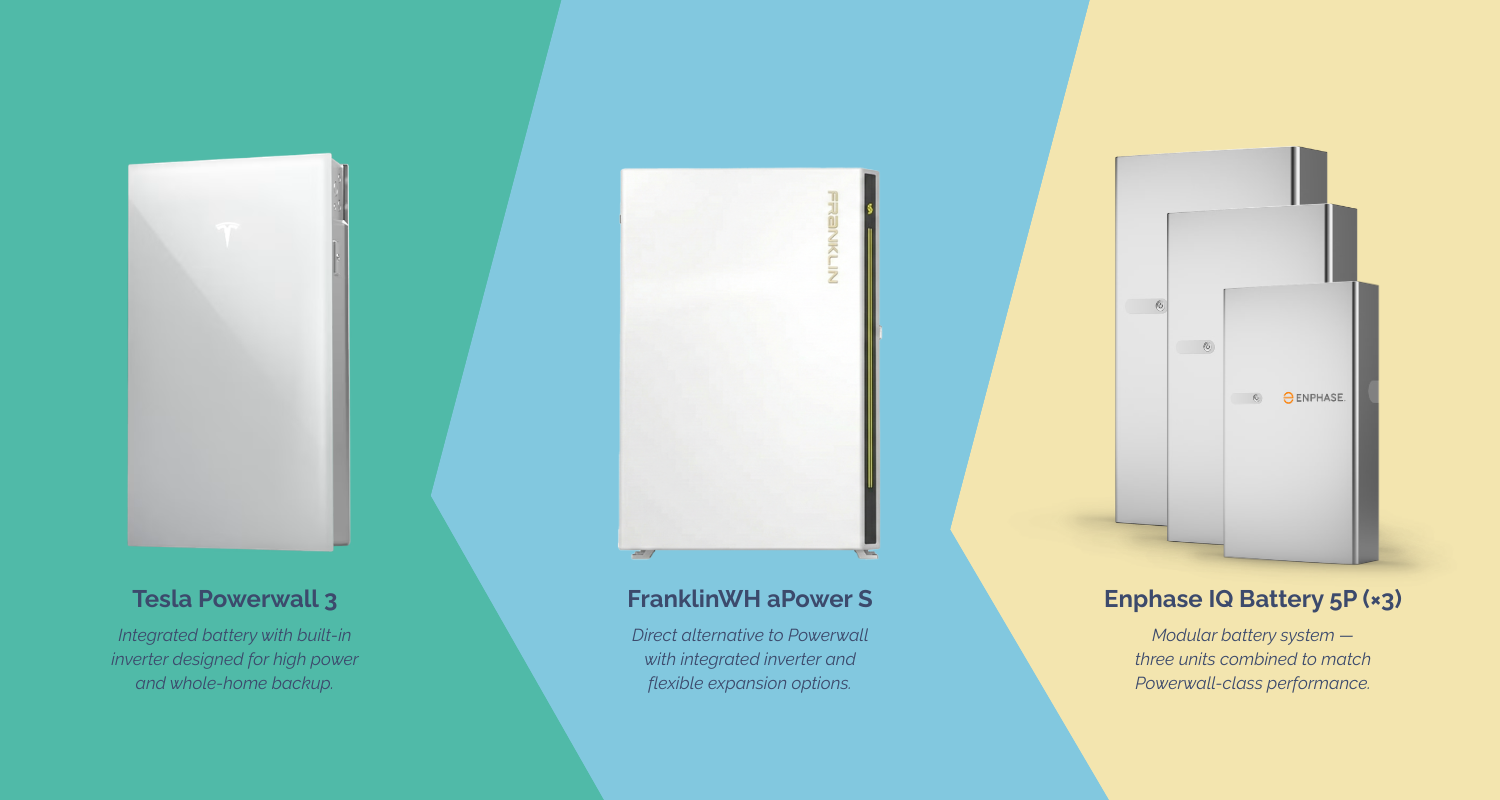
The FranklinWH aPower S is designed as a direct competitor to the Tesla Powerwall 3, offering a similar “all-in-one” design with an integrated inverter and whole-home backup capability. Meanwhile, the Enphase IQ Battery 5P takes a modular approach. Instead of one large battery, homeowners typically install three IQ Battery 5P units to match the storage capacity and performance range of a single Powerwall 3, creating a flexible alternative for homes already using Enphase solar equipment.
Choosing between these options isn’t just about capacity numbers. In Florida, batteries must handle high-demand appliances like air conditioning and well pumps, operate reliably during hurricane outages, and help homeowners keep more of their solar energy when utility buyback programs provide limited export value.
That last point is especially important locally. For example, Gainesville Regional Utilities has moved away from traditional retail net metering for new solar customers and now compensates exported solar energy at lower fuel-adjustment rates. This shift makes solar panels with battery storage far more valuable because homeowners can store excess solar energy instead of sending it back to the grid at reduced value.
This guide compares Tesla Powerwall 3, FranklinWH aPower S, and a three-battery Enphase IQ Battery 5P setup using simple, homeowner-focused criteria: backup power performance, expandability, durability, and overall value for Florida homes.
Solar panels with battery storage: when it delivers the most value in Florida
In many states, adding a battery is mainly about backup power. In North Central Florida, it’s often about backup and economics working together. The way utilities credit exported solar energy can dramatically change how valuable solar panels with battery storage become for your home.
Utility buyback rules and why storage matters
Florida does not operate under one uniform solar compensation model. While some utilities still offer traditional net metering structures, others — including Gainesville Regional Utilities — credit exported solar energy at significantly lower rates than retail electricity.
When exported solar power is credited at reduced value, sending extra energy back to the grid becomes less financially attractive. A home energy storage system allows you to keep that excess solar production and use it later when your home needs it most — typically evenings, when air conditioning, cooking, and household usage are highest. This approach is commonly called self-consumption, and it helps homeowners maximize the value of their solar energy, reduce reliance on utility pricing changes, and improve overall energy independence.
This shift is one of the biggest reasons energy storage for home is growing quickly across North Central Florida. Batteries help homeowners rely less on changing utility policies and keep more of their solar production working directly for their household.
Not all solar batteries for home are designed the same way. Some focus on delivering high output and whole-home capability from a single unit, while others use smaller modular batteries that combine to reach similar performance levels.
For homeowners evaluating modern residential battery storage systems, the most practical comparison looks like this:
- Tesla Powerwall 3 vs FranklinWH aPower S
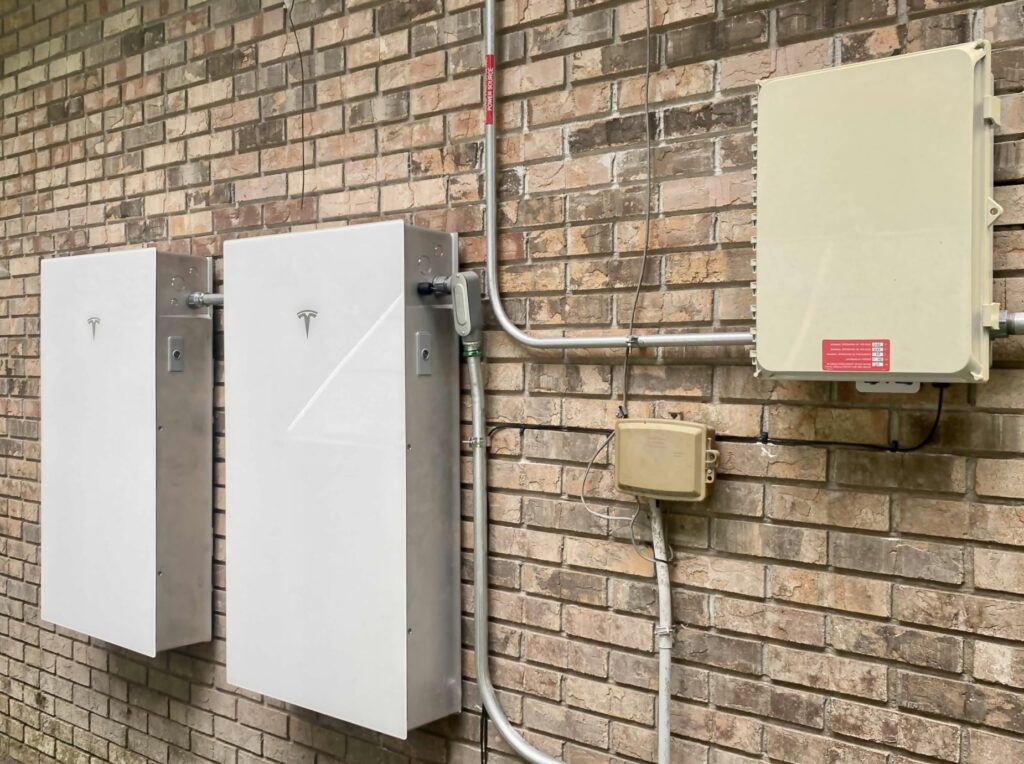
These two systems are direct competitors. Both use integrated inverter designs and are built to support whole-home backup strategies with fewer battery units.
- Three Enphase IQ Battery 5P units vs one Powerwall 3
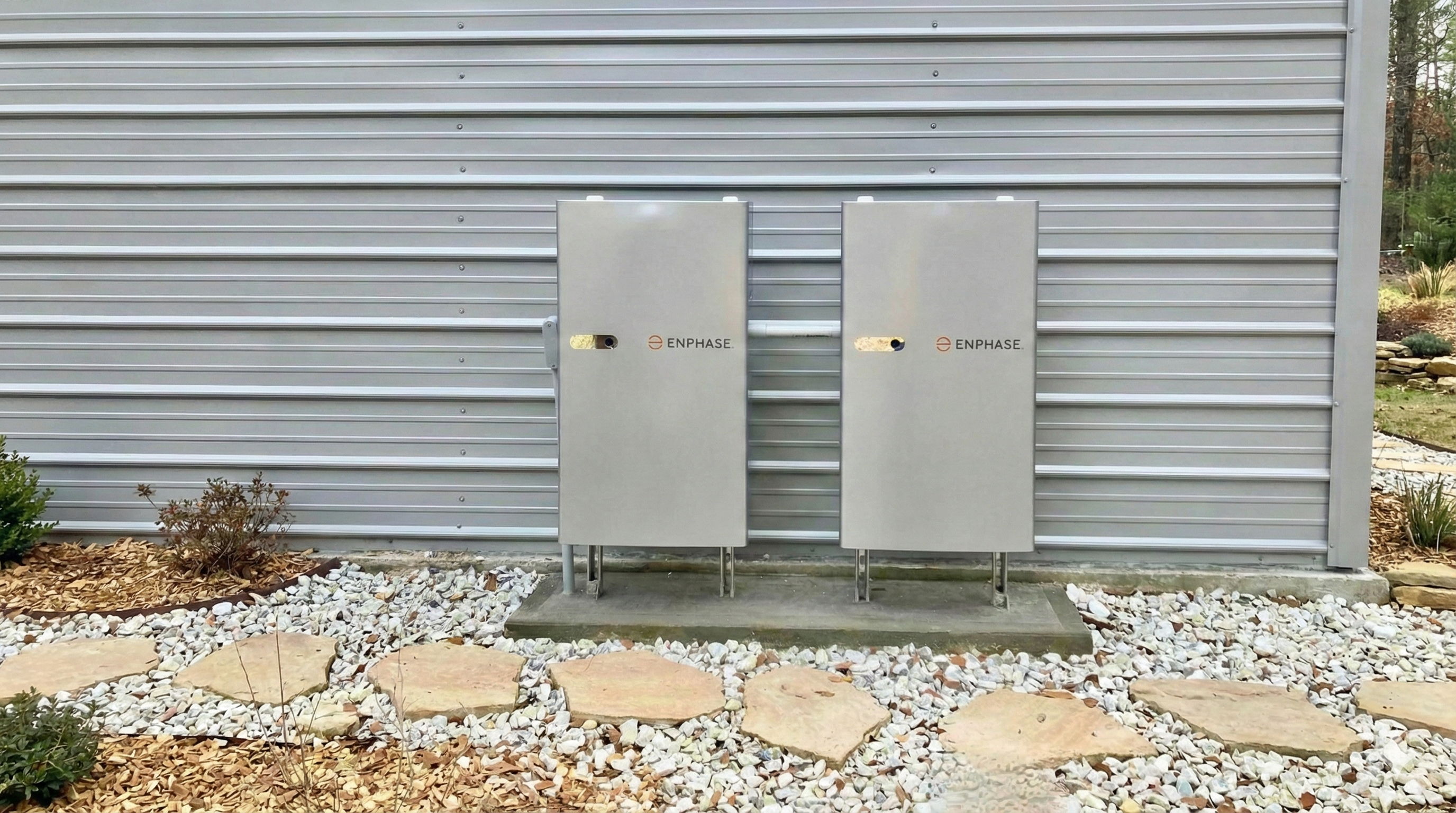
Enphase batteries are intentionally modular. Installing three units places their total storage and performance range in the same category as a single Powerwall 3 or aPower S system, making it the most realistic homeowner comparison.
Understanding this structure helps homeowners compare systems based on real-world performance, not just individual battery size.
When battery storage becomes most valuable for Florida homeowners
A properly designed battery storage system for home typically delivers the strongest return when it supports both outage protection and daily energy management. That value increases if your household:
- Uses significant electricity after sunset
- Runs large cooling loads or well pumps
- Wants dependable power during storm outages
- Lives in a utility territory with reduced export credit programs
For many Florida homeowners, storage for solar power is no longer just an emergency upgrade. It is becoming a core part of how solar systems deliver consistent savings and energy independence year-round.
How a home energy storage system works
Not all home energy storage systems are built the same way. While every battery stores solar energy and provides backup power, the way each system is designed directly affects how much power it can deliver, how easily it expands, and how it supports your home during outages.
Integrated battery systems vs modular battery systems
Today’s solar battery storage generally falls into two design categories.
Integrated battery systems (Powerwall 3 and FranklinWH aPower S)
Integrated systems combine battery storage and inverter technology into a single unit. The inverter converts stored battery energy into usable electricity for your home and also allows solar panels to recharge the battery during the day.
This design allows a single battery unit to deliver high power output and often supports whole-home backup with fewer components. That is why homeowners typically compare one Powerwall 3 directly against one Franklin aPower S. Both are built to deliver large amounts of power from one central system.
Modular battery systems (Enphase IQ Battery 5P, IQ Battery 10c)
Modular systems take a different approach. Instead of one large battery, they use multiple smaller battery units that work together. Each unit adds both storage capacity and power output.
Because each Enphase battery is smaller, homeowners typically install multiple units to reach the same performance range as larger integrated batteries. In most homes, three IQ Battery 5P units place Enphase in the same performance category as one Powerwall 3 or aPower S system.
Unlike single-unit battery platforms, Enphase systems allow homeowners to combine different battery sizes. For example, pairing one IQ Battery 10C (10 kWh) with one IQ Battery 5P can create a hybrid configuration designed to approach Powerwall-level backup performance while keeping expansion options open for future energy needs.
This modular design allows homeowners to expand gradually and adds redundancy, meaning if one battery module experiences a fault, the remaining units can continue operating.
What happens when the grid goes down
When utility power fails, a properly installed battery storage system for home automatically disconnects your home from the grid and switches to backup power. Solar panels can continue generating electricity during the day, recharging the battery while powering selected household circuits.
Backup systems are typically designed in one of two ways:
- Essential loads backup
Powers only critical circuits such as refrigeration, lighting, internet, medical equipment, and selected outlets. This setup allows batteries to last significantly longer during extended outages. - Whole-home backup
Powers most or all household circuits, including air conditioning and large appliances. This setup provides maximum comfort but typically requires more battery capacity and higher output capability.
kWh vs kW: “how long” vs “how much at once”
Picture your home battery like a water tank with a faucet. The kilowatt-hour (kWh) rating tells you the tank’s size—the total amount of energy stored inside. The kilowatt (kW) rating represents the faucet’s flow rate—how much power flows out at any given moment.
You can have a massive water tank with a tiny faucet, or a small tank with a large faucet. A battery with high kWh but low kW gives you plenty of storage but limited power delivery. This distinction matters significantly for Florida homes with demanding appliances:
- Central air conditioning systems requiring substantial startup power
- Well pumps needing significant initial current to overcome motor inertia
- Pool equipment drawing continuous loads throughout the day
Starting a 3-ton air conditioner typically demands a momentary surge of 6-8kW—far beyond what smaller battery systems can deliver. Evaluating both metrics ensures your residential battery storage system can handle peak demands while lasting through extended outages.
Residential battery storage system comparison: Powerwall 3 vs FranklinWH aPower S vs Enphase IQ Battery 5P units
Now that we’ve explained how battery systems are designed, we can compare how the three most popular solar batteries for home actually stack up in real Florida installations.
Powerwall 3 and FranklinWH aPower S are integrated battery systems designed to deliver high power from a single unit. Enphase batteries are modular, which means multiple smaller batteries are combined to reach similar performance levels. Installing three Enphase batteries typically places the system in the same category as one Powerwall or Franklin battery for whole-home backup and daily energy management.
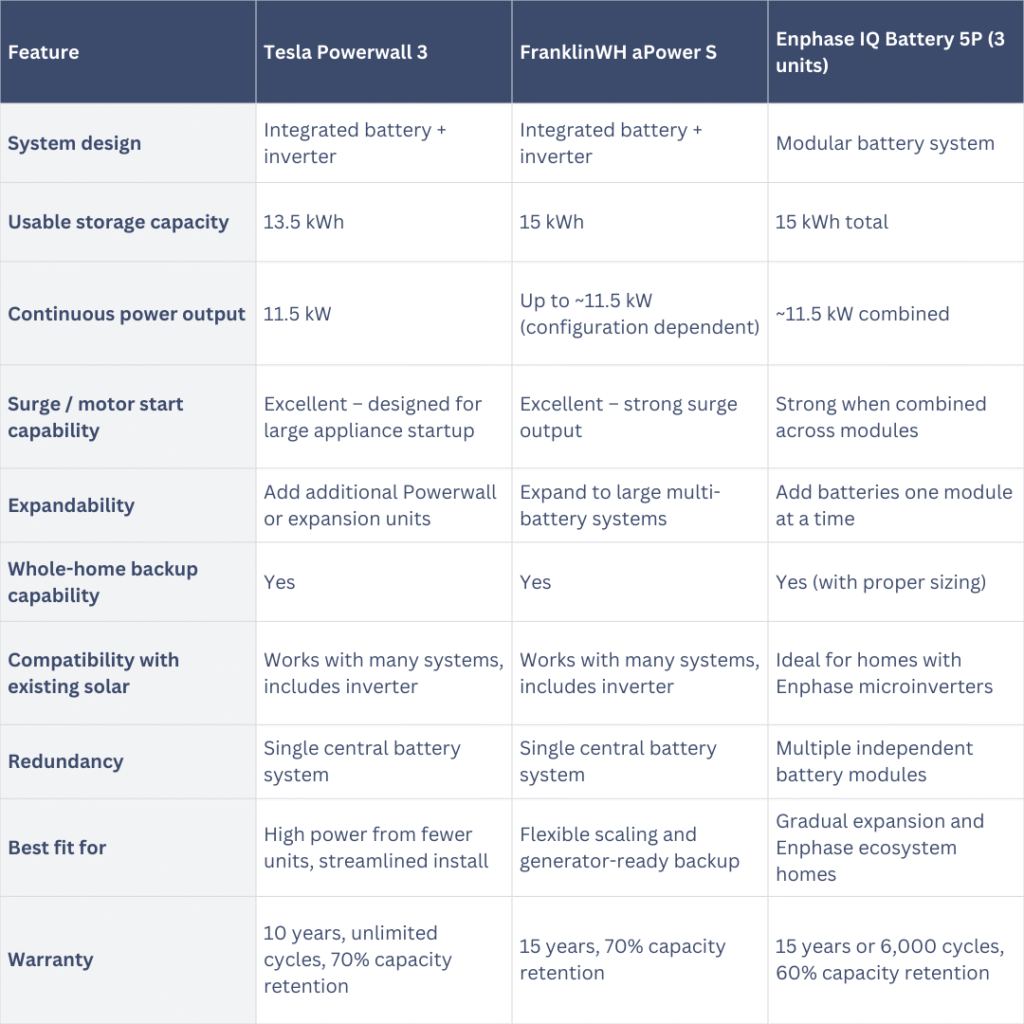
While this comparison focuses on three IQ Battery 5P units as the closest match to one Powerwall-class system, Enphase also offers another high-capacity option: the IQ Battery 10C. This newer generation battery provides approximately 10 kWh of storage and about 7 kW of continuous output, placing it between modular 5P systems and larger single-unit batteries. It allows homeowners to combine a 10C plus one 5P battery to reach performance levels similar to a Powerwall 3, often with more flexible expansion paths.
What these differences mean for Florida homeowners
While the numbers look similar, each system approaches backup and energy storage differently.
Tesla Powerwall 3 focuses on delivering strong output from a single battery. This makes it popular for homeowners who want a streamlined installation that can support large household loads like air conditioning with fewer units.
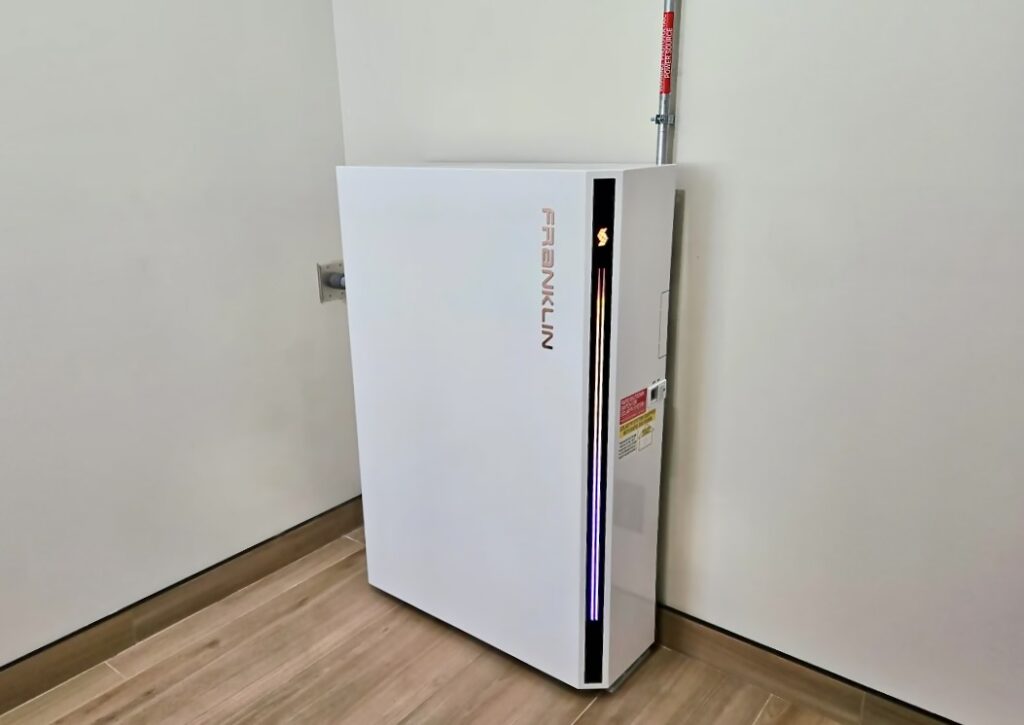
FranklinWH aPower S offers similar integrated performance while emphasizing flexibility and scalability. It is especially attractive for homeowners planning to expand battery capacity over time or combine battery backup with long-duration outage strategies.
Enphase IQ Battery 5P offers a modular approach. Instead of relying on one central battery, homeowners install multiple units that operate together. This allows systems to grow gradually and adds redundancy — if one module needs service, the remaining batteries continue operating.
Which system design is “better”?
There is no universal winner. The best residential battery storage system depends on how you want your battery to function inside your home.
- Homeowners prioritizing high output from fewer batteries often lean toward integrated systems like Powerwall or Franklin.
- Homeowners prioritizing modular expansion or already using Enphase solar equipment often lean toward the IQ Battery platform.
- Homes requiring long outage planning sometimes prefer systems that scale easily with additional storage capacity.
The next step: translating specs into Florida performance
Battery comparisons become much clearer when we look at how each system handles Florida’s most demanding appliances — central A/C, well pumps, and pool equipment — and what realistic runtime looks like during outages.
In the next section, we’ll move from specifications to real-world performance so you can understand how each system behaves when your home actually needs backup power.
Solar battery storage performance for Florida loads
Florida homes place heavier demands on backup systems than many other regions. Cooling, water access, and humidity control often determine how comfortable and safe a home remains during an outage. Understanding how each battery storage system for home performs under these conditions helps homeowners choose the right configuration.
Starting big motors: why “power” matters more than “capacity”
Battery capacity determines how long power lasts, but power output determines what appliances can start and operate reliably. In Florida, this distinction is especially important because many homes rely on motor-driven equipment that requires high startup power.
Central air conditioning systems, well pumps, and pool pumps all create short bursts of heavy demand when turning on. A battery may still have stored energy available but fail to start these appliances if it cannot deliver enough surge power.
Powerwall and Franklin systems are designed to provide strong output from a single battery, while Enphase systems reach similar performance by combining multiple batteries into one coordinated system.
When backup plans include air conditioning or water pumps, output capability usually becomes more important than total storage size.
How to think about runtime during long outages
Runtime depends less on battery size alone and more on how electricity is used during outages. A well-designed residential battery storage system typically focuses on maintaining essential circuits first, allowing storage to last significantly longer.
Most homeowners structure backup loads around:
- Refrigeration and food preservation
- Lighting and basic outlets
- Internet and communication
- Garage doors and security systems
- Medical or accessibility equipment
Trying to power every appliance simultaneously reduces runtime quickly, especially in Florida where cooling demand continues overnight. Focusing on essential loads allows batteries to carry homes through longer outages while still maintaining safety and comfort.
The advantage of pairing solar panels with battery storage is that solar production can recharge batteries during daylight hours, allowing homes to cycle power daily during extended grid outages.
Whole-home backup (when it makes sense)
Whole-home backup powers most or all circuits in the house, including major loads like central air conditioning, well pumps, and pool equipment. This setup offers maximum convenience — no prioritizing, no circuit restrictions.
However, it comes with tradeoffs. Running the entire home requires:
- Higher power output
- More total battery capacity
- Careful load coordination
- Often additional components like soft starters
Whole-home backup can be achieved with integrated systems like Powerwall or Franklin using fewer units, while modular systems like Enphase typically reach the same capability by combining multiple batteries.
This configuration makes the most sense when:
- Comfort during outages is a top priority
- The home experiences frequent or extended outages
- The system is sized with sufficient capacity for longer runtimes
Charging speed basics (why it depends on solar size + house loads)
Charging performance depends on how much solar energy your system produces compared to how much electricity your home is using at the same time. Solar energy first powers active household loads, and any remaining production is directed toward recharging the battery.
For example, during sunny hours:
- If solar production exceeds home usage, batteries recharge quickly.
- If cooling systems or appliances are running heavily, battery charging slows because solar energy is being used immediately.
Homes that want faster recovery after outages typically design solar panel to battery storage systems with enough solar production to support both household demand and battery recharging.
Choosing the right configuration for your Florida home
The best configuration is not about powering everything — it’s about powering what matters most for your household.
Many Florida homeowners start with an essential loads setup and expand later as needs change. This approach keeps costs reasonable, maximizes runtime, and allows the residential solar battery storage system to grow over time without overbuilding on day one.
This is where Enphase’s flexible battery sizing becomes especially useful. Homeowners can begin with smaller batteries and later add higher-capacity options like the IQ Battery 10C, or combine different battery sizes to increase both storage and power output without redesigning the entire system.
Whether you choose essential loads or whole-home backup, the key is designing the system around your actual usage patterns, cooling needs, and outage expectations — not just the size of the battery on paper.
Cost and value: Tesla Powerwall system vs alternatives
When comparing a battery storage system for home, the only number that really matters is the total installed cost for comparable backup capability — not the price of a single battery unit.
Regardless of brand, a complete residential solar battery storage system usually includes:
- Battery hardware
- Backup controller / transfer equipment
- Electrical labor and integration
- Permits and inspections
- Backup or critical-loads panel
Homes with older electrical panels or whole-home backup goals may require additional electrical work, which often has a larger impact on cost than the battery brand itself.
PPM Solar has significantly reduced pricing on FranklinWH aPower S and Enphase IQ Battery 5P systems, making them much more competitive with the Tesla Powerwall 3 at comparable performance levels.
Tesla, meanwhile, is supporting Powerwall adoption through a limited-time rebate program. Homeowners can receive $500 per Powerwall 3 or Powerwall 3 Expansion, up to $1,000 total, when the order is placed by March 31, 2026. This rebate helps narrow upfront cost differences and is an important factor to consider when comparing final pricing.
At this point, cost is often less about Tesla versus non-Tesla, and more about system design choices — essential loads versus whole-home backup, expandability plans, and how well the system matches your actual usage and utility rules.
Next steps: finding the right battery storage solution
Proper preparation for your home battery storage consultation saves time and ensures you receive accurate, useful quotes. Having the right information ready makes your evaluation process much more effective.
What to gather before your consultation
Before meeting with installers, collect these important documents and details:
- Recent utility bills showing your monthly consumption patterns
- Clear priorities for outage backup (medical devices, well pump, refrigeration)
- List of high-power appliances with their wattage ratings
- Plans for future changes like EV charging or home office additions
Key questions for your installer
When evaluating potential partners, ask about these critical topics:
- Complete warranty coverage—product, performance, and labor protection
- System expansion possibilities (“Can I add more battery modules later?”)
- Monitoring capabilities and your access to performance data
- Installation timeline with realistic start and completion dates
- Service agreements for troubleshooting and ongoing support
Quality installation matters as much as the equipment itself. Some manufacturers won’t honor warranties without proper internet connectivity for monitoring.
Ready to get started?
PPM Solar provides personalized evaluations that account for your utility’s specific rules, outage priorities, and household energy needs. We’ll help you determine which battery storage solution delivers the best value for your Florida home.
Contact us today to schedule your consultation and explore the right battery storage system for your situation.
Frequently Asked Questions
What is the best energy storage for home in Florida?
The best energy storage for home in Florida depends on three factors: your utility’s solar export rules, the loads you want to back up (A/C, well pump, essentials), and how much flexibility you want to expand later. Tesla Powerwall 3, FranklinWH aPower S, and Enphase IQ Battery 5P are all strong options when properly sized and configured for Florida conditions.
Is Tesla Powerwall the only good option for solar battery storage?
No. While Tesla Powerwall is the most recognizable name in solar battery storage, FranklinWH aPower S and Enphase IQ Battery 5P are proven alternatives. FranklinWH competes directly with Powerwall as an integrated system, while three Enphase IQ Battery 5P units offer a modular alternative with similar overall capacity and performance.
How much battery storage do I need for my home?
Battery needs vary by home. For many Florida households, one Powerwall 3, one aPower S, or three Enphase IQ Battery 5P units are enough to support essential loads and limited A/C usage during outages. Whole-home backup typically requires additional batteries or careful load planning.
Can solar panels work during an outage without a battery?
In most cases, no. Standard grid-tied solar systems shut down during outages for safety reasons. To use solar panels with battery storage during a blackout, your system must be designed to isolate from the grid and operate in backup mode.
How does battery storage help if my utility does not offer net metering?
If your utility credits exported solar energy at reduced rates, storage for solar power becomes much more valuable. A battery allows you to store excess solar production and use it later instead of exporting it for low compensation. This is a key reason residential battery storage is growing in North Central Florida.
Can a battery storage system for home run air conditioning?
Yes, but it depends on system design. Running central A/C requires sufficient power output and surge capability. Many homes achieve this with one high-output battery, multiple modular batteries, or the addition of an A/C soft starter. Battery capacity alone does not guarantee A/C operation.
What happens during a long power outage with solar battery storage?
During extended outages, a properly designed solar panel to battery storage system can recharge during daylight hours while powering the home. Homes using an essential-loads configuration typically maintain power much longer than homes attempting full whole-home backup.
Can I add battery storage to an existing solar system?
Yes. Most solar panel systems with battery storage can be added to existing solar installations. Compatibility depends on inverter type, electrical layout, and backup goals. Enphase batteries integrate especially well with Enphase microinverter systems, while integrated batteries can work with many existing setups./