Introduction to EV Charging with Solar in 2026
Charging your electric vehicle with solar energy isn’t just a smart move—it’s the single best investment a Florida homeowner can make to slash transportation and electricity costs at the same time. With wind and solar now generating 19% of all U.S. electricity (EIA, 2025) and EV sales projected to hit 11.8% market share in 2026, this combination has gone fully mainstream.
While driving an EV is already better for the environment than a gasoline car, your environmental impact isn’t fully minimized if you’re still using grid energy to charge it. Solar is the most abundant and reliable energy source available, and when paired with a battery storage system, it ensures a fully charged vehicle even during power outages or grid emergencies—something especially important here in Florida during hurricane season.
How Can You Charge an EV with Solar?
Level 2 Chargers: The Best Option for EV Charging at Home
Installing a Level 2 charging station is the most efficient and reliable way to charge an electric vehicle at home. While you can still use a Level 1 charger with a standard 120V outlet, it’s impractically slow. Level 2 chargers provide 240V power and can fully charge an electric vehicle in 6–14 hours, depending on battery size.
Great news for 2026: Level 2 charger prices have dropped significantly. You can now get a quality home charger for $280 to $600, a major improvement from even two years ago. Here are the top-rated options:
| Charger Model | Price | Power Output | Key Feature |
| Lectron Level 2 WiFi | $280 | 9.6 kW (40A) | Most affordable, portable |
| Emporia Classic | $429 | 11.5 kW (48A) | Best value, Wi-Fi connected |
| ChargePoint Home Flex | $549 | 12 kW (50A) | Most powerful, J1772 or NACS |
| Tesla Universal Wall Connector | $595 | 11.5 kW (48A) | Longest warranty, works with all EVs |
| Emporia Pro | $599 | 11.5 kW (48A) | Built-in load balancing |
Level 2 EV charger prices as of early 2026. Installation costs are additional and vary depending on your electrical panel and home setup.
Level 2 chargers are also gentler on your EV’s battery compared to DC fast chargers, reducing degradation over time and extending your vehicle’s lifespan.
Charging an EV with Solar Panels: The Power of Solar Inverters
With the right setup, charging an EV at home using solar panels is effortless. The key component is a solar inverter, which converts the direct current (DC) electricity generated by your solar panels into the alternating current (AC) electricity needed to charge your EV battery. The inverter ensures that the energy your solar panels capture from the sun can efficiently power your vehicle.
The Role of Battery Storage in Solar Charging
One of the challenges of charging an EV with solar panels is the mismatch between when solar energy is produced and when it’s needed. Solar power is generated during daylight hours, while many EV owners prefer to charge their vehicles overnight. This is where battery storage comes in.
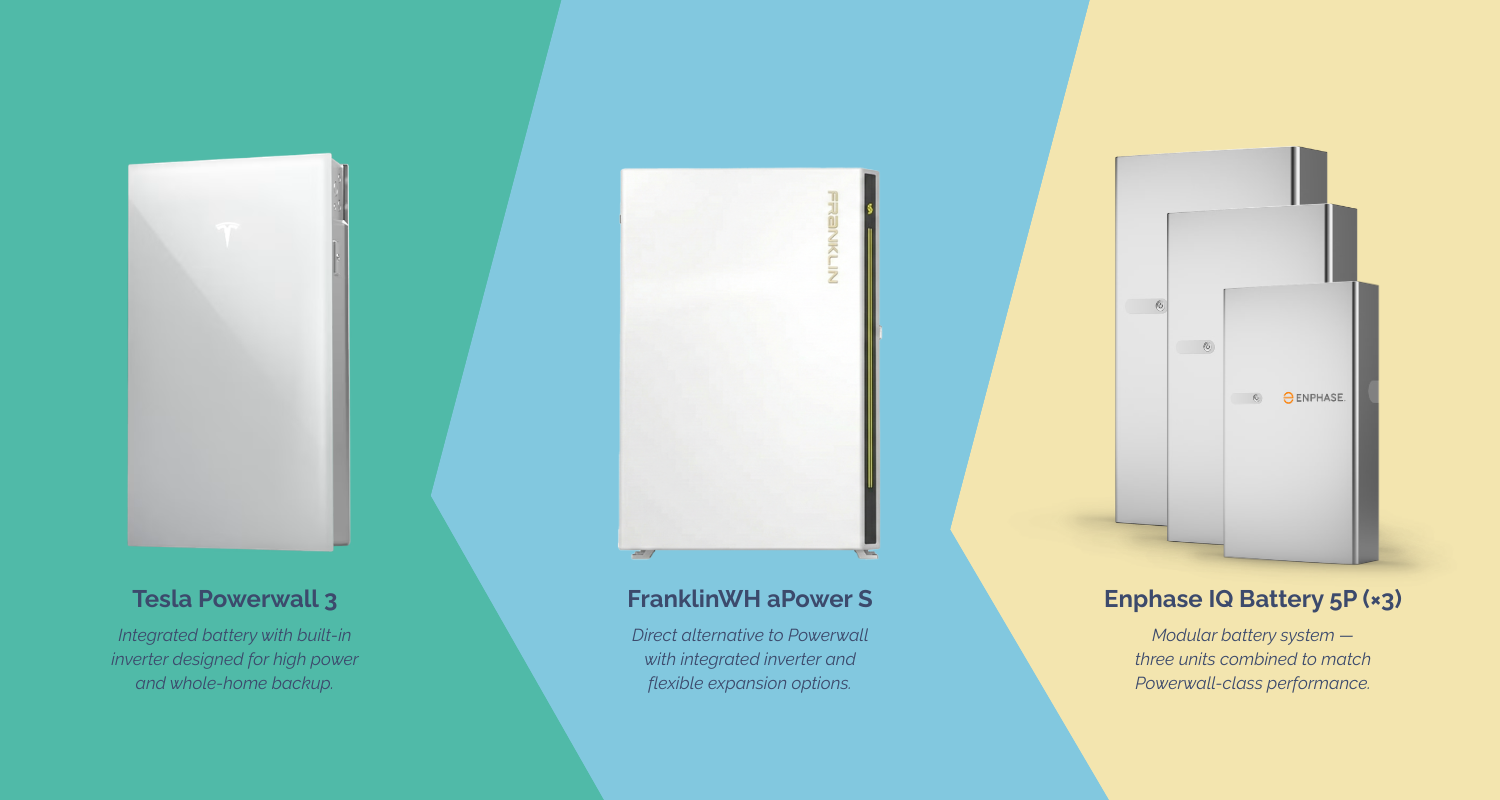
A battery energy storage system stores the excess energy your solar panels generate during the day so you can use it at night to charge your EV. The Tesla Powerwall 3 (~$14,000 installed) can back up your entire home with a single unit, featuring a built-in hybrid inverter and safer lithium iron phosphate (LFP) battery chemistry. Alternatives include the Enphase IQ Battery 5P (~$11,500 for first unit) and the FranklinWH aPower S, both of which offer modular expandability.
Benefits of Charging Your EV at Home with Solar
Below, we’ll explore how solar energy reduces your charging costs, minimizes your carbon footprint, and gives you true energy independence.
Home Solar: Still the Cheapest Way to Power a Car in 2026
Charging your EV at home with solar power remains the most cost-effective method available. The levelized cost of solar energy for residential systems in Florida is approximately $0.06 per kWh—significantly less than grid electricity or public chargers. Here’s how the costs compare in 2026:
| Charging Method | Cost per kWh | Annual Cost (13,500 miles) |
| Home Solar | $0.06 | ~$243 |
| Home Grid Power (Florida avg.) | $0.15 – $0.16 | ~$628 |
| Public Level 2 Charger | $0.25 – $0.45 | ~$1,418 |
| Public DC Fast Charger | $0.40 – $0.60 | ~$2,025 |
| Gasoline (13,500 miles) | — | ~$1,700 |
Solar energy is 60–75% cheaper than grid electricity and far cheaper than any other way to fuel your vehicle.
Solar is the Cleanest Way to Charge an EV
Charging your EV with solar energy ensures your driving is virtually carbon-free. Here’s a comparison of the environmental impact:
| Charging Method | CO2 Emissions (lbs per Year) |
| Home Solar | ~320 |
| Home Grid Power | ~1,840 |
| Public EV Charger | ~1,840 |
| Gasoline (13,500 miles) | ~8,135 |
Become Energy Independent
Energy independence is one of the most compelling reasons to pair your EV charger with solar panels. Installing a solar system locks in your electricity costs for 25 years. This long-term stability is especially valuable given that Florida electricity rates have been climbing steadily—from about $0.12/kWh a few years ago to $0.15–$0.16/kWh in 2026.
Hurricane Resilience: Solar + Battery + EV
For Florida homeowners, there’s an added benefit that’s hard to put a price on: hurricane resilience. When a major storm knocks out the grid—sometimes for days or even weeks—a solar-plus-battery system keeps your lights on and your essential appliances running. Add in an EV with bidirectional charging capability (more on that below), and you have a massive energy reserve that can power your home for days.
Convenience of Charging EV at Home
Range anxiety remains a common concern among potential EV owners, but a home charging station eliminates that worry entirely. Installing a solar-powered EV charging station means waking up every morning to a fully charged vehicle without ever visiting a gas station or waiting at a public charger.
Modern solar systems and EV chargers integrate seamlessly with smart home technology, allowing you to monitor and optimize your energy usage from your phone.
Smart Charging: Maximize Your Solar Self-Consumption
One of the most important developments in solar EV charging is smart charging—the ability to automatically schedule and adjust your EV’s charging to align with peak solar production. This is especially beneficial in areas like GRU and JEA service territories in Florida, where favorable net metering policies are no longer available.
How Smart Charging Works
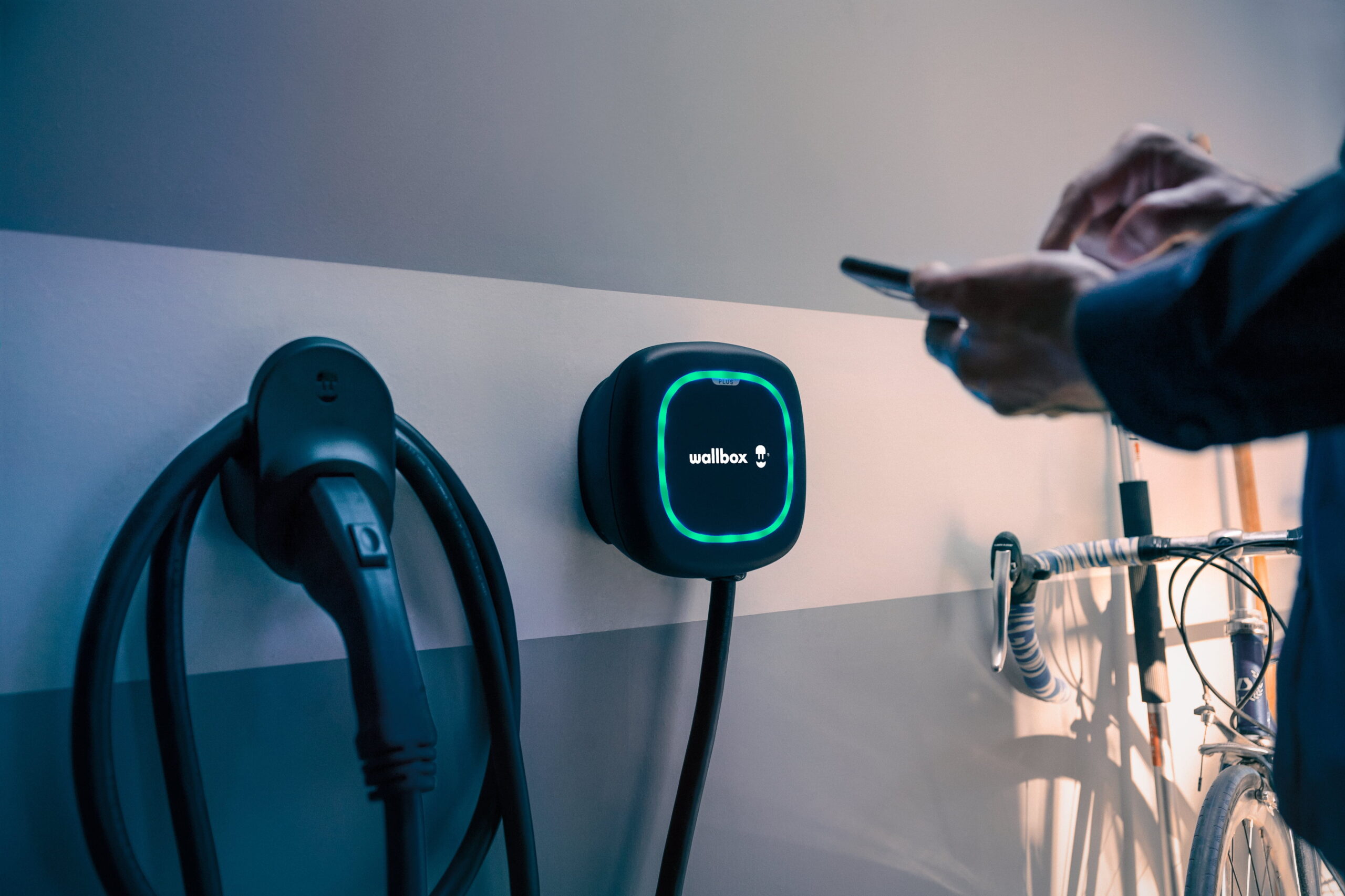
Smart EV chargers (like the Emporia Pro or ChargePoint Home Flex) connect to your home’s Wi-Fi and can be programmed or automated to:
- Charge during peak solar hours: automatically begin charging when your panels are producing the most energy (typically 10am–3pm).
- Respond to real-time solar production: some systems (like Emporia’s Vue energy monitor paired with their charger) adjust the charging rate based on how much excess solar energy is available at that moment.
- Optimize for time-of-use rates: if your utility charges more during peak hours, a smart charger can shift your charging to cheaper off-peak times.
- Load balancing: prevent your home from exceeding its electrical panel capacity by dynamically sharing power between your EV charger and other household loads.
Bidirectional Charging: Power Your Home with Your EV Battery
One of the biggest developments since our original guide is that bidirectional EV charging is now commercially available. Vehicle-to-Home (V2H) technology lets you use your EV’s battery to power your home during grid outages or peak demand periods. What was once a “future technology” is now a product you can buy and install today.
V2H Vehicles and Chargers Available in 2026
Several automakers now offer vehicles with built-in bidirectional charging support:
| Vehicle | V2H Power | Notes |
| Ford F-150 Lightning | 9.6 kW | Pro Power Onboard + Charge Station Pro required |
| GM EVs (Equinox EV, Blazer EV, Silverado EV) | Up to 10.2 kW | Via GM Energy PowerShift system |
| Tesla Cybertruck | 11.5 kW | Powershare feature built-in |
| Kia EV6 / EV9 | 3.6 kW V2L | V2H with compatible third-party charger |
| Hyundai Ioniq 5 / Ioniq 6 | 3.6 kW V2L | Expanding V2H compatibility |
| Nissan LEAF (2022+) | Up to 6 kW | CHAdeMO-based V2H |
V2H-capable vehicles as of early 2026. Power output and charger requirements vary by model.
On the charger side, several options are now available or launching in 2026:
- Ford Charge Station Pro: $12,000–$15,000 complete system (Ford vehicles only)
- GM Energy PowerShift: $7,299 with home battery hub (GM vehicles only)
- Emporia V2X: ~$2,500 estimated (works with multiple CCS-compatible EVs)
- Enphase Bidirectional Charger: IQ8-based system launching in 2026
- SolarEdge V2X Charger: DC-coupled design launching in 2026
How Bidirectional Charging Works
Bidirectional EV chargers enable energy to flow both ways—charging your EV from the grid or solar panels, and when needed, drawing power from your EV to supply your home. Your home needs a transfer switch (like the Tesla Backup Gateway or Enphase IQ System Controller) to safely isolate from the grid during outages, creating a backup microgrid.
Benefits of Bidirectional Charging
The ability to use your EV as a home battery is a game-changer. The average EV battery holds 60–100 kWh—the equivalent of 5–8 Tesla Powerwalls. During a multi-day power outage after a hurricane, your EV can keep your home’s essential systems running while your solar panels recharge the vehicle during the day.
Challenges in Charging an EV with Solar
While charging your EV with solar power offers tremendous benefits, it’s important to be aware of the challenges. Understanding them will help you make smart decisions and get the most from your system.
Variability of Solar Power
Solar energy production fluctuates throughout the day and across seasons. Your panels produce the most energy midday and less in the morning, evening, and on cloudy days. This means your solar production may not always match your EV’s charging demand in real time.
The solution? A combination of battery storage (to bank daytime energy for nighttime charging) and smart charging (to shift your EV’s charging to peak solar hours). With a properly designed system, this mismatch is easily managed.
System Efficiency: Finding a Good Contractor
The efficiency of your solar EV charging setup depends heavily on proper system design—especially in areas where net metering policies have been altered or eliminated, such as GRU and JEA service areas. In these regions, it’s important to size your system and battery backup correctly to maximize self-consumption without overproducing. Wasted overproduction means lost savings.
Customers in Duke Energy and FPL service areas still benefit from net metering, which makes battery storage less critical (though still valuable for backup). Either way, an efficient system design is essential to optimize your production-consumption ratio.
Upfront Cost of a Solar EV Charging System
The upfront cost to install an EV charger at home and pair it with a solar system can be significant. However, it’s important to focus on the long-term payback. Even without the federal solar tax credit (which expired at the end of 2025—see below), solar still pays for itself through electricity savings alone in most cases.
PPM Solar also offers low-interest financing through partnerships with banks that fund solar projects. In many cases, your monthly loan payment will be lower than your current electricity bill, and the average payback period in Florida is 6–8 years.
Integrating Solar Panels with an EV Charger: How It Works
Integrating solar panels with an EV charging station involves a few key components working together. Below, we’ll walk through the process using two popular EVs: the Tesla Model 3 and the Hyundai Ioniq 5.
Tesla Model 3 Charging Setup
Components Needed:
- Solar Panels: For a Tesla Model 3, you’ll need enough panels to generate around 4,000 kWh per year for EV charging alone. The number of panels varies based on panel output and your home’s overall energy consumption.
- Inverter: Tesla’s Powerwall 3 includes a built-in hybrid inverter, simplifying the setup by converting DC power from the solar panels to AC power for home use and EV charging.
- Level 2 Charger: Tesla Universal Wall Connector (240V, $595) – A Level 2 charger can fully charge a Tesla Model 3 in about 6–8 hours. The Universal Wall Connector now works with all EVs, not just Teslas.
- Battery Storage (Optional but Recommended): Tesla Powerwall 3 (~$14,000 installed) stores excess solar energy for nighttime charging and provides whole-home backup during outages.
How It Works:
- Daytime Charging: Solar panels generate electricity, which the inverter converts to AC power. This charges your Tesla Model 3 through the Wall Connector. Excess energy is stored in the Powerwall 3.
- Nighttime Charging: The Powerwall 3 discharges stored solar energy to continue charging your car overnight—no grid power needed.
Hyundai Ioniq 5 Charging Setup
Components Needed:
- Solar Panels: Similar to the Tesla setup, you’ll need a solar array that generates around 4,000 kWh per year for EV charging.
- Inverter: A standard solar inverter converts DC solar power to AC for household use and EV charging. If you add an Enphase IQ Battery 5P, the system includes microinverters for each panel.
- Level 2 Charger: The Ioniq 5 works with any J1772 or NACS-compatible Level 2 charger. Top choices include the ChargePoint Home Flex ($549) and Emporia Classic ($429).
- Battery Storage (Optional but Recommended): The Enphase IQ Battery 5P (~$11,500 for first unit) or Tesla Powerwall 3 stores excess solar energy. The Ioniq 5 also has built-in V2L (vehicle-to-load) capability for powering appliances directly.
How It Works:
- Daytime Charging: Solar panels generate electricity that the inverter converts to AC power, which charges your Ioniq 5 through the Level 2 charger.
- Nighttime Charging: The battery storage system provides stored solar energy for overnight charging, minimizing grid draw.
Both setups require solar panels, an inverter, and a Level 2 charger. Battery storage is a recommended addition for increased efficiency, energy independence, and backup power. PPM Solar can design a system tailored to your specific vehicle and home.
Calculating Power Needs and Cost of Pairing an EV with Solar
When planning to charge your EV with solar energy, it’s essential to understand your vehicle’s energy consumption and how to size your solar system correctly. Whether you’re buying an EV first or already have a solar system, contact us for a free assessment to determine how many solar panels you’ll need.
EV Energy Consumption
Electric vehicles vary in energy consumption depending on the model, driving habits, and climate. For example:
- A Tesla Model 3 averages about 3.3 miles per kWh
- A Tesla Model Y averages about 3.0 miles per kWh
- A Hyundai Ioniq 5 averages about 3.2 miles per kWh
- A Ford F-150 Lightning averages about 2.1 miles per kWh
- A Chevy Equinox EV averages about 3.4 miles per kWh
Required Solar Capacity
Let’s use the Tesla Model 3 as an example: The average American drives about 13,500 miles annually. At 3.3 miles per kWh, that’s roughly 4,090 kWh of electricity needed each year to charge the vehicle.
Solar Panel Requirements
Using standard 400-watt solar panels that produce about 2 kWh per day in Florida’s sunny climate:
- Daily EV Usage: ~11.2 kWh per day (4,090 kWh ÷ 365 days)
- Number of Panels: About 6 panels dedicated to EV charging (11.2 kWh ÷ 2 kWh per panel ≈ 6 panels)
The required number of solar panels varies by vehicle. A more efficient Chevy Equinox EV might need only 5 panels, while a Ford F-150 Lightning could need 9 or more due to its higher energy consumption.
Cost Comparison: Solar vs. Grid Energy
Charging your EV with solar panels is both environmentally friendly and economically advantageous. The levelized cost of residential solar energy in Florida is around $0.06 per kWh, compared to the current grid rate of $0.15–$0.16 per kWh.
- Annual Charging Cost with Solar: At $0.06/kWh, charging a Tesla Model 3 costs about $245 per year (4,090 kWh × $0.06).
- Annual Charging Cost with Grid: At $0.16/kWh (Florida 2026 average), the same charging costs about $654 per year (4,090 kWh × $0.16).
- Annual Savings with Solar: About $409 per year on EV charging alone—and that’s before factoring in the savings on your household electricity.
When sizing your solar system, be sure to include your total household energy use in addition to EV charging. A well-designed system should cover everything under one roof.
Incentives and Tax Credits in 2026: What’s Still Available?
The incentive landscape for solar and EVs changed significantly in 2025, so it’s important to understand what’s still available and what has expired.
Federal Solar Tax Credit (ITC) — Expired
The federal Residential Clean Energy Credit, which provided a 30% tax credit on solar installations, is no longer available for systems installed after December 31, 2025. The “One Big Beautiful Bill Act,” signed into law on July 4, 2025, eliminated this credit ahead of its originally scheduled phase-down.
Federal EV Tax Credits — Expired
The $7,500 federal tax credit for new clean vehicles and the $4,000 credit for used EVs expired for purchases after September 30, 2025 under the same legislation. If you purchased a qualifying vehicle before that date, you may still claim the credit on your 2025 tax return.
EV Charger Installation Credit — Still Available Through June 30, 2026
The Alternative Fuel Vehicle Refueling Property Credit (Section 30C) is still available and covers 30% of EV charger installation costs, up to a maximum of $1,000. This credit applies to both the charger and the installation labor.
Florida Utility Rebates for Electric Cars and Chargers
While Florida doesn’t offer statewide EV incentives, several local utilities provide valuable rebates:
- Orlando Utilities Commission (OUC): $200 rebate for residential customers who purchase or lease an eligible new or used EV. Apply within six months of purchase.
- Kissimmee Utility Authority (KUA): $100 rebate for EV purchases. A licensed electrical contractor must carry out the installation.
- Jacksonville Electric Authority (JEA): Up to $300 for pre-wiring to support a Level 2 EV charger.
- Florida Power & Light (FPL): The EVolution Home program includes electrical upgrades and a Level 2 EV charger installation for a flat monthly fee of $31–$38, including ongoing maintenance.
- Duke Energy Florida: Check their website for current EV incentive programs, which are updated periodically.
Contact your local utility directly for the most current information on EV and solar incentive programs.
Step-by-Step Guide to Installing Solar for EV Charging
Here’s a straightforward process to get your solar EV charging system up and running:
1. Assess Your Energy Needs
Start by understanding how much energy your EV requires. Calculate your vehicle’s daily energy consumption and determine how many solar panels you’ll need. If you already have a solar system, you may only need to add a few panels and a charger. Consulting with a solar energy expert ensures accurate sizing tailored to your situation.
2. Choose a Trusted Installer
Look for a company with a proven track record in your area—one that has handled similar residential projects. A good installer will provide a customized proposal that accounts for your vehicle model, home size, battery needs, and overall energy consumption.
3. Installation Process
Once you’ve chosen your installer, the process typically includes:
- Site Assessment: The installer evaluates your roof condition, sun exposure, electrical panel, and other factors affecting performance.
- System Design: Based on the assessment, a solar system is designed to meet your home and EV energy needs.
- Permitting and Approval: Your installer handles all permits and approvals required by local authorities.
- Installation: Solar panels, inverter, battery storage (if included), and EV charging station are installed, followed by a final inspection.
4. Best Practices
Get the most out of your solar EV charging setup with these tips:
Conclusion: Is It Worth Charging Your EV with Solar Energy in 2026?
Absolutely—more than ever. Even without the federal tax credit, charging your EV with solar energy is 60–75% cheaper than grid power and saves over $1,400 per year compared to public fast charging. Solar panels last 25–30 years, locking in low energy costs and protecting you from rising electricity prices.
In 2026, the technology is better, the costs are lower, and new capabilities like bidirectional charging make the solar-plus-EV combination more valuable than ever. Add in Florida’s hurricane season and the peace of mind that comes with energy independence, and the case is clear.
PPM Solar is a certified solar and electrical contractor in Florida, serving the local market for over 17 years. We’re the most-reviewed local contractor with the highest customer ratings, dedicated to quality and reliability. Whether you need a new solar system, an EV charger installation, or a complete solar + storage + EV charging solution, we’ve got you covered.
Get a free quote for solar-powered EV charging →
Frequently Asked Questions
Is the federal solar tax credit still available in 2026?
No. The federal Residential Clean Energy Credit (30% ITC) expired for installations after December 31, 2025, following the passage of the One Big Beautiful Bill Act in July 2025. However, solar still makes strong financial sense in Florida—the combination of dropping equipment costs and rising electricity rates means a typical system pays for itself in 6–8 years through electricity savings alone.
Can charging an electric car with solar panels save money?
Yes, significant money. The levelized cost of residential solar energy is approximately $0.06 per kWh, compared to Florida’s average grid rate of $0.15–$0.16 per kWh. That’s a savings of about $400 per year on EV charging alone for a typical driver. Over 25 years, solar-powered EV charging can save you $10,000 or more compared to grid charging.
Can my EV power my house during an outage?
Yes—if your EV supports bidirectional charging (V2H). As of 2026, vehicles like the Ford F-150 Lightning, GM’s Ultium-platform EVs, Tesla Cybertruck, Kia EV6/EV9, and Hyundai Ioniq 5/6 all support some form of vehicle-to-home power. You’ll need a compatible bidirectional charger and a transfer switch.
Can I charge my EV directly from solar panels?
Technically possible, but not recommended. Solar panels generate DC electricity that must be converted to AC using an inverter before charging your EV. For best results, integrate your solar panels with an inverter, a smart Level 2 charger, and ideally a battery storage system.
How many solar panels do I need to charge an EV?
On average, 5–9 solar panels (400W each) dedicated to EV charging, depending on your vehicle’s efficiency and driving habits. A Tesla Model 3 driven 13,500 miles per year needs about 6 panels. A Ford F-150 Lightning may need 9 or more.
Can I still charge my EV efficiently with solar on cloudy days?
Yes. Solar panels still produce electricity on cloudy days at reduced capacity. Battery storage lets you use energy banked on sunny days. A well-designed solar-plus-storage system handles Florida’s weather without issues.
Is solar charging faster or slower than grid charging?
The speed is the same. Level 2 chargers operate at the same rate whether powered by solar or grid energy. With a properly sized system, solar charging is just as fast and reliable as grid charging.
What is the cheapest way to charge an electric car?
Home solar panels. At about $0.06 per kWh, solar is 60–75% cheaper than grid electricity and far cheaper than public charging. Once your panels are paid off, EV charging is essentially free.
How much does it cost to install a home EV charger in 2026?
The charger itself costs $280–$600. Installation adds $300–$800 depending on your electrical panel. The federal EV charger tax credit (up to $1,000) is still available for installations before June 30, 2026.
Can I charge my electric vehicle for free?
Essentially, yes. Once your solar panels are paid for, the electricity they generate has no additional cost—making EV charging free.
Can I use existing solar panels to charge my EV?
Yes, but you may need to add panels if your current system doesn’t generate enough for both home and EV needs. Adding a few panels is much cheaper than building a new system from scratch.
What are the maintenance requirements for a solar EV charging system?
Minimal. Periodic panel cleaning, inverter checks, and professional inspections every few years. These systems are designed for 25+ years of reliable, low-maintenance operation.