Warehouses and storage facilities have the space, the load profile, and the scale to make commercial solar installation one of the highest-returning capital investments available today. Yet most operators still treat electricity as a fixed cost rather than something that can be engineered and controlled.
Solar changes that. A properly designed system doesn’t just reduce utility bills — it gives operators predictability over one of their largest operating expenses for the next 25+ years.
For a typical 50,000 square-foot warehouse spending $6,000–$12,000 per month on electricity, a commercial solar panel system can reduce energy costs by 40–70%, with full payback in 4–7 years depending on utility rates, demand charges, and available incentives.
But under current federal policy, the window to lock in the strongest incentives is narrowing. Projects must begin construction by July 4, 2026, to preserve full ITC eligibility — making the timing of this decision just as important as the decision itself.
Why Warehouses Are Turning to Solar Now
Energy as a Controllable Operating Cost
In most warehouse operations, energy is one of the largest ongoing expenses — often $0.08–$0.15+ per square foot annually. Unlike labor or rent, it can be partially stabilized.
A properly designed commercial solar installation allows facilities to produce a portion of their own power on-site, reducing reliance on the grid during the most expensive hours. This shifts energy from a variable, utility-driven cost into something more predictable — and that predictability is where warehouse solar ROI starts to make real financial sense.
For operators managing tight margins, locking in a known energy cost for 25+ years while utility rates continue to climb is a meaningful competitive advantage.
Large Roofs and Aligned Load Profiles
Warehouses tend to check two important boxes for commercial solar panels:
- Large, unobstructed roof space (often 70–90% usable after setbacks and fire code)
- Consistent daytime energy usage that aligns directly with solar production
This combination makes warehouse solar installation more efficient compared to many other commercial buildings. Power generated during the day is typically consumed immediately on-site, which maximizes system economics and minimizes grid export.
Solar for storage facilities is especially effective in climate-controlled units, where daytime HVAC and refrigeration demand aligns closely with peak solar production.
The 2026 Incentive Deadline Is Driving Action
Current federal incentives — including a 30% Investment Tax Credit (ITC) — can dramatically reduce the effective cost of a commercial solar installation. But under the One Big Beautiful Bill Act (OBBBA), projects must begin construction by July 4, 2026, to preserve full eligibility.
For many operators, this doesn’t mean rushing into construction. It means evaluating feasibility now, understanding how to structure a project early, and securing safe harbor status to maintain flexibility on timing.
That’s a significant reason why commercial solar for warehouses is being evaluated now — even by companies that aren’t planning to build immediately.
How Warehouses and Storage Facilities Actually Use Energy
Before evaluating solar, it’s worth understanding where energy is really going inside a facility. For most operators, usage isn’t random — it’s consistent, predictable, and heavily tied to daytime operations. That’s exactly what makes commercial solar panels a strong fit when designed around actual consumption patterns.
Lighting and Large Interior Loads
Warehouses rely on extensive lighting across large square footage — often running for long hours or continuously. High-bay fixtures, aisle lighting, and exterior security lighting all contribute. Even with LED upgrades, the scale of the space means lighting remains a meaningful portion of total warehouse energy usage — typically 15–25% of the total bill.
This is one of the most straightforward loads where solar offsets consumption directly during operating hours.
HVAC and Climate-Controlled Storage
Cold storage and climate-controlled facilities are in a completely different category when it comes to energy demand:
- Refrigeration systems run continuously, often consuming 50–70% of total facility energy
- HVAC systems work harder to maintain stable conditions, especially in Florida’s climate
- Temperature-sensitive storage (pharmaceuticals, food, wine) requires zero fluctuation
For these facilities, energy isn’t just an expense — it’s a core operational requirement. Annual electricity costs for a 100,000 sqft refrigerated warehouse can exceed $200,000–$350,000, making commercial solar installation especially impactful.
For operators of refrigerated warehouses, food storage, pharmaceuticals, or climate-controlled self-storage, this is often where the strongest warehouse solar ROI is found.
Security, Access Systems, and 24/7 Baseline Loads
Even outside of active operations, warehouses don’t turn off. Security systems, surveillance cameras, gate access controls, and network infrastructure create a constant baseline load that runs 24/7. While solar primarily offsets daytime usage, reducing that daytime portion still meaningfully lowers total grid dependence and utility costs over time.
EV Charging and Future Load Growth
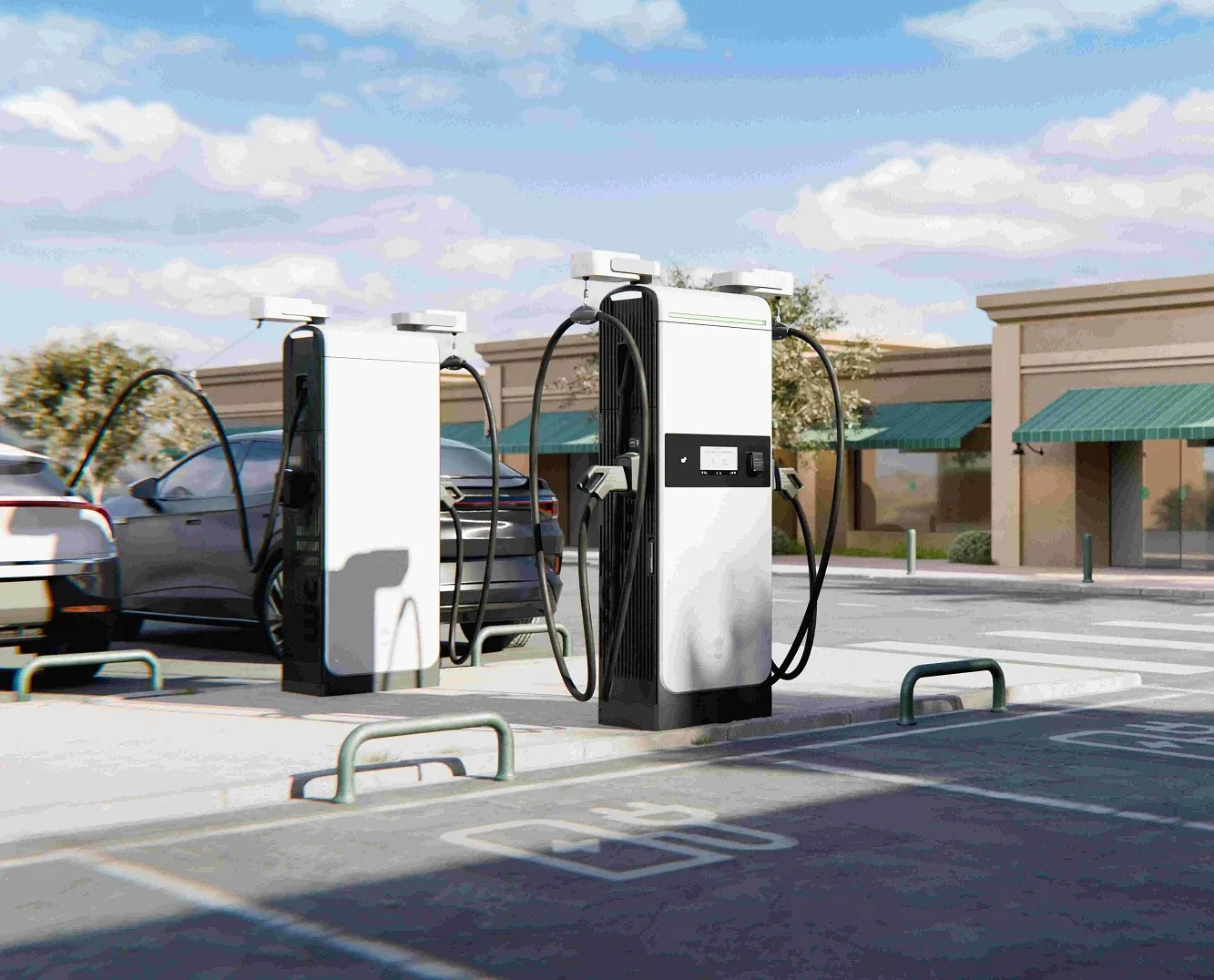
Energy demand in warehouses is increasing. More facilities are adding EV fleet charging, tenant charging infrastructure, and electrified equipment. Integrating a commercial solar panel system early helps facilities absorb that growth without fully passing it through as higher utility costs — a forward-looking strategy that many operators overlook.
Where Solar Impacts Warehouse Economics
Most discussions around solar stop at “it reduces your bill.” For warehouse and storage operators, that’s too simplistic — and it misses where the real value comes from.
Reducing Daytime Electricity Costs
At the most basic level, solar offsets electricity that would otherwise be purchased from the grid at $0.10–$0.14+/kWh (typical commercial rates in Florida, trending upward 3–5% annually).
For warehouses, this is especially effective because most energy consumption occurs during daylight hours when solar production peaks. Generated energy is used immediately on-site rather than exported, which maximizes the financial return per kWh produced.
In practical terms, commercial solar for warehouses converts a portion of your electricity from a variable, utility-priced expense into a fixed, self-generated resource with a known cost for 25+ years.
Lowering Demand Charges — Where Most Savings Are Missed
For many warehouse operators, demand charges — not energy usage — are the largest driver of electricity costs. And this is the area that most commercial solar guides completely overlook.
Utilities like Duke Energy charge based on the highest 15-minute peak demand (in kW) during each billing cycle — not just total kWh consumed. A single spike from compressors starting up, HVAC cycling, or equipment running simultaneously can set your demand charge for the entire month.
By generating power during peak hours, a warehouse solar installation can:
- Reduce the facility’s maximum grid draw during peak periods
- Lower billed demand (kW), which directly reduces demand charges
- Deliver savings that aren’t visible in simple kWh-based payback models
For facilities with significant mechanical loads — especially cold storage and climate-controlled warehouses — demand charge reduction can account for 30–50% of total solar savings. Properly accounting for this is often the difference between a mediocre project and a strong one.
What a Typical Warehouse Solar Investment Looks Like
Commercial solar panel costs vary by system size, complexity, and equipment selection, but here are realistic ranges for warehouse projects in 2026:
| Warehouse Size | Typical System Size | Installed Cost (Pre-Incentive) | Estimated Annual Savings |
| 10,000–20,000 sqft | 30–75 kW | $90,000–$250,000 | $8,000–$20,000/yr |
| 20,000–50,000 sqft | 75–200 kW | $225,000–$600,000 | $20,000–$55,000/yr |
| 50,000–100,000 sqft | 200–500 kW | $550,000–$1.4M | $50,000–$120,000/yr |
| 100,000–250,000 sqft | 500 kW–1.5 MW | $1.2M–$3.5M | $110,000–$300,000/yr |
| 250,000+ sqft | 1.5–3+ MW | $3M–$7M+ | $250,000–$550,000+/yr |
💡 Costs shown are pre-incentive. With the 30% ITC + bonus depreciation, effective cost is typically 45–60% lower than listed. Actual savings depend on utility rate, demand charges, system design, and consumption profile.
Payback Period and Long-Term ROI
For most warehouse solar projects, the financial profile looks like this:
- 4–7 years Simple payback (after ITC and depreciation, many cash-purchase projects see payback in 3–5 years)
- 3–6× the initial investment 25-year net savings
- 15–30%+ Internal rate of return (IRR) depending on utility rates and demand charge structure
For comparison: leaving $1M in a savings account at 4% yields $40K/year. The same $1M invested in a warehouse solar installation can yield $80K–$150K+ in annual energy savings — a significantly higher and more predictable return.
Long-Term Cost Stability vs. Utility Volatility
Utility rates are not static — and for most operators, they are moving in one direction. Florida commercial electricity rates have increased an average of 3–5% annually over the past decade, and rate pressure is accelerating with grid infrastructure costs.
Solar introduces a fundamentally different cost structure: predictable long-term production with reduced exposure to rate increases. For operators managing multiple facilities or long-term leases, this stability becomes part of broader financial planning rather than a line item you react to.
Portfolio-Level Impact for Multi-Site Operators
For companies operating across multiple warehouses or storage locations, commercial solar is not just a single-site decision — it becomes a portfolio strategy.
Once a model is validated on one facility, it can be replicated across similar sites with increasingly efficient design, engineering, and procurement. This is where commercial solar for warehouses scales beyond a project and starts influencing overall operating margins across an entire portfolio.
What Most “Warehouse Solar” Guides Get Wrong
Most content about commercial solar for warehouses makes it look simple — large roof, high usage, install panels, generate savings. But the gap between a generic guide and a real project is where the most expensive mistakes happen.
Roof Size ≠ System Size
Having a 100,000 sqft roof doesn’t mean you can install 100,000 sqft of panels. Structural capacity, fire code setbacks (typically 3–6 feet from edges and penetrations), mechanical equipment clearance, and roof condition all reduce usable area — often by 20–40%. In some cases, roofs that look ideal from satellite imagery can’t support the additional weight without structural reinforcement.
A proper commercial solar installation starts with a structural assessment and site survey, not a Google Earth screenshot.
kWh-Only ROI Models Miss the Biggest Savings
This is the most common and most costly mistake. Many solar proposals estimate savings based only on kWh offset — how much energy the system produces versus how much the facility uses.
But for warehouses, especially those on commercial demand tariffs, demand charges can represent 30–60% of the total electric bill. A system that reduces peak demand by even 20–30% can deliver savings that dwarf the kWh offset alone. If your solar proposal doesn’t model demand charge reduction separately, the ROI is almost certainly understated.
No Two Warehouses Are the Same
A logistics hub, a self-storage site, and a refrigerated warehouse all behave completely differently in terms of load profile, peak demand patterns, and electrical infrastructure. A self-storage facility may have distributed buildings with multiple meters. A cold storage facility may have 24/7 baseload that’s 3× higher than a standard warehouse of the same size.
These differences directly impact system design, interconnection, and warehouse solar ROI. That’s why feasibility comes first — understanding what can be installed, how it will connect, and how the facility actually uses energy. Without that, projections are just assumptions.
Ignoring Interconnection and Utility Limits
Even when a roof can support a large system, the local utility may limit how much solar can be interconnected. Grid capacity constraints, transformer limitations, and net metering policies all affect how large a system can practically be — and how exports are compensated. A strong warehouse solar installation is engineered around these real-world constraints, not idealized models.
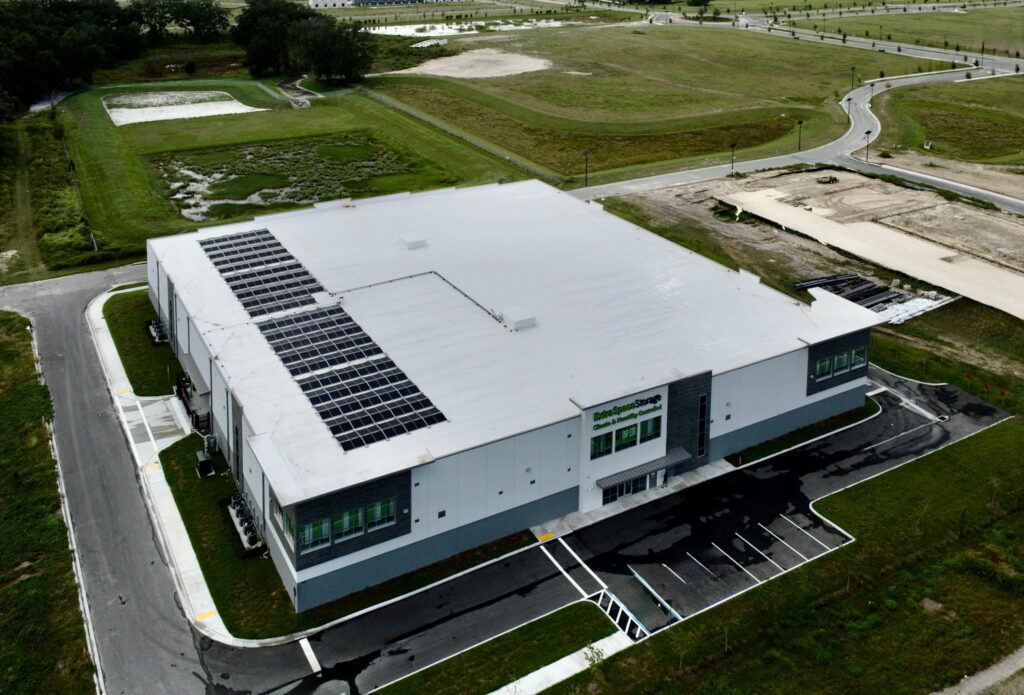
Case Study — ExtraSpace Storage, Twisted Oaks, FL
This project reflects how commercial solar installation works in a real-world self-storage facility — not in theory, but in a way that aligns with actual energy usage, site constraints, and long-term performance.
Project Overview
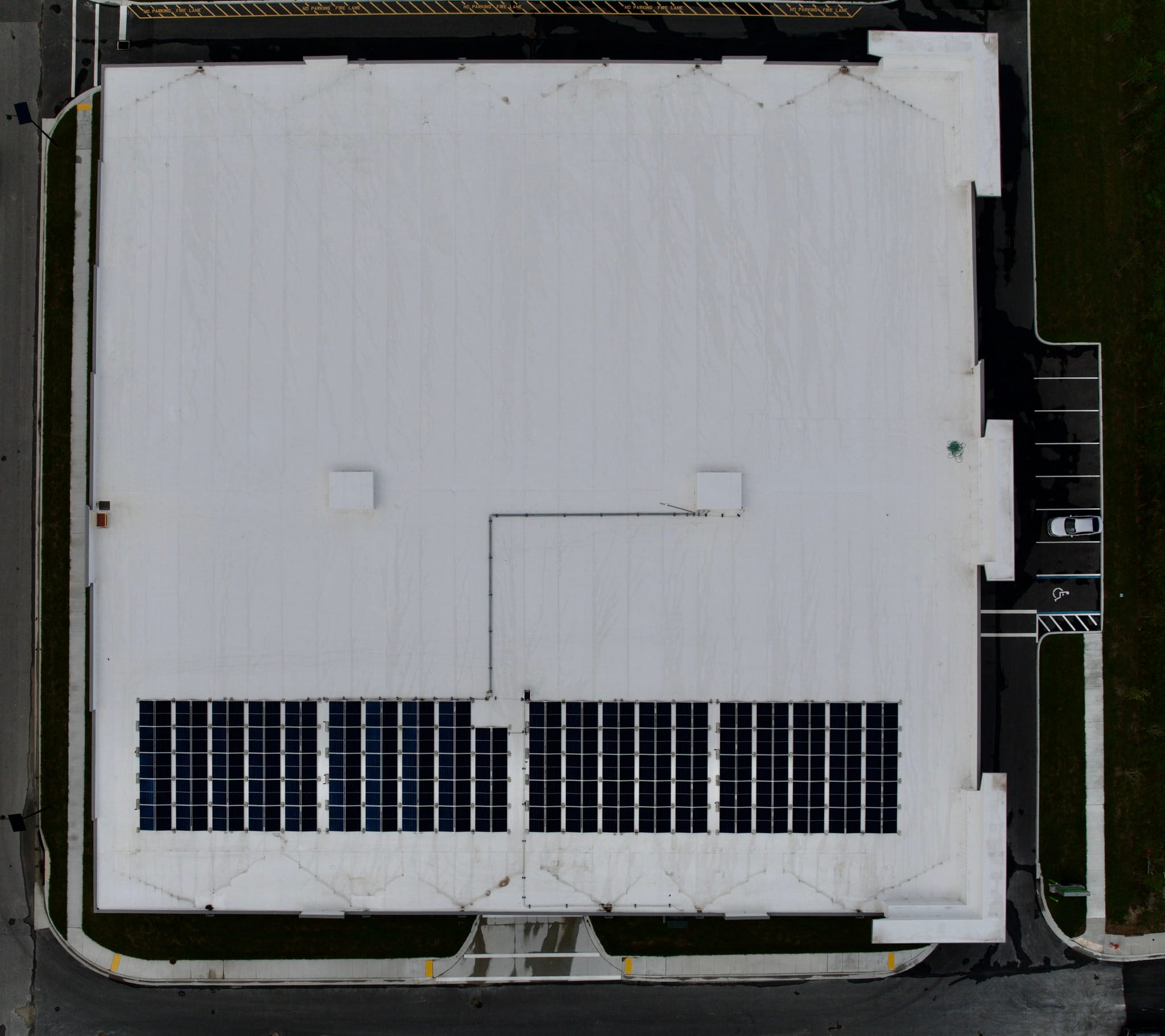
At the Twisted Oaks location in Wildwood, FL — within Duke Energy’s commercial service territory — PPM Solar designed and installed a commercial rooftop solar system tailored to a multi-building storage layout.
The system includes:
- 117 kW DC solar PV system
- 266 high-efficiency Boviet solar modules
- SMA commercial inverters (480V configuration)
- 3 Tesla Powerwall 3 units (40.5 kWh total storage)
- Automatic Transfer Switch (ATS) for seamless backup power during grid outages
- Flat roof installation with 100% solar access
The facility has an annual energy consumption of approximately 261,760 kWh, and the system was designed to offset a significant portion of that load directly on-site.
🔋 The ATS is a critical component for storage facilities: it enables the Powerwall system to automatically provide backup power during grid outages, keeping security systems, surveillance cameras, access controls, and climate systems operational — essential for protecting tenants’ stored property.
System Performance and Energy Impact
The system is expected to generate approximately 164,500+ kWh annually, achieving:
~62.9% total energy offset
~73.8% direct on-site solar consumption
~19.8% export to the grid
This is a strong example of how a well-aligned warehouse solar installation maximizes on-site usage — which is critical for achieving solid warehouse solar ROI. Instead of overproducing and relying heavily on grid exports, the system is designed to match the facility’s daytime load profile, improving overall efficiency and financial performance.
Storage Integration and Load Optimization
The battery storage system is configured to:
- Increase self-consumption of solar energy
- Shift excess generation into usable energy later in the day
- Reduce reliance on grid energy during higher-cost periods
- Provide backup power during outages via the ATS, protecting security, access, and climate systems
While storage accounts for a smaller portion of total energy flow (~3–4%), it plays a strategic role in optimizing how energy is used and ensuring operational continuity — especially relevant for solar + storage for warehouses with variable daily demand and uptime requirements.
Design Considerations for Storage Facilities
Self-storage facilities introduce specific challenges that differ from traditional warehouses: distributed building layouts, multiple electrical segments, and variable tenant usage patterns. At Twisted Oaks, the system was engineered to work within these constraints while maintaining strong performance and operational simplicity.
What This Means for Similar Facilities
This project demonstrates several important principles for operators evaluating commercial solar for warehouses and storage facilities:
- High offset percentages (60%+) are achievable when systems are aligned with actual usage patterns
- Storage enhances performance and provides operational resilience, but should be applied strategically based on tariff structure
- Multi-building layouts can be effectively integrated into a single energy solution
- Backup power via ATS adds real operational value — especially for facilities where security and climate control are non-negotiable
Financing Your Warehouse Solar Project
One of the most common barriers to commercial solar installation isn’t whether it makes financial sense — it’s how to structure the upfront investment. The two primary paths for warehouse solar projects are cash purchase and solar lease, each with distinct advantages.
Cash Purchase
Purchasing a system outright delivers the strongest long-term returns:
- Full ownership of the system and all energy it produces
- Claim the 30%+ ITC directly, plus 100% bonus depreciation (MACRS) in year one
- Fastest payback period (typically 3–5 years after incentives)
- Maximum 25-year savings — often 3–6× the initial investment
- No ongoing payments, lease terms, or escalators
For taxable entities with available capital, cash purchase is the most financially advantageous option. The combination of the ITC and accelerated depreciation can offset 45–60% of total project cost in the first year alone.
Solar Lease
For operators who prefer to preserve capital or don’t have sufficient tax liability to fully utilize the ITC, a solar lease offers a way to go solar with minimal upfront cost:
- Low or no upfront investment
- Immediate energy savings from day one (lease payment is typically less than current utility cost)
- Predictable monthly payments with known escalation rates
- Maintenance and monitoring typically included
- Option to purchase the system at end of lease term
A solar lease makes commercial solar for warehouses accessible to operators who want savings without large capital outlay — including nonprofits and entities that can’t directly use tax credits.
💡 Which option is right for your facility depends on your tax situation, capital strategy, and operational preferences. A detailed financial analysis comparing both scenarios — modeled against your actual utility data — is the best way to evaluate.
Incentives, Tax Credits, and the 2026 Safe Harbor Deadline
Federal incentives for commercial solar projects are substantial — but the rules have changed significantly under the One Big Beautiful Bill Act (OBBBA). Understanding the current landscape is critical for any warehouse operator evaluating a project.
The Federal Investment Tax Credit (ITC)
Commercial solar projects currently qualify for a 30% federal Investment Tax Credit, with potential bonus adders:
- 30% of total project cost Base ITC:
- +10% Domestic Content Bonus (additional 10% for projects meeting domestic content requirements)
- +10% Energy Community Bonus (additional 10% for projects in qualifying energy communities)
- +10–20% Low-Income Community Bonus (additional 10–20% for qualifying low-income or affordable housing projects)
Combined, eligible projects can receive a commercial solar tax credit of 40–50%+ of total project cost.
Bonus Depreciation (MACRS)
In addition to the ITC, taxable entities can claim 100% bonus depreciation on the remaining depreciable basis in year one, using the Modified Accelerated Cost Recovery System (MACRS) 5-year schedule. For a $1M system with a 30% ITC:
- ITC: $300,000 (direct tax credit)
- Depreciable basis: $850,000 (cost minus 50% of ITC)
- Year 1 depreciation deduction: $850,000 × your marginal tax rate
Together, the ITC and MACRS can effectively reduce the net cost of a commercial solar installation by 45–60% in the first year.
The July 4, 2026 Safe Harbor Deadline
Under the OBBBA, projects must begin construction by July 4, 2026, to preserve ITC eligibility beyond 2027. Here’s what that means in practice:
- Projects that begin construction by July 4, 2026 have up to four calendar years to complete (generally through December 31, 2030)
- Projects that do NOT begin construction by July 4, 2026 must be fully placed in service by December 31, 2027 to qualify — or they receive NO federal tax credit
- “Beginning construction” is now primarily established through the Physical Work Test — actual physical work of a significant nature (e.g., installing racking, mounting structures, or site preparation)
Important change: For projects larger than 1.5 MW AC, the previous “5% safe harbor” method (spending 5% of project costs on equipment) is no longer available under IRS Notice 2025-42. These projects must demonstrate construction has begun through the Physical Work Test. Projects of 1.5 MW AC or smaller may still use the 5% method, but planning for Physical Work Test compliance is recommended for all projects.
FEOC (Foreign Entity of Concern) Compliance
Starting in 2026, the OBBBA introduced Foreign Entity of Concern (FEOC) rules that affect which components qualify for ITC eligibility:
- Solar projects must meet a minimum threshold of non-FEOC component costs: 40% in 2026, increasing to 45% in 2027
- FEOC applies to entities owned, headquartered, or controlled in China, Russia, North Korea, and Iran
- This affects module, inverter, and battery sourcing — not just where components are assembled, but who controls the manufacturing entity
Working with a knowledgeable installer who tracks FEOC compliance in their supply chain is essential to preserving your commercial solar tax credit eligibility.
What This Means for Warehouse Operators
In practical terms, warehouse operators don’t need to rush construction — but they do need to:
- Begin project evaluation and feasibility analysis now (Q2 2026 or earlier)
- Secure safe harbor status by establishing construction activity before July 4, 2026
- Ensure equipment sourcing meets FEOC compliance thresholds
- Work with installers experienced in ITC documentation and safe harbor requirements
The penalty for missing these deadlines isn’t a reduced incentive — it’s potentially losing 30–50%+ of project cost savings entirely.
Sustainability, ESG, and the Business Case Beyond Savings
For many warehouse and logistics operators, solar isn’t just a financial decision — it’s increasingly a business requirement.
- Large logistics companies, 3PLs, and Fortune 500 tenants are setting Scope 2 emissions reduction targets that directly impact facility requirements
- Retailers and e-commerce companies are auditing supply chain sustainability, including warehouse energy sources
- LEED and green building certifications can increase property values and attract premium tenants
A 200 kW warehouse solar installation in Florida can offset approximately 200–250 metric tons of CO₂ annually — equivalent to taking 45–55 cars off the road each year. Over 25 years, that’s 5,000–6,000+ metric tons of avoided emissions.
For operators competing for institutional tenants or managing assets for REITs, commercial solar panels are becoming a baseline expectation rather than a differentiator. Having solar already installed positions your facility ahead of competitors who will be forced to add it later — at higher cost and under tighter timelines.
Why the Installer Matters as Much as the Equipment
In commercial solar installation, the difference between a strong project and a mediocre one often comes down to the process behind it — not just the panels on the roof.
PPM Solar approaches warehouse projects with an engineering-first process: starting with analysis of actual electricity bills, tariff structure (including demand charges), and load profile to determine how a system will perform in practice — not in a sales deck.
Key elements of PPM’s approach:
- Site-specific design around structural capacity, interconnection limits, and multi-building layouts common in storage facilities
- Full-scope execution by licensed in-house teams (no subcontractors) — design, permitting, installation, utility coordination, and commissioning
- Conservative production modeling using real consumption data for accurate warehouse solar ROI projections
- 17+ years of experience as a licensed solar and electrical contractor in Florida
- Optimization for high on-site consumption rather than overproduction and export
- Post-installation monitoring and long-term support
As a NABCEP-certified installer serving commercial facilities across Florida, PPM Solar has the technical depth to handle complex projects — from single-site warehouses to multi-location portfolio rollouts.
Conclusion
For warehouses and storage facilities, commercial solar installation is one of the most practical, high-return capital investments available today. With the right design, a system can offset 40–70% of energy usage, significantly reduce demand charges, and create long-term cost stability — across a single site or an entire portfolio.
The economics are clear: typical payback periods of 4–7 years, 25-year returns of 3–6× the investment, and protection against rising utility rates that show no signs of slowing. For climate-controlled and cold storage facilities, the numbers are even stronger.
But the window for the strongest incentives is narrowing. The July 4, 2026 safe harbor deadline means the time to evaluate is now — not when construction is ready, but when the project can be structured to preserve 30–50%+ in federal incentives.
The next step isn’t a proposal — it’s clarity on what’s possible for your specific facility.
Use our commercial solar calculator for a quick preliminary analysis:
- Estimated system size for your facility
- Project cost and after-incentive investment
- Available federal and state incentives
- Projected savings, payback period, and long-term ROI
👉 Calculate your savings
Frequently Asked Questions
How much does it cost to put solar on a warehouse?
Commercial solar panel costs for warehouses typically range from $2.50–$3.50 per watt installed, depending on system size, complexity, and equipment. A 200 kW system for a 50,000 sqft warehouse might cost $550,000–$700,000 before incentives. After the 30% ITC and bonus depreciation, the effective cost can drop by 45–60%. Contact PPM Solar for a preliminary estimate based on your facility’s actual specifications.
What is the ROI on warehouse solar panels?
Most warehouse solar installations see a simple payback of 4–7 years, with 25-year net savings of 3–6× the initial investment. Internal rates of return (IRR) typically range from 15–30%+, depending on utility rates, demand charge structure, and incentive utilization. The key is that ROI analysis must include demand charge reduction — not just kWh offset — to be accurate.
Can solar panels reduce demand charges for warehouses?
Yes, and this is often where the largest savings come from. By generating power during peak hours, a warehouse solar installation reduces the facility’s maximum grid draw, directly lowering billed demand (kW). For facilities with high mechanical loads like cold storage, demand charge reduction can account for 30–50% of total solar savings.
What is the 2026 solar tax credit deadline for commercial projects?
Under the One Big Beautiful Bill Act (OBBBA), commercial solar projects must begin construction by July 4, 2026, to preserve ITC eligibility beyond 2027. Projects that miss this deadline must be fully placed in service by December 31, 2027 — or they receive no federal tax credit. The IRS now primarily requires the Physical Work Test (actual construction activity) to establish “beginning of construction” for projects larger than 1.5 MW AC.
How long does it take to install solar on a warehouse?
Installation timelines vary by system size and complexity. A 100–200 kW system typically takes 1–3 weeks of on-site work, with minimal disruption to facility operations. The full project timeline — including design, permitting, and utility interconnection — is usually 3–6 months. For operators concerned about the July 2026 safe harbor deadline, starting the process in Q2 2026 or earlier is recommended.
Does warehouse solar work with battery storage?
Yes. Solar + storage for warehouses can further reduce demand charges, shift energy use to higher-value periods, and provide backup power for critical systems (security, refrigeration, access controls). Battery storage is most impactful for facilities with high demand charges, critical uptime requirements, or less favorable net metering structures. That said, storage should be evaluated based on actual tariff structure and operational needs — not added by default.