The 30% federal solar credit for businesses ends December 31, 2027. Your solar project needs to be placed in service by then.
Our commercial projects take about nine months from signed contract to completion. If you want the credit, the decision is this year, not next December.
- Licensed electrical and solar contractor since 2009, our own crews, same owners
- Serving businesses in Florida, North Carolina and South Carolina
- Honest numbers. If solar does not pay for your building, we say so.
Free commercial solar assessment
One call and a copy of your electric bill. You get real numbers: system size, the federal credit and depreciation, payback, and whether it pencils at all.
We call back within minutes during business hours, 9am to 5pm Eastern. No pressure, no lease pitch.
The credit, and why the real deadline is sooner than December
Section 48E of the tax code gives a business a federal tax credit worth 30% of a solar system’s cost. The 2025 budget law ended that credit for solar: unless a project had started construction by July 4, 2026, the system must be placed in service, meaning running with utility permission to operate, by December 31, 2027. After that date the credit for solar is zero. There is no step-down and no extension to wait for.
A commercial system is not a quick install. Design, structural review, permits, equipment lead times and the utility’s interconnection queue all run in sequence. On our projects that chain has typically taken about nine months from signed contract to completion, and longer for larger systems. That is why we tell clients the practical deadline is a signed contract by the end of March 2027, and earlier for larger systems.
Two things most competitors leave out. First, the same law restored 100% bonus depreciation for equipment acquired after January 19, 2025, so a taxable business can deduct most of the system’s cost (85% of it, since the depreciable basis is reduced by half the credit) in the year it goes into service. For many owners that is worth more than the credit itself. Second, battery storage is not subject to the 2027 cutoff: a battery keeps its own 30% credit after the solar credit ends.
- Jul 4, 2026Begin-construction safe harbor closed. Projects that met it have up to four years to finish; new projects do not.
- Now to Mar 2027Sign, design, permit, order equipment, file interconnection. At about nine months from contract to completion, this is the window in which a system can realistically be running by year end.
- Dec 31, 2027Last day a solar system can be placed in service and claim the 30% credit.
- 2028 onNo federal credit for solar. Battery storage still qualifies. Bonus depreciation and rate protection continue.
Fine print your CPA will ask about
Systems of 1 MW AC and above must meet prevailing-wage and apprenticeship rules to get 30% rather than 6%. Most commercial rooftops are well under that line.
Projects starting construction after 2025 must meet federal rules on foreign-sourced components. We specify equipment that complies and put the sourcing in the proposal.
Florida C-corporations add bonus depreciation back for state tax and deduct it over seven years. Florida has no personal income tax, so pass-through owners take the full federal benefit.
Sources: IRS Notice 2025-42; IRC §48E as amended by the One Big Beautiful Bill Act (2025). The credit, explained in full.
Your electric rate is going up, and the increases are already approved
In 2025 Florida regulators approved a multi-year base-rate settlement for Florida Power & Light worth roughly $7 billion through 2029, the largest rate case in the state’s history. Duke Energy Florida has its own increases in motion. Data-center load for AI was a central issue in the FPL case, and the regulators lowered the share of that risk the data centers carry, which moves more of it to the rest of the rate base.
Florida still has full net metering. FPL and Duke Energy Florida credit the solar you export at the retail rate, month to month, for systems up to 2 MW under Florida PSC Rule 25-6.065. The Carolinas no longer have that, and it is the reason a Florida system can be sized to the building’s full annual use without losing value on the power it sends out at midday.
Duke Energy Carolinas and Duke Energy Progress have raised rates in each of the last three years under their approved multi-year plans, and Duke Energy Carolinas has asked North Carolina regulators for a further 15% over two years starting in 2027, on top of fuel-cost increases that take effect in June 2026. Consumer advocates in both Carolinas are pushing for separate data-center rates for the same reason Florida’s are: new AI load is being added faster than generation.
None of that is a forecast. It is a rate schedule. A business that buys its power will pay more for it every year of the next five, and the increases are set by regulators it does not get to negotiate with.
A solar system changes the arithmetic. The power it produces costs the same in year twenty as in year one, because the cost was fixed the day the system was paid for. What you still buy from the utility gets more expensive; what you make does not.
What this means on a bill
A business paying $8,000 a month today at 4% annual increases pays about $9,700 a month in five years and $11,800 in ten. The same load with 60% offset by solar sees only the unoffset 40% rise.
Illustrative; your assessment uses your actual tariff and 12 months of bills. Sources: Florida PSC Docket No. 20250011-EI, FPL 2025 base-rate settlement ($945 million added for 2026, a further $705 million for 2027, term through 2029); North Carolina Utilities Commission Docket E-7, Sub 1329, Duke Energy Carolinas 2025 rate request (15.0% over two years).
Stop renting power. Own it.
Every kilowatt-hour you buy from the utility is rent: paid monthly, never finished, priced by someone else. A solar system you own is the opposite. It is an asset on your balance sheet, it depreciates on your tax return, and it produces at a fixed cost for 25 years or more.
That is why PPM does not sell leases or power-purchase agreements. A lease moves the credit, the depreciation and the asset to a finance company and leaves you with a 20-year escalating payment. If a lease is the right answer for a building, we will say so and point you to someone who sells them. For most profitable businesses with their own roof or land, ownership is the better deal by a wide margin, and we would rather build those.
Where demand charges are a large share of the bill, we size a battery with the system. Solar alone trims demand charges unreliably; a battery does it on purpose, and it keeps its own 30% federal credit after 2027. Before we assume any demand reduction, we build a comprehensive load profile and take the measurements needed to make that assumption an informed one.
Own versus lease, in one line each
Own: 30% credit, depreciation, fixed cost, asset is yours.
Lease or PPA: no credit, no depreciation, escalating payment, asset belongs to the lessor, buyout at their price.
Do nothing: approved rate increases, every year.
We are a licensed contractor, not a sales company
We started PPM in 2009 as electrical contractors who happened to believe in solar. Seventeen years later that is still what we are. The people who design your system and the crews who put it on your roof work for us, under our Florida electrical and solar licenses, and they will be the same people who answer the phone in year twelve when you have a question.
We have told clients not to buy when the numbers did not work for their building. We would rather lose a sale than install a system that disappoints, because every one of our commercial jobs is a reference, and we have been in the same town with the same phone number long enough that it matters.
The owners, Power Production Management, Inc.
Commercial work you can check
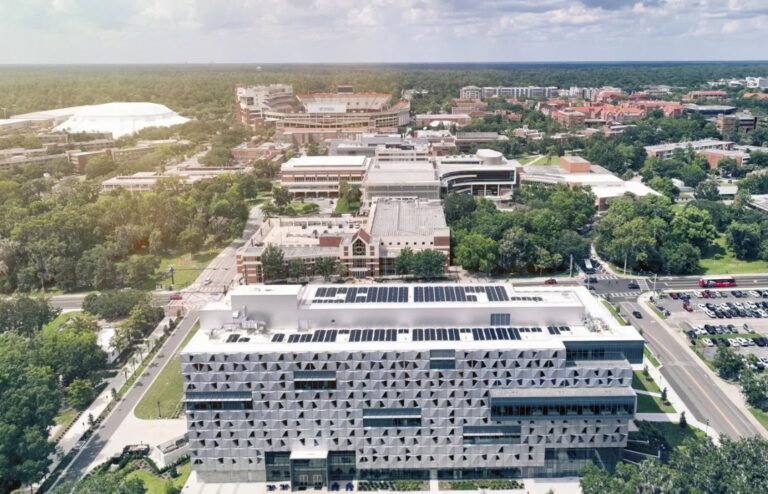
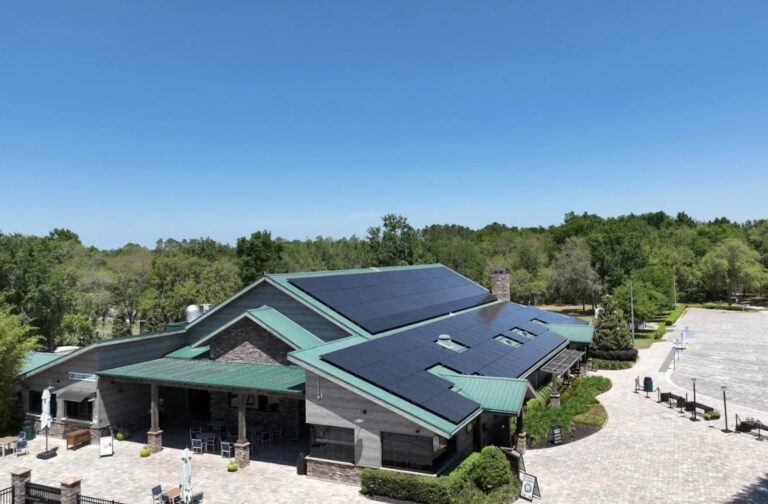
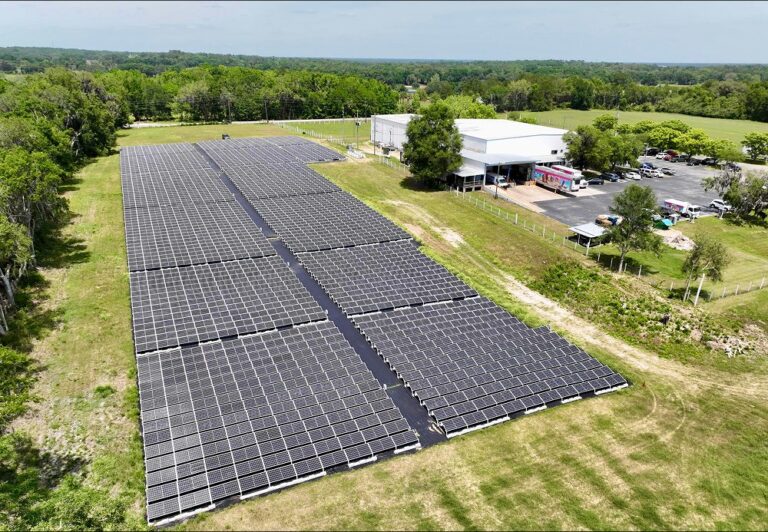
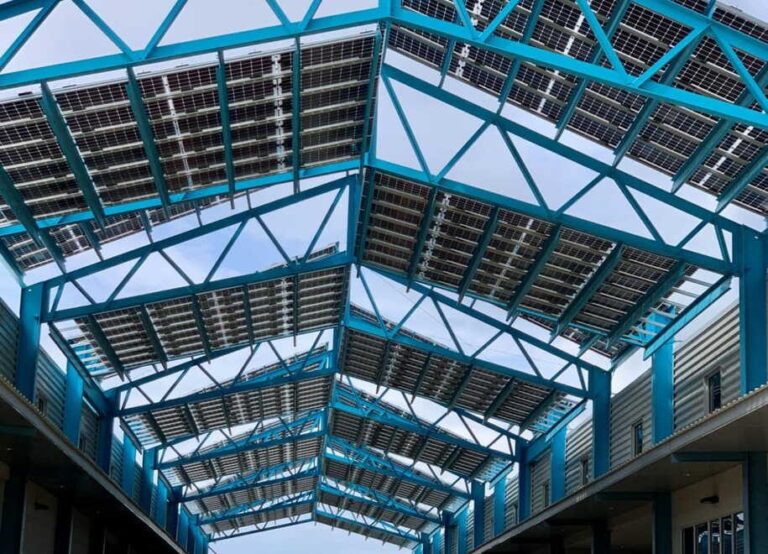
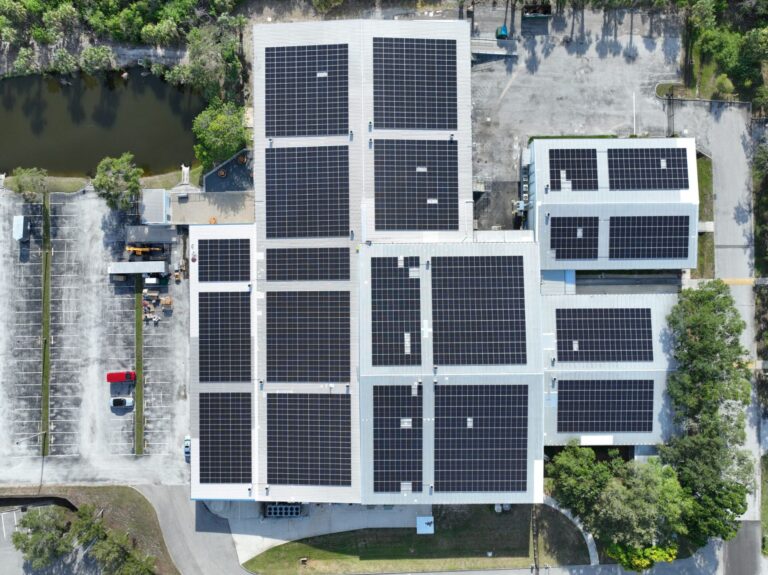
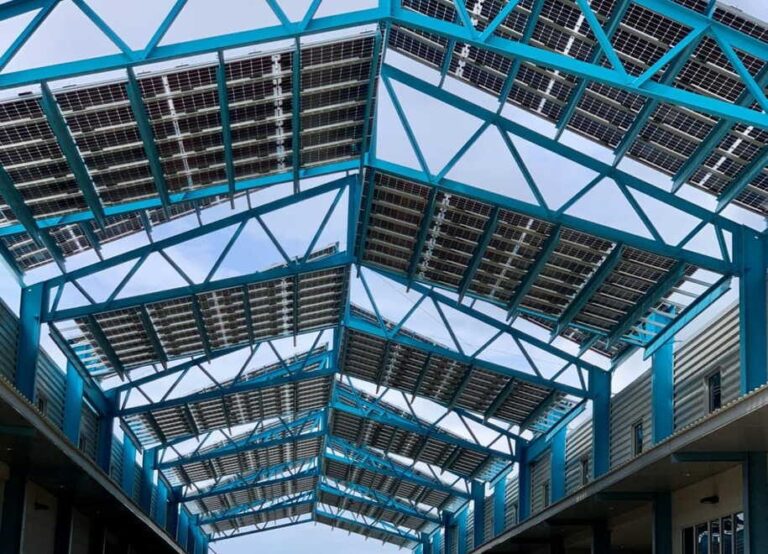
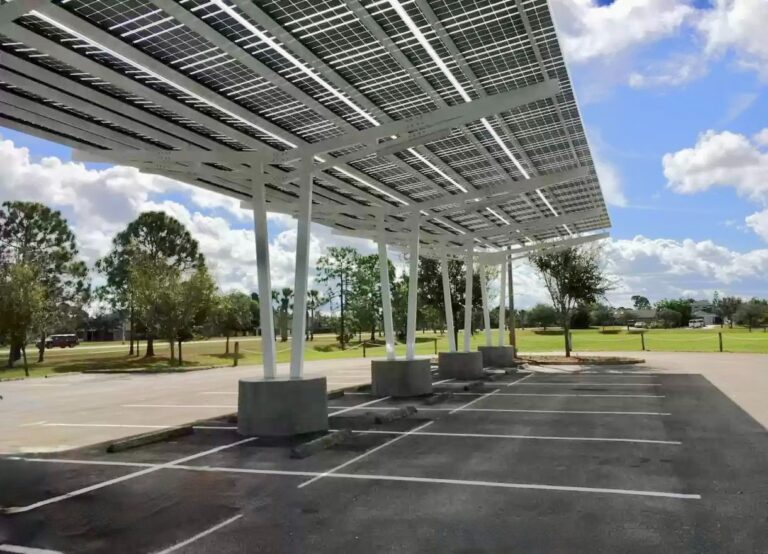
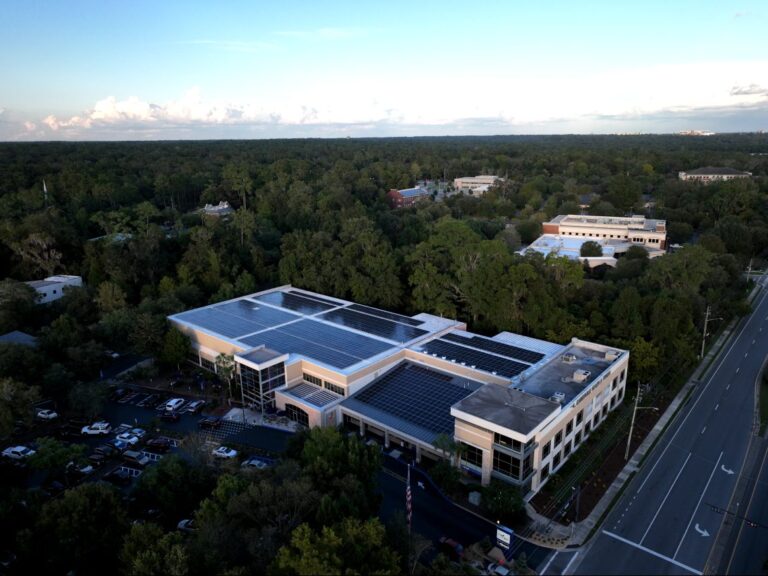
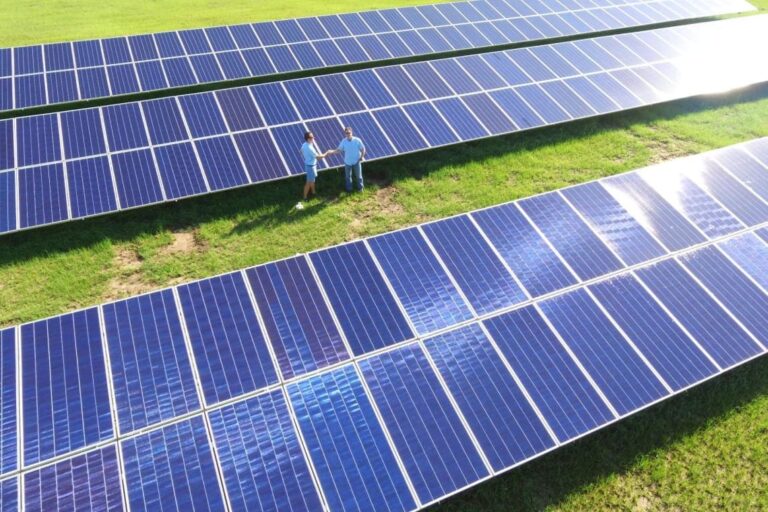
A sample of the commercial systems PPM has designed and built. Several of these clients have been with us for a decade.

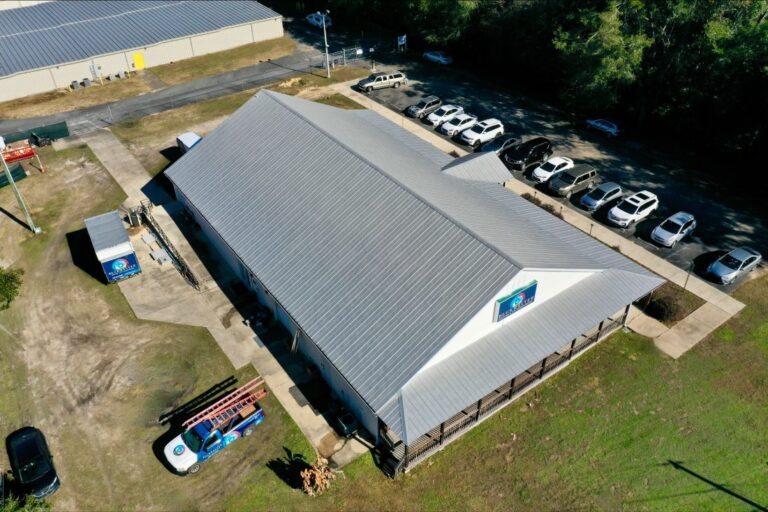
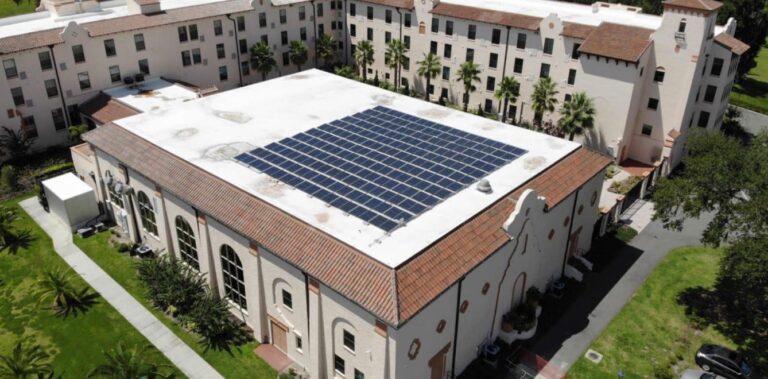
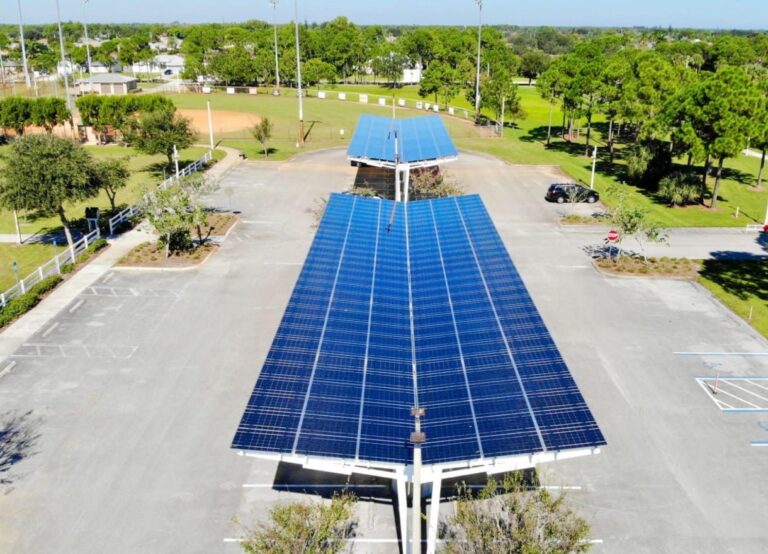
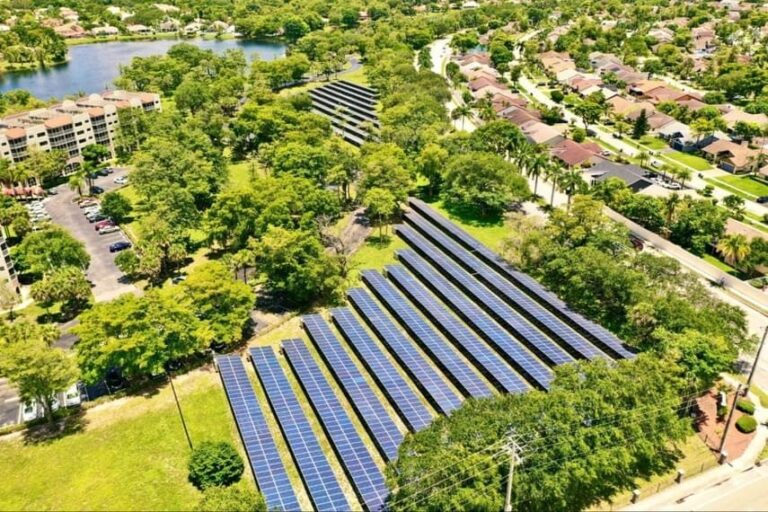
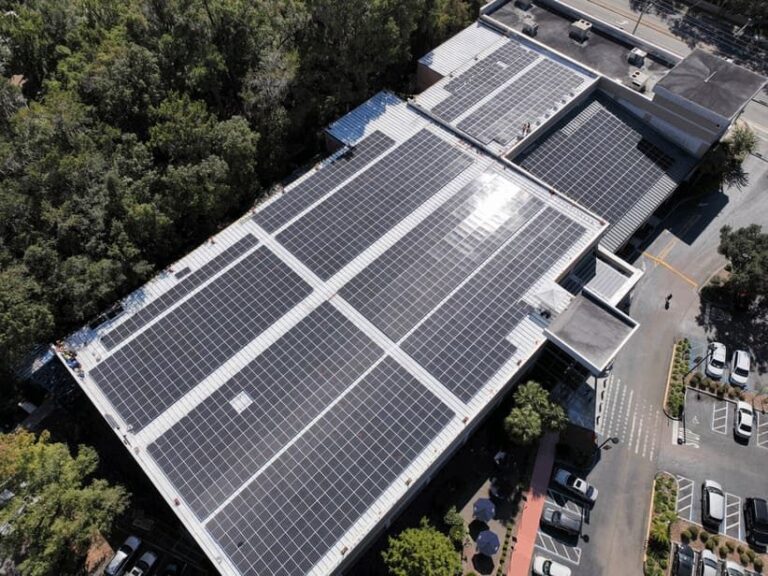
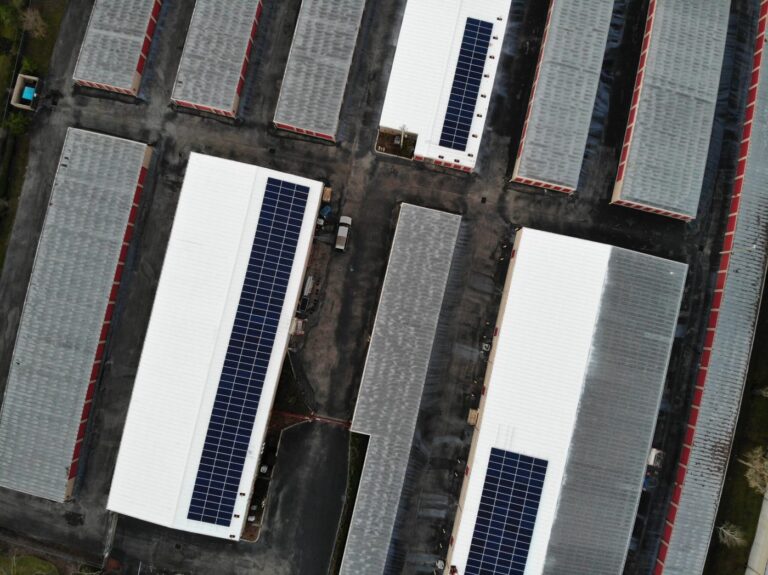
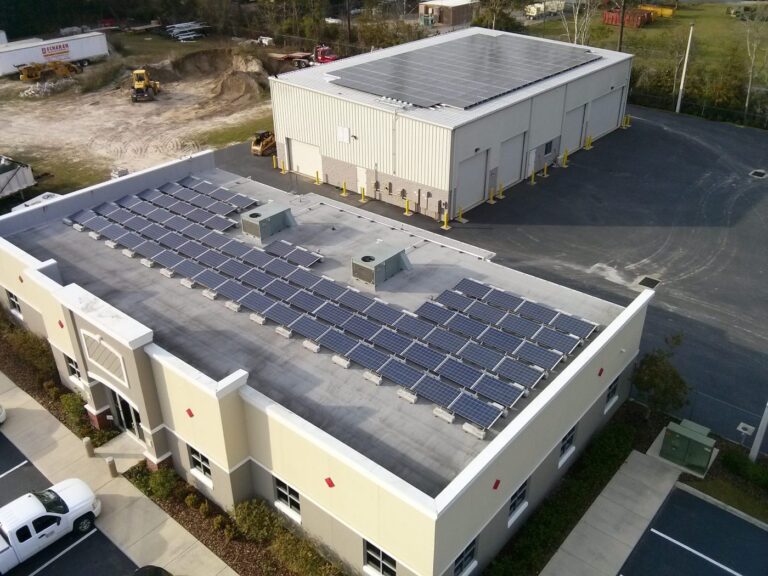
| Project | Size | Type | Note |
|---|---|---|---|
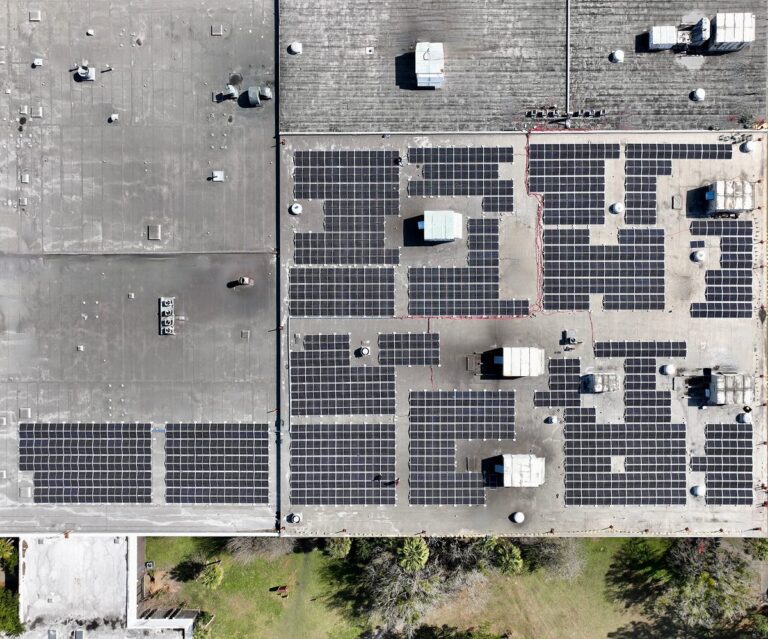
| San Felasco Tech City, Alachua, FL | 2 MW | Rooftops, parking canopies | 12,000+ panels across a tech campus, expanding to 4 MW; seven-year client relationship |
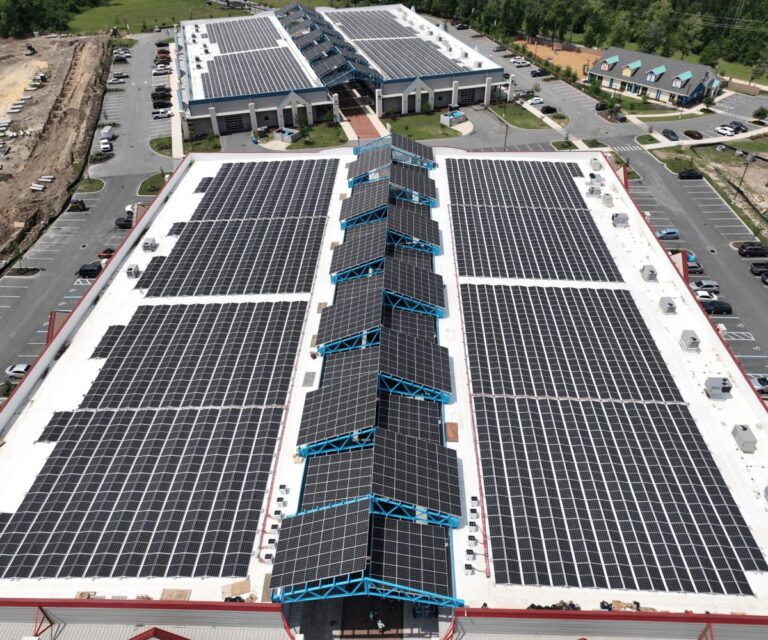
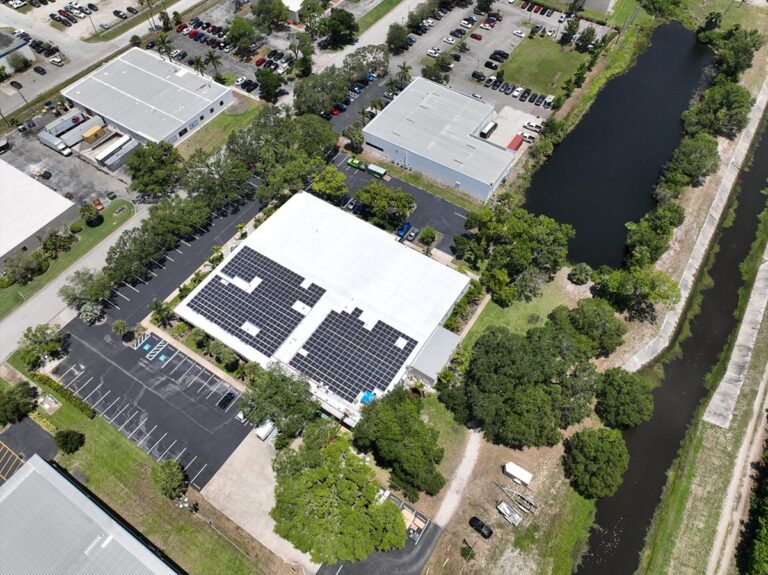
| Commercial rooftop, St. Petersburg, FL | 1.15 MW | Rooftop | Multi-building rooftop array across a single campus |
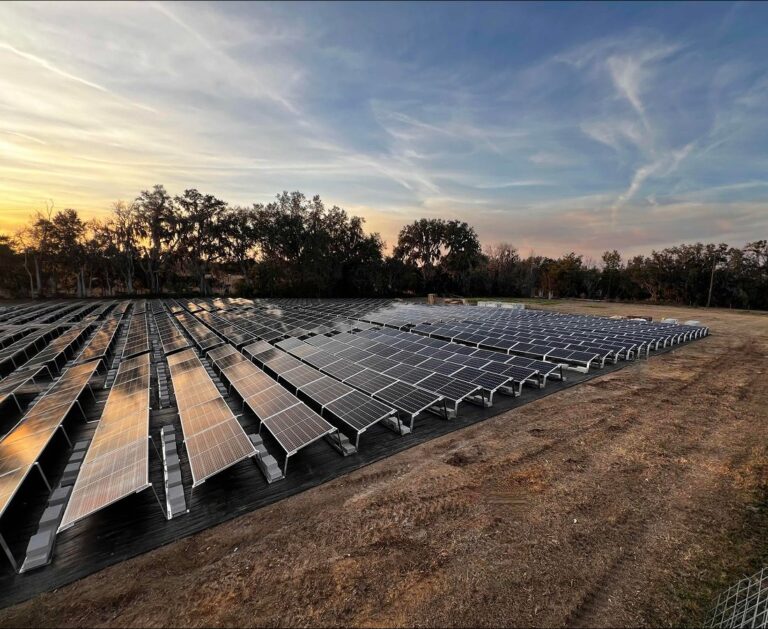
| DeConna Ice Cream | 794 kW | Ballasted ground mount | Cold storage; offsets 64% of annual use; utility transformer upgrade; two USDA grants secured |
| Gainesville Health & Fitness | 531 kW | Rooftop | 1,000+ panels, about 787,000 kWh a year; installed on off-peak hours around a 24-hour business |
| OFAB Manufacturing, Ocala, FL | 420 kW | Rooftop | Precision manufacturer; high-output modules, SMA inverters |
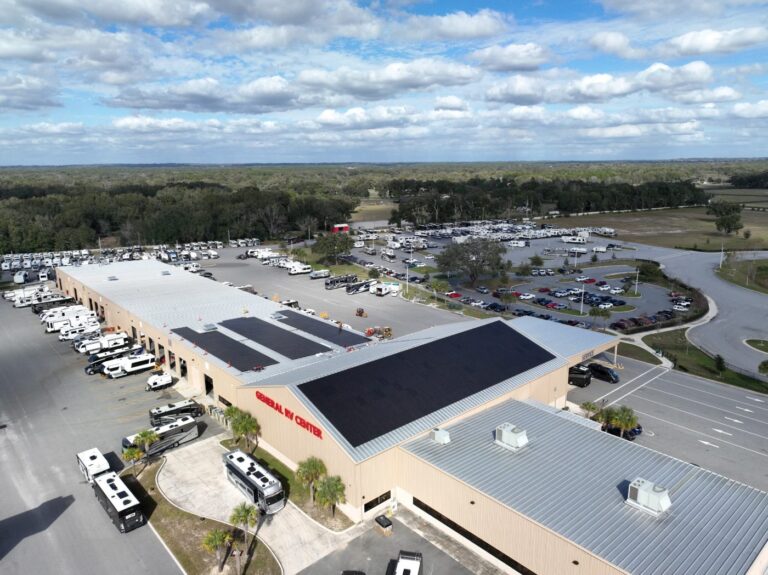
| General RV, Florida | 277 kW | Rooftop | Offsets about 35% behind the meter; a 1 MW system is planned for their North Carolina facility |
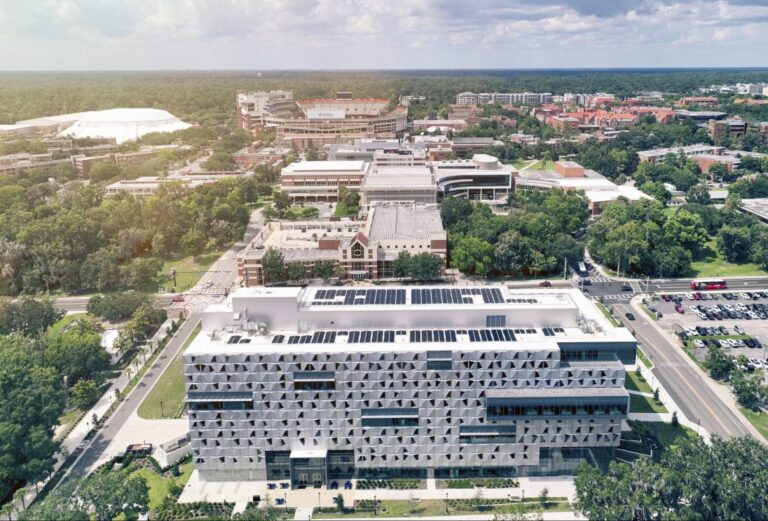
| Malachowsky Hall, University of Florida | 162 kW | Rooftop | Bifacial modules on a $150M data-science building |
| Just Add Power | 151 kW | Rooftop | Manufacturing; ongoing O&M including warranty hurricane repairs |
| Access Self Storage | 118 kW | Rooftop | Saves about $2,500 a month |
| UF Health Shands Hospital | 100 kW | Rooftop | Emergency department, installed without disrupting patient care |
| Jessica Clinton Park, Port St. Lucie, FL | 100 kW | Carport canopy | FPL SolarNow project; translucent modules on a custom canopy |
Sizes and figures as published in PPM’s commercial portfolio.
What the free assessment includes
It is the first third of the engineering, done before you commit to anything, so that the decision is made on your numbers rather than a brochure.
- Review of 12 months of electric bills and your tariff, including demand charges
- A comprehensive load profile of the building, with the on-site measurements needed to make an intelligent demand-reduction assumption rather than a guess
- A system sized to what the building actually uses, not the largest roof we can fill
- Federal credit and depreciation estimate for your entity type, for your CPA to check
- Simple payback and a 25-year cash flow against your utility’s approved rate path
- Interconnection path and timeline for your utility, and whether a battery makes sense
- A plain answer on whether it pencils. If it does not, we say so.
It takes one call and a copy of your bill. Send the bills and what comes back is a proposal, not a sales call.
Who it is for
Businesses, farms, nonprofits and institutions in Florida, North Carolina and South Carolina with their own roof or land and an electric bill of roughly $1,000 a month or more.
Tax-exempt organizations can take the credit as a direct payment. USDA restructured its REAP grant program in October 2026 and now funds completed projects; the assessment tells farms what, if anything, still applies. We have done both.
Want a first look yourself?
Try our commercial solar calculator, then send us the bills and we will do the real numbers.
For North and South Carolina businesses
The Carolinas have one thing Florida does not: Duke Energy now pays non-residential customers less for solar they export to the grid than it charges for power they buy. That changes how a system should be designed. We size to your daytime consumption so most of what you produce is used on site, and we add storage where it pays, rather than oversizing and hoping the export rate holds.
PPM holds an electrical contractor license in North Carolina (U34653) and South Carolina. Our first Carolinas commercial project, a 1 MW system for General RV’s North Carolina facility, is in development for a client we have built for in Florida since 2023.
Same deadline, same credit
The December 31, 2027 placed-in-service rule and the 30% credit are federal; they apply in the Carolinas exactly as in Florida. Both Carolinas also have state-level incentives for some commercial projects; the assessment covers them.
Get your numbers
Fill this in or call (352) 309-7727. A person answers Monday to Friday, 9am to 5pm Eastern.