Glare study
Modeled
Every minute of the year, from every viewpoint that matters.
Study and testing services
We model the glare, then measure the glass. FAA-ready reports for solar near airports, roads and neighbors.
Request a studyA glare question can stall a permit. We have successfully navigated glare concerns and solar moratoriums before, so we can tell you quickly and efficiently which path gets your project approved.
We start from research we have already done into glare-compliant, airport-ready panel types and coatings. Third-party licensed engineers and licensed glare software are on the ready when a certification or a formal model is called for.
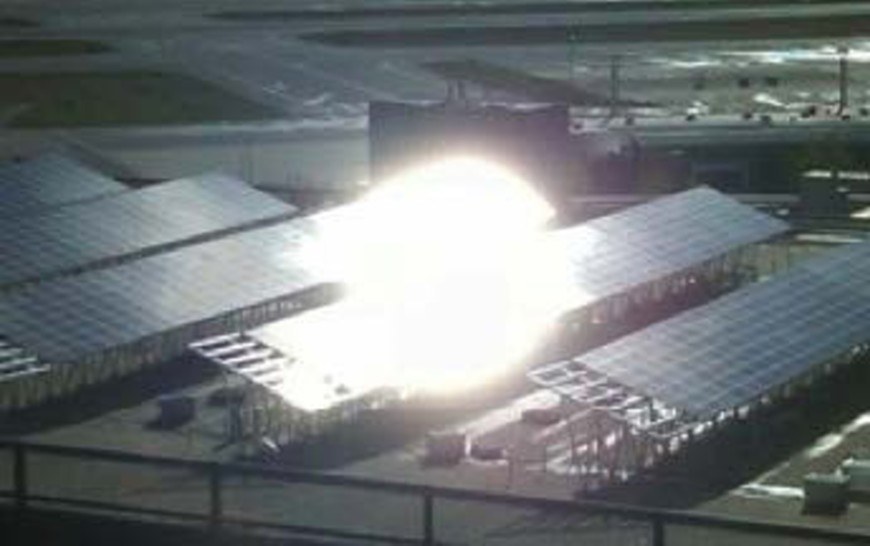
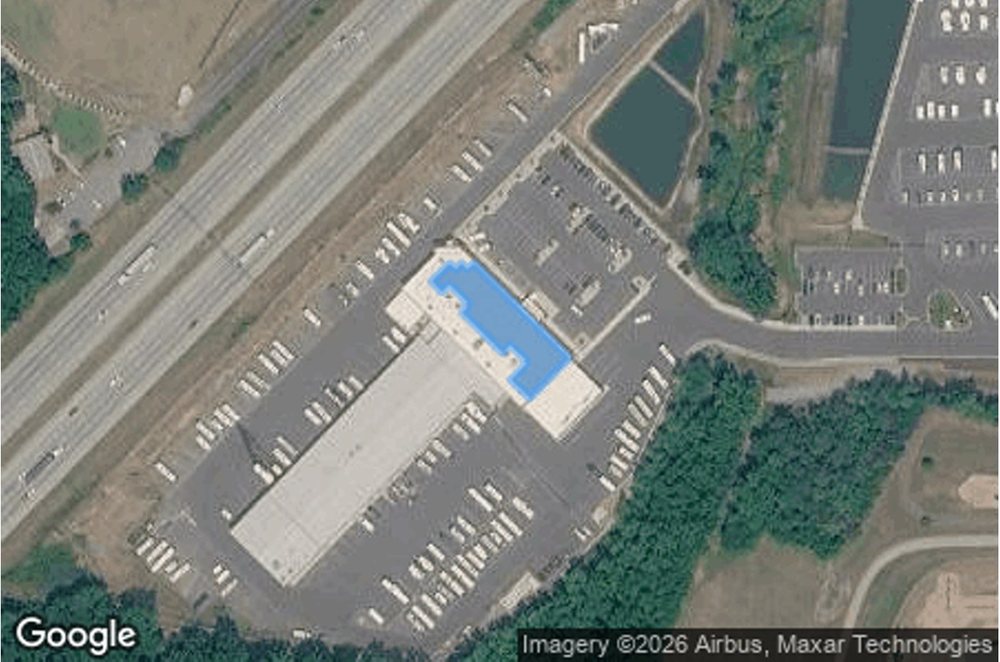
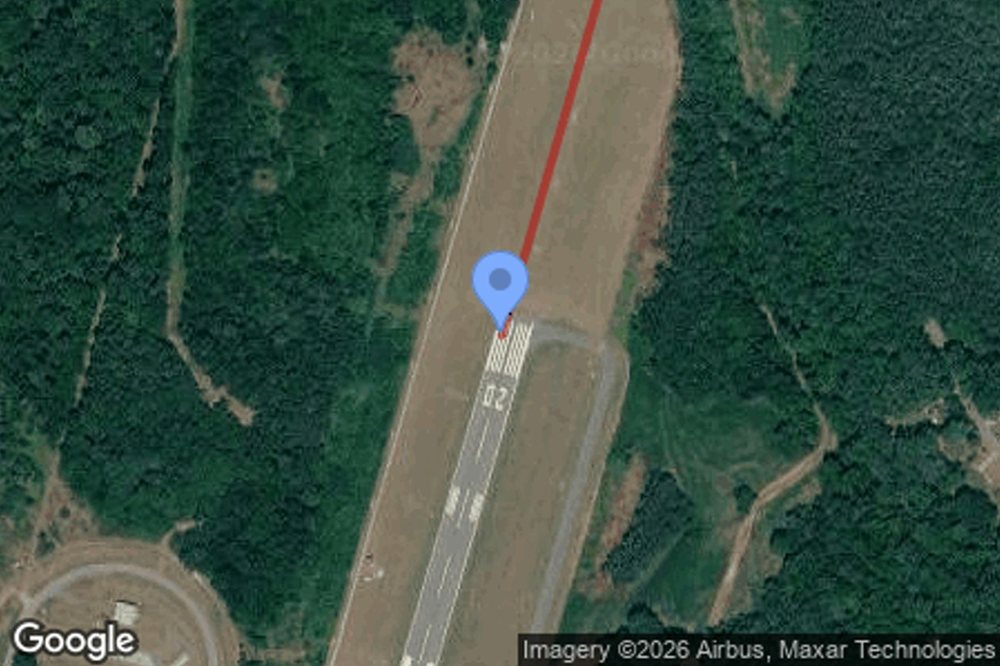
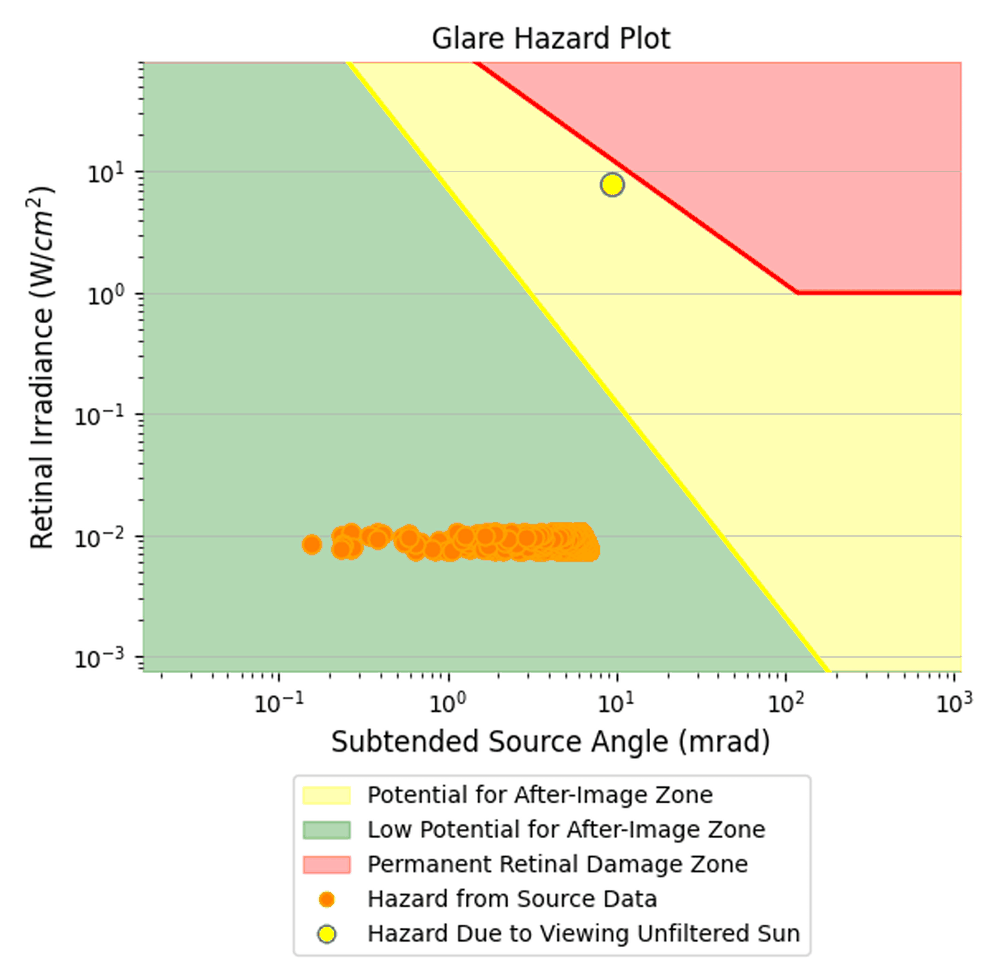
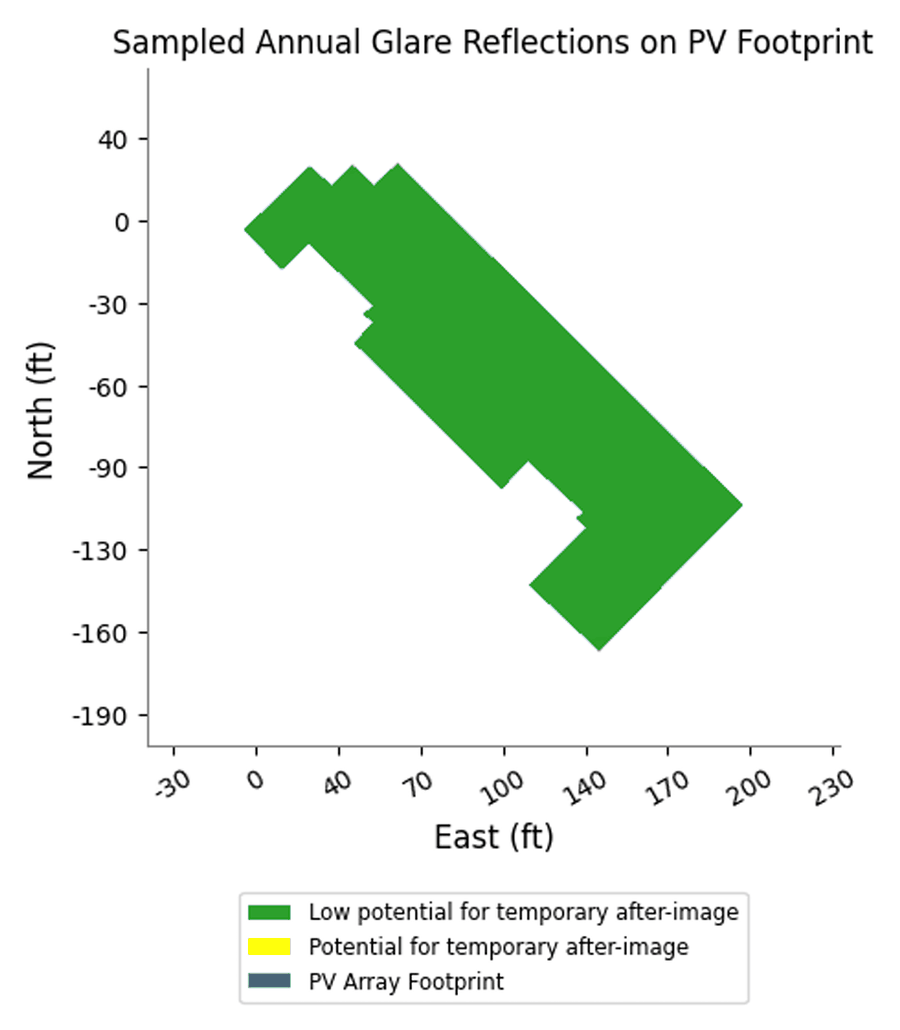
Glare photograph: Manchester-Boston Regional Airport, courtesy of Sandia National Laboratories. Plots and maps from a PPM glare study. Satellite imagery © Google, Airbus, Maxar Technologies.
Two services. Order one, or both in a single report.
Every minute of the year, from every viewpoint that matters.
Total, diffuse and specular reflectance, read off the glass.
Airports first. Under the FAA’s 2021 solar policy, the sponsor of a federally obligated airport with a control tower files Form 7460-1 with a statement that the project will not put glare in the tower cab. Our study is the evidence behind that statement.
Off the airfield, it is usually a county, a city or an airport zoning board that asks. We model the tower, the approach paths, the roads and the neighbors in one report.
Every glare model starts with an assumption about the module glass. Bare glass reflects about 4% of sunlight head-on, and far more as the sun skims across it.
Anti-reflective coatings lower that number, but they thin with age. So we measure the modules themselves: before you buy, at commissioning, and on a schedule after that.
A reading at 20° confirms the coating is there and working. The model carries it to every other angle.
Reflection from one surface of uncoated glass, by angle of incidence. Fresnel equations, refractive index 1.5.
Minutes of glare per year at every viewpoint, graded green, yellow or red.
ASTM-method readings from your modules, with the calibration record.
Form 7460-1 details and the no-glare statement, drafted for the airport.
Public methods and a calibrated instrument, in a report any reviewer can check.
For solar at a federally obligated airport with a control tower, the FAA’s 2021 policy has the airport sponsor file Form 7460-1 with a statement that the project will not cause ocular impact to the tower cab. The FAA no longer reviews the analysis or names a required tool, so a documented study is how the airport stands behind that statement. Off-airport projects fall outside the policy, but local airport zoning often asks for the same evidence.
A glare study is a computer model. It predicts when and where reflected sunlight reaches a controller, pilot, driver or neighbor. A reflectance test is a physical measurement of how much light the module glass reflects. The test confirms the assumption the model depends on.
Minute by minute, using the ocular hazard method developed at Sandia National Laboratories. Green means low potential for an after-image, yellow means potential for a temporary after-image, and red means potential for permanent eye damage.
We measure with a Surface Optics 410 handheld reflectometer, which the manufacturer builds to ASTM E903 and ASTM C1549. It reads total, diffuse and specular reflectance in seven bands from 335 to 2,500 nm at 20° from perpendicular, and it is calibrated against reference coupons at the start of every session.
No. Sandia National Laboratories found that coatings lower reflection when the sun is close to square with the panel, but do little at steep angles, where glass reflects the most. Textured glass, which scatters the reflection, does more.
Yes. We test sample modules before procurement, the installed array at commissioning, and again on a schedule when a permit calls for periodic checks. We do this for our own projects and for other installers and developers.
Send the address and the array layout. We’ll tell you what the reviewer will ask for.
(352) 309-7727Updated October 2026. PPM Solar is not affiliated with the FAA, ASTM International or Surface Optics Corporation.