Your R2 Isn’t Just a Car. It’s an 87.9 kWh Battery on Wheels.
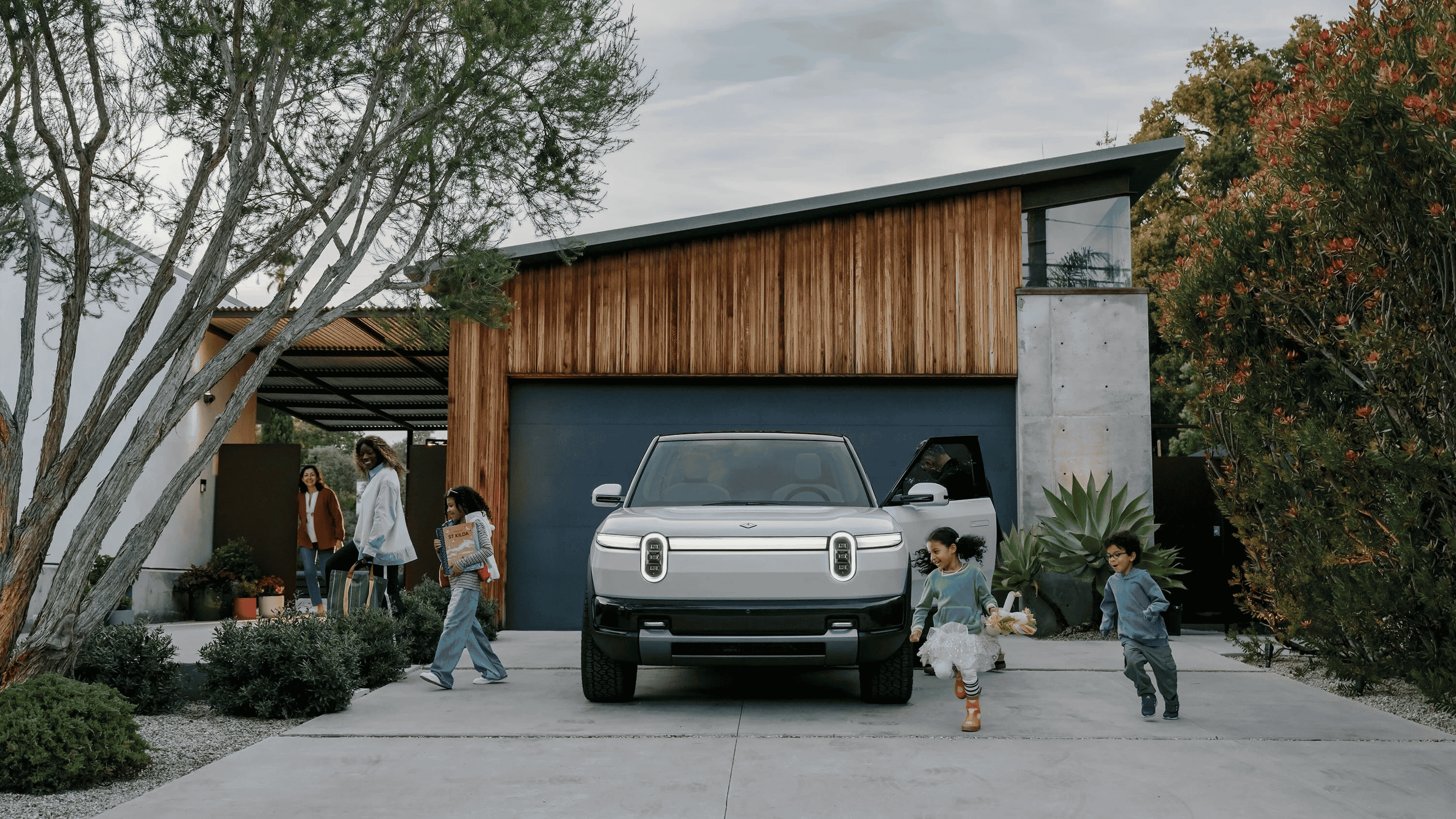
Most people look at the Rivian R2 and see a midsize electric SUV. Good range, nice interior, solid tech. And it is all of those things.
But there’s a number on the spec sheet that deserves more attention than the 0-to-60 time: 87.9 kilowatt-hours. That’s the size of the R2’s battery pack. To put it in perspective, a Tesla Powerwall 3 — one of the most popular home batteries in the country — stores 13.5 kWh. The R2 carries more than six of them under its floor.
And unlike most EVs, the R2 was designed to share that energy with your home. It ships with 11 kilowatts of bidirectional vehicle-to-home (V2H) charging built in — not as a software unlock, not as a paid add-on. It’s part of the car from the factory.
If you live in Florida, that matters. Hurricane season runs from June through November. In 2024, Hurricane Milton alone knocked out power for 3.4 million Florida customers. Many waited days to get it back. A parked R2, connected to the right equipment, could have kept the essentials running through most of that.
This article walks through exactly how R2 V2H works, how long the battery can realistically power a Florida home, what equipment you’ll need, and how it compares to the V2H system you can install today: Tesla Powershare.
How R2 V2H Actually Works (the Tech, in Plain English)
The key piece of hardware is something Rivian calls the Energy Management Control Module — EMCM for short. It sits at the back of the R2’s battery pack and consolidates several critical systems into one unit, including the vehicle’s inverter and a bidirectional on-board charger.
Here’s what that means in practice. When you charge the R2 normally, AC power from the grid flows through the charging port, gets converted to DC by the on-board charger, and fills the battery. V2H is that process in reverse: the EMCM pulls DC power from the battery, converts it to AC, and sends it back out through the charging port to your home’s electrical panel.
The output is 11 kilowatts continuous. To give that number some context: a typical Florida central air conditioning system draws 3 to 5 kW. A refrigerator uses about 0.1 to 0.4 kW. Your lights, fans, WiFi router, and phone chargers combined might pull another 0.5 to 1 kW. At 11 kW, the R2 can comfortably run all of that simultaneously — with headroom to spare.
Why the On-Board Inverter Matters
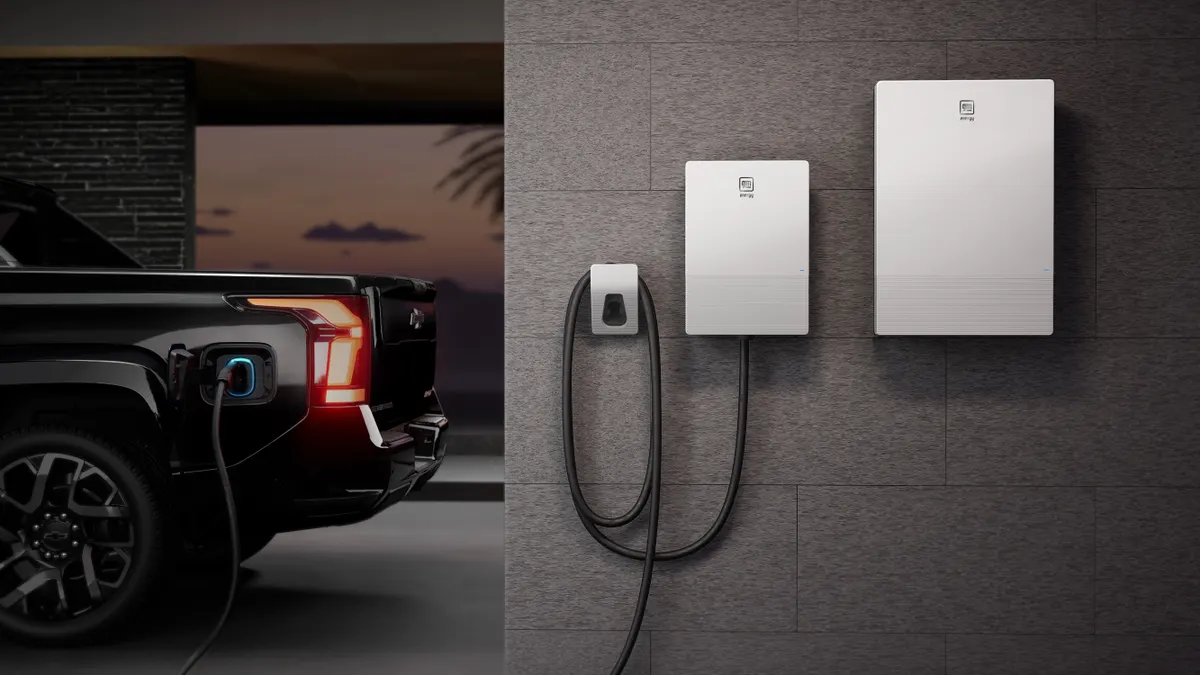
This is a technical detail worth understanding because it affects cost. The R2 does the DC-to-AC conversion inside the car. Ford’s F-150 Lightning and GM’s Ultium-based vehicles use a different approach — they send DC power out of the vehicle and rely on external equipment at your house to convert it to AC. That means more hardware on the wall, more complexity in the installation, and generally higher costs.
Tesla’s Powershare system works similarly to the R2’s approach — the Cybertruck also has an on-board AC inverter. But the R2 brings this to a much lower price point. The cheapest V2H-capable Cybertruck starts at $79,990. The R2 starts at $45,000.
Think of the R2’s approach this way: the expensive part — the inverter — comes with the car. The home-side equipment should be simpler and cheaper as a result.
How Long Can the R2 Power Your Florida Home?
This is the question everyone asks, and the honest answer is: it depends on what you’re willing to turn off.
The average Florida home uses about 40 kWh per day — roughly 1,200 kWh per month. In summer, with air conditioning running hard, that can climb to 50 to 70 kWh per day. But during a power outage, you’re not running the pool pump and the clothes dryer. You’re running the essentials.
Here’s what essential loads typically look like:
- Food: Refrigerator and freezer — 1 to 3 kWh/day
- Comfort: LED lights and ceiling fans — 1 to 2 kWh/day
- Communication: WiFi router, phones, laptops — 0.5 to 1 kWh/day
- Cooling: Window AC unit or portable AC — 3 to 8 kWh/day (this is the big variable)
- Other: Well pump, medical equipment, security system — varies
A conservative estimate for essential loads is 10 to 15 kWh per day. If you’re running a window AC unit in one room, it’s closer to 15 to 20 kWh.
The R2’s battery is 87.9 kWh. In practice, the system probably won’t drain the battery all the way to zero — most V2H systems reserve 15 to 20 percent to protect battery health and keep enough charge to drive if needed. So we’ll assume about 70 kWh of usable V2H capacity.
Here’s the backup math:
| What You’re Running | Daily Draw | R2 Backup Duration |
| Essentials only (fridge, lights, fans, WiFi) | 10 kWh | ~7 days |
| Essentials + window AC in one room | 15 kWh | ~4.5 days |
| Moderate use (partial home, some AC) | 25 kWh | ~2.8 days |
| Full home including central AC (summer) | 40 kWh | ~1.8 days |
For context: after Hurricane Milton in October 2024, 95 percent of Florida power outages were restored within four days. On essentials, the R2 can cover that with days to spare. Even running a window AC, you’re looking at close to five days — enough to ride out the vast majority of Florida outages.
The Caveat You Need to Hear
These numbers assume the R2 is parked and connected the entire time. If you need to drive somewhere — to get supplies, to check on family, to evacuate — every mile you drive is energy that’s not available for your house. At 32 kWh per 100 miles, a 50-mile round trip costs about 16 kWh. That’s a full day of essential backup.
This is exactly why a dedicated home battery (like a Tesla Powerwall or Franklin Home Power system) still makes sense even if you have a V2H-capable vehicle. The home battery holds the fort while the car is mobile. The car is the deep reserve — the backup to the backup.
R2 V2H vs. Tesla Powershare: An Honest Comparison
If you’re shopping for a V2H-capable EV, or you already have an R2 on order and want to understand how it stacks up, here’s the side-by-side. This isn’t about which car is better — it’s about which V2H system works better for your home, today.
| Rivian R2 | Tesla Cybertruck (Powershare) | |
| V2H output | 11 kW | 11.5 kW |
| Battery capacity | 87.9 kWh | 123 kWh |
| Backup on essentials | ~7 days | ~10 days |
| Inverter location | On-board (inside car) | On-board (inside car) |
| Home equipment needed | Rivian bidirectional charger (TBD) | Powershare Gateway + Wall Connector ($1,950) |
| Equipment available now? | No — not released yet | Yes — available now |
| Solar integration | To be determined | Full Tesla ecosystem (Gateway ↔ Powerwall ↔ Solar) |
| Vehicle-to-grid (V2G) | Not announced | Powershare Grid Support (TX, CA) |
| Vehicle starting price | $45,000 (base, late 2027) $57,990 (Performance, now) | $79,990 |
Where Tesla Wins Today
Tesla’s Powershare ecosystem is live, complete, and installable right now. You can walk into a consultation today and have a Gateway and Wall Connector installed within weeks. The system integrates directly with Powerwall batteries and Tesla solar, creating a fully unified energy management system you can monitor from one app.
And the modular build-out path is genuinely flexible. You can start with just the Cybertruck plus Gateway and Wall Connector — about $3,500 to $5,000 total installed — and add a Powerwall and solar panels later as your budget allows. Each piece adds value on its own, and they work better together.
Tesla has also moved beyond V2H into vehicle-to-grid (V2G) with Powershare Grid Support, currently available in Texas and California. That means Cybertruck owners in those states can sell energy back to the grid during peak demand — something Rivian hasn’t announced yet.
Where the R2 Has an Edge
Price and form factor. The R2 is a midsize SUV starting at $45,000 — roughly half the cost of a Cybertruck. For families who want V2H capability but don’t want a full-size truck, the R2 is the first affordable option in its class.
The on-board inverter approach should also mean simpler, less expensive home-side equipment — though we won’t know for certain until Rivian releases its charger and pricing.
And there’s a practical argument: many households have two cars. If one is a Cybertruck or another V2H vehicle and the other is an R2, you have a layered backup. But even for single-car households, the R2 brings V2H to a price range that was previously truck-or-nothing territory.
The Gap You Need to Know About
Rivian has not released its bidirectional home charger. No pricing. No availability date. No installation specifications. The R2 has 11 kW of V2H capability built into every unit — but right now, there’s no way to connect it to your home’s electrical panel.
This is not a knock on the R2. It’s a reality check. The hardware is ready on the car side. The home side isn’t there yet. When Rivian announces its charger, we’ll update this article with pricing, installation details, and a direct cost comparison.
For a complete breakdown of Tesla Powershare — including the modular build-out path, how it integrates with Powerwall, and a comparison of all V2H-capable vehicles — see our full guide: Your EV Can Power Your Home During a Hurricane.
What R2 Owners Should Do Right Now
The R2 is V2H-ready. Your house probably isn’t. Here’s the playbook for getting your home prepared — so when Rivian’s bidirectional charger launches, installation is just the last step.
Step 1 — Install a Level 2 Charger
You need a 240-volt home charger to charge the R2 efficiently anyway — overnight charging on a regular wall outlet is painfully slow for an 87.9 kWh battery. Have the electrical work done properly: dedicated circuit, appropriate panel capacity, clean installation. This is the foundation that V2H will eventually build on.
Step 2 — Size Your Solar for the R2
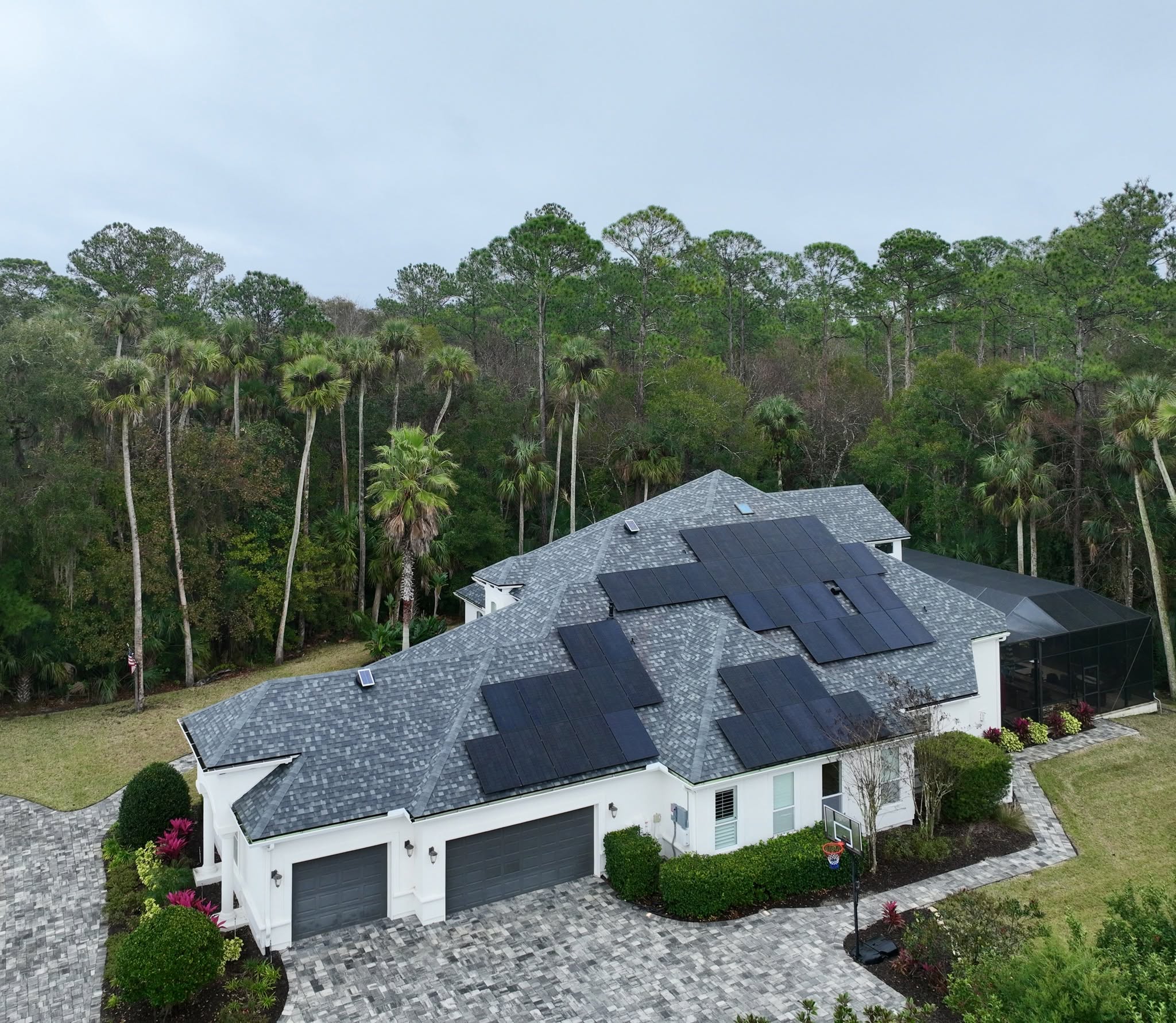
If you’re adding solar panels — or already have them — make sure the system accounts for EV charging. As we detailed in our R2 charging cost breakdown, you need roughly 2.3 kW of additional solar capacity to offset the R2’s annual charging draw. That’s about five to six extra panels on your roof. Design for both your home and your car from the start — it’s cheaper than adding panels later.
Step 3 — Consider a Home Battery Now
A Powerwall, Franklin Home Power, or equivalent battery system gives you backup today — no waiting for Rivian’s charger. When the R2’s V2H hardware does become available, the home battery becomes Layer 2, and the R2 becomes your deep reserve. The two systems complement each other; the home battery doesn’t become obsolete.
Step 4 — Watch for Rivian’s Charger Announcement
When Rivian releases its bidirectional home charger — with pricing, specs, and installation requirements — you’ll want the home electrical infrastructure already in place. Proper panel capacity, a dedicated circuit, and ideally a solar-plus-battery system ready to integrate. That way, adding V2H is just one more connection, not a full rewire.
The key message: don’t wait for perfection. Solar plus battery storage is valuable today — it cuts your electric bill, provides hurricane backup, and qualifies for the 30% federal tax credit through 2032. V2H is the bonus that makes an already-strong investment even stronger.
Standard and bidirectional charging is expected to come out in 2026 early 2027 for R2 and other Rivian vehicles.
The Bottom Line
The Rivian R2 has genuine vehicle-to-home capability. Eleven kilowatts, 87.9 kWh, built in from the factory. On essentials, it can power a Florida home for roughly a week. Paired with solar, the backup can last as long as you need it.
The catch — and it’s an important one — is that Rivian’s bidirectional home charger hasn’t been released yet. The car has the hardware. Your house doesn’t have a connection point. That will change, but it hasn’t changed yet.
The smart play is to build the home infrastructure now. Solar panels, a home battery, a properly wired electrical panel. These investments pay for themselves regardless of V2H — through lower electricity bills, hurricane resilience, and tax credits. When Rivian’s charger arrives, you plug in the last piece and the system gets even better.
And if your timeline can’t wait for Rivian — Tesla Powershare is available today, with a complete ecosystem from charger to battery to solar. Whether your V2H path runs through Rivian or Tesla, the solar system underneath is the same. We design it for both.
Ready to Build Your System?
At PPM Solar, we design solar and battery systems with V2H in mind — whether you’re driving a Rivian, a Tesla, or something else entirely. We’ll assess your home’s electrical panel, size the solar for your house and your EV, and recommend the battery setup that gives you real hurricane protection.
Schedule a free consultation. We’ll design it right the first time.