If you’ve lived in Florida long enough, you know the feeling. The wind dies down, the rain stops — and then comes the silence. No hum of the refrigerator. No air conditioning. Just the slow, creeping heat of a Florida afternoon with no power and no idea when it’s coming back.
In 2024, that feeling hit millions of Floridians three times in three months. Hurricanes Debby, Helene, and Milton knocked out power for 3.4 million customers across the state. Gas stations couldn’t pump fuel. Groceries spoiled. People who worked from home couldn’t work. People who needed to evacuate couldn’t move.
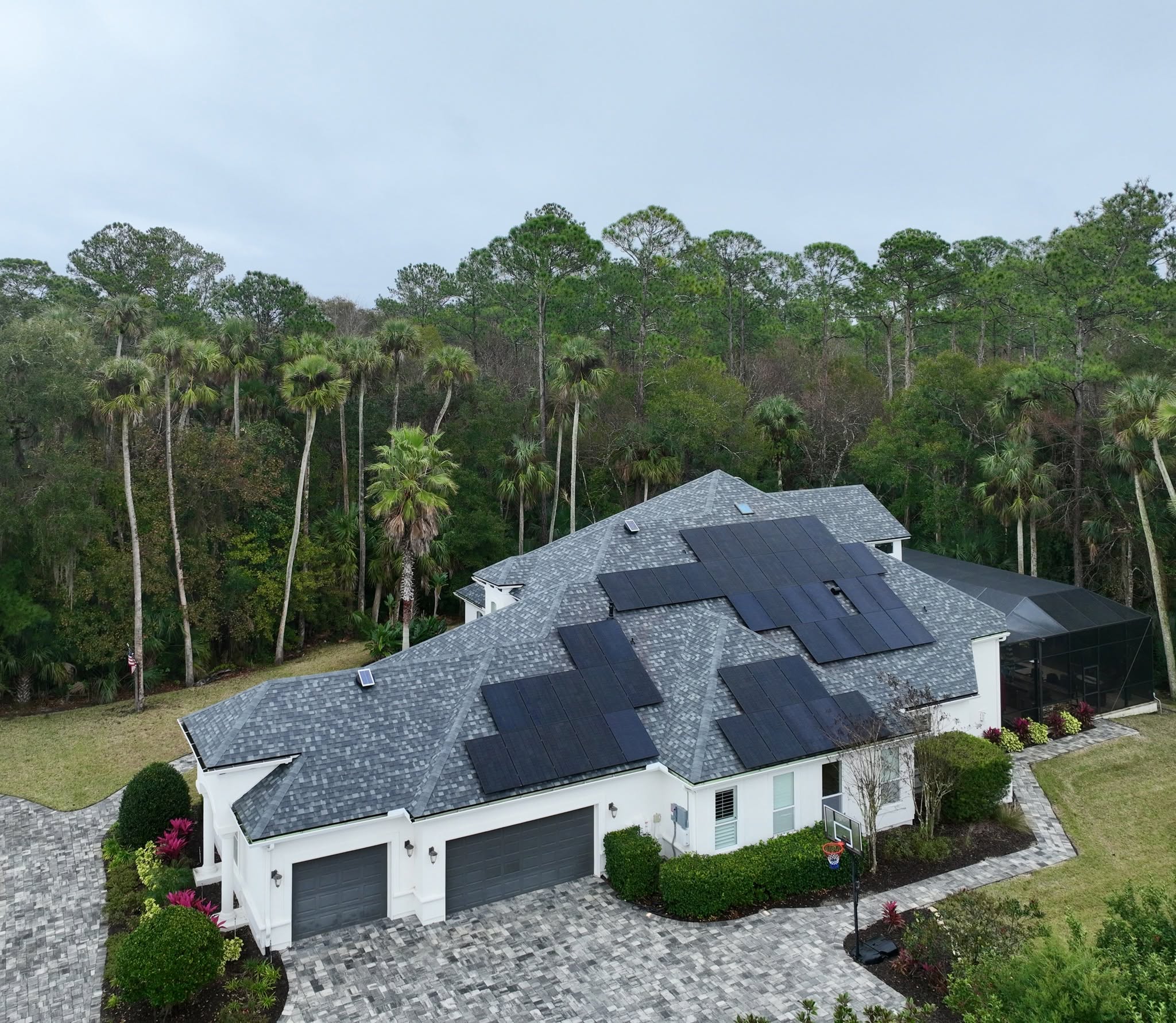
Now imagine a different version of the next storm. The grid goes down, but your lights stay on. Your air conditioning keeps running. Your electric vehicle — fully charged and sitting in the garage — is quietly feeding power back into your home. And when the sun comes out the next morning, your solar panels start recharging everything automatically.
That scenario is no longer hypothetical. Vehicle-to-home technology has arrived, and for the first time, Florida homeowners can turn their electric vehicles into whole-home backup power systems. This article covers how it works, what your options are in 2026, and why the combination of solar, battery storage, and a V2H-capable EV may be the smartest hurricane preparation investment you can make.
Florida’s Hurricane Problem, by the Numbers
The 2024 hurricane season was one of the most punishing in recent memory. Three storms — Debby, Helene, and Milton — struck Florida within just three months. Here’s what that looked like:
- Hurricane Milton (Category 3): 3.4 million customers lost power across the state. Utility crews replaced over 1,560 power poles. Most customers saw restoration within four days, but some of the hardest-hit areas waited far longer.
- Hurricane Helene (Category 4): Over 800,000 outages reported at a single utility provider alone. Restoration took 72 hours or more in many communities.
- Hurricane Debby (Category 1): Even a relatively moderate storm knocked out power for 350,000 customers.
According to the U.S. Energy Information Administration, American electricity customers experienced an average of 11 hours without power in 2024 — nearly double the annual average of the prior decade. Major weather events accounted for 80% of those outage hours.
And the financial impact goes beyond inconvenience. Florida’s largest utilities are now seeking billions in storm recovery costs — Duke Energy alone is pursuing $1.1 billion, while FPL is seeking $1.2 billion. Those costs get passed directly to ratepayers, adding $12 or more per month to your electric bill.
What a Power Outage Actually Costs You
The average Florida home consumes about 40 kilowatt-hours of electricity per day — already 33% above the national average. During summer months, when hurricane season peaks, that number climbs to 50–70 kWh per day, driven almost entirely by air conditioning.
When the power goes out, the costs start stacking up fast:
- Spoiled food from refrigerators and freezers: $200–$500
- Lost work productivity (remote workers, home offices): roughly $200 per day
- Emergency hotel stays (if available — prices surge during widespread outages): $150–$400+ per night
- Emergency supplies (flashlights, ice, batteries, water): $25–$100
- Property damage from flooding when sump pumps stop: $500 to $25,000+
A single 24-hour outage can easily cost a homeowner $800 to $1,200 or more. Multiply that by the multi-day outages that major hurricanes produce, and you’re looking at thousands of dollars in losses — every single storm season.
The Traditional Solution Isn’t Great Either
Whole-home standby generators cost $13,000–$17,000 to install, require $500–$800 per year in maintenance, and depend on a steady supply of natural gas or gasoline. They’re loud, they produce carbon monoxide, and during a major hurricane — when you need them most — the fuel often isn’t available.
When the Power Goes Out, the Gas Pumps Stop Too
This is the part of hurricane preparedness most people don’t think about until it’s too late.
Gas stations rely on electricity to pump fuel. When the grid goes down, most gas stations go dark — even if their underground tanks are full. And even the ones with backup power run dry quickly when millions of people are trying to fuel up at the same time.
During Hurricane Milton, over 1,300 Florida gas stations were completely dry five days after landfall. In the Tampa metro area, nearly half of all 1,801 tracked gas stations had no fuel six days later.
This creates a cascading problem. You can’t refuel your car. You can’t refuel your generator. You can’t evacuate if conditions change. You’re stuck.
Electric vehicle owners face a completely different reality. If you have solar panels on your roof, your car charges from the sun the moment it comes back out. Even without solar, EV charging stations are increasingly designed with hurricane resilience in mind — over 70% of Florida’s public EV chargers are built to withstand Category 4 winds, and some include their own solar backup power.
EVs also have a practical advantage most people don’t consider: they don’t idle. A gas car sitting in evacuation traffic burns fuel continuously. An EV barely uses any energy when stationary. During Hurricane Helene, EV drivers bypassed hours-long gas lines and charged at vacant stations while the rest of the state fought for the last few gallons.
In Asheville, North Carolina, after Helene left the region devastated, a Rivian owner used their electric truck to power a food truck and run chainsaws for road clearance. A veterinary clinic used EVs to restore operations.
The bottom line: an electric vehicle isn’t just backup power for your house. It’s your guaranteed ability to still move when everyone else is stranded.
Solar Panels Are Built to Survive Florida Hurricanes
One of the most common concerns we hear from homeowners considering solar is: “What about hurricanes? Won’t the panels get destroyed?”
The short answer: no. Modern solar panels are engineered specifically for extreme weather. Florida building code requires all solar panels to be rated for at least 160 mph winds — that exceeds the threshold for a Category 5 hurricane. Standard residential panels are tested to withstand 140 mph (Category 4), and enhanced installation methods can push that rating to 180 mph or higher.
The panels themselves are waterproof and shatter-resistant. Independent testing has shown them surviving impacts from hailstones traveling at 262 mph. When properly installed with code-compliant racking and lag bolts secured to your roof’s rafters, solar panels often outlast the shingles around them.
Real-World Proof
Babcock Ranch, located near Fort Myers and often called “America’s first solar-powered town,” has more than 700,000 solar panels. When Hurricane Ian — a devastating Category 4 storm — tore through Southwest Florida in 2022, Babcock Ranch experienced zero power loss. Residents kept their lights, air conditioning, and WiFi running while surrounding communities dealt with days of blackouts.
After Hurricane Irma in 2017, a Category 5 storm with 185 mph winds, solar panels across Florida homes were left largely unscathed — even as 80% of Puerto Rico’s traditional power grid was destroyed.
One Critical Detail
Standalone solar panels are designed to shut down automatically when the grid goes down. This is a safety requirement — it protects utility workers from being electrocuted by power feeding back into downed lines.
That’s why battery storage is essential. A home battery system (like the Tesla Powerwall or Franklin Home Power) creates an “island” — your panels keep producing, your battery stores the energy, and your home stays powered independently from the grid. Without a battery, your solar panels go dark when the grid does.
What Is Vehicle-to-Home (V2H)?
Vehicle-to-home, or V2H, is a technology that allows an electric vehicle to send stored energy back into your home’s electrical system. Instead of just charging your car from the wall, the energy flows in both directions — your car becomes a massive battery that can power your house.
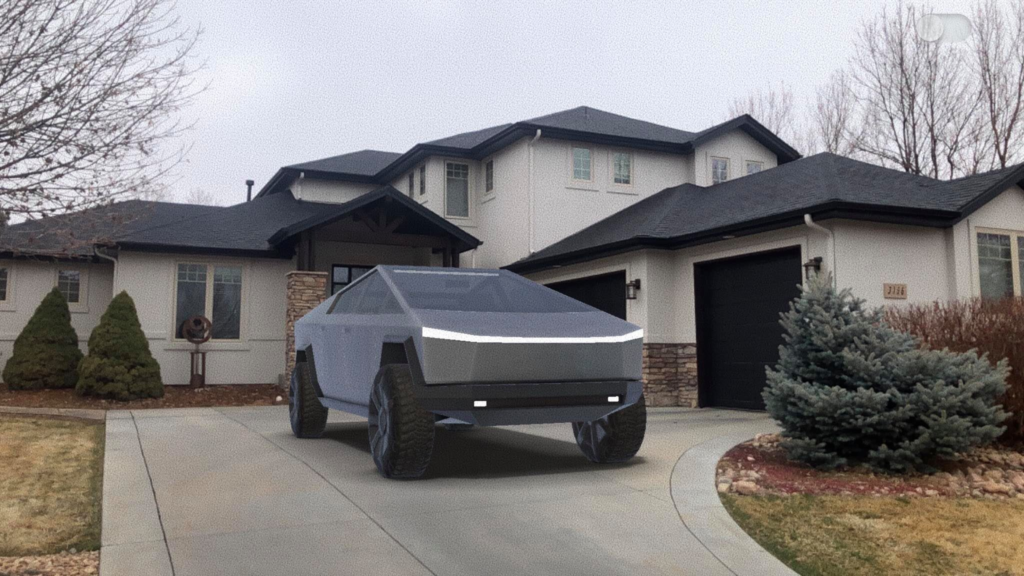
Think of it this way: a typical home battery like the Tesla Powerwall 3 stores 13.5 kWh. The Tesla Cybertruck’s battery holds 123 kWh — roughly nine times more energy. That’s enough to power a typical American home for three to five days, depending on how much you conserve.
V2H isn’t science fiction. It’s available today, and several major automakers now offer it.
V2H vs. V2L: Understanding the Difference
You’ll see two terms used in this space, and they mean different things:
- Vehicle-to-Load (V2L): You plug individual appliances directly into outlets on your vehicle. Think of it as a portable generator replacement — you can run a fridge, some lights, charge your phone. Useful, but limited.
- Vehicle-to-Home (V2H): Your vehicle connects to your home’s electrical panel through a dedicated system. It powers your entire house — air conditioning, lights, refrigerator, WiFi, everything — just as if the grid were still on. This is the full solution.
Tesla Powershare: How the Cybertruck Powers Your Home
Tesla’s Powershare is the most accessible and affordable vehicle-to-home system available in 2026. Currently available for the Cybertruck, it turns the truck into a silent, emissions-free home backup system that outperforms most traditional generators.
The Specs
- Continuous output: 11.5 kW at 240V — enough to run a central air conditioning system, refrigerator, lights, and more, simultaneously
- Battery capacity: 123 kWh — equivalent to roughly nine Powerwall 3 units
- Motor start capability: 110 LRA — can kick-start heavy appliances like AC compressors without tripping
- Backup duration: 3–5 days for a typical home (at 25–40 kWh/day usage)
- Noise: Zero. Unlike a generator, the Cybertruck produces no sound and no exhaust
Built-In Power Outlets (Vehicle-to-Load)
The Cybertruck AWD and Cyberbeast trims come with five built-in power outlets: two 120V outlets in the cabin, two 120V outlets in the cargo bed, and one 240V outlet in the cargo bed. Combined, they deliver up to 9.6 kW of power — enough to run power tools on a job site or keep essential appliances running during an outage, even without a full V2H setup.
Other Cybertruck trims can use the $80 Powershare Outlet Adapter, which converts the charge port into a standard 120V/20A outlet.
Full Home Backup (Vehicle-to-Home)
For full V2H capability — where the Cybertruck powers your entire home through the electrical panel — you need two pieces of equipment:
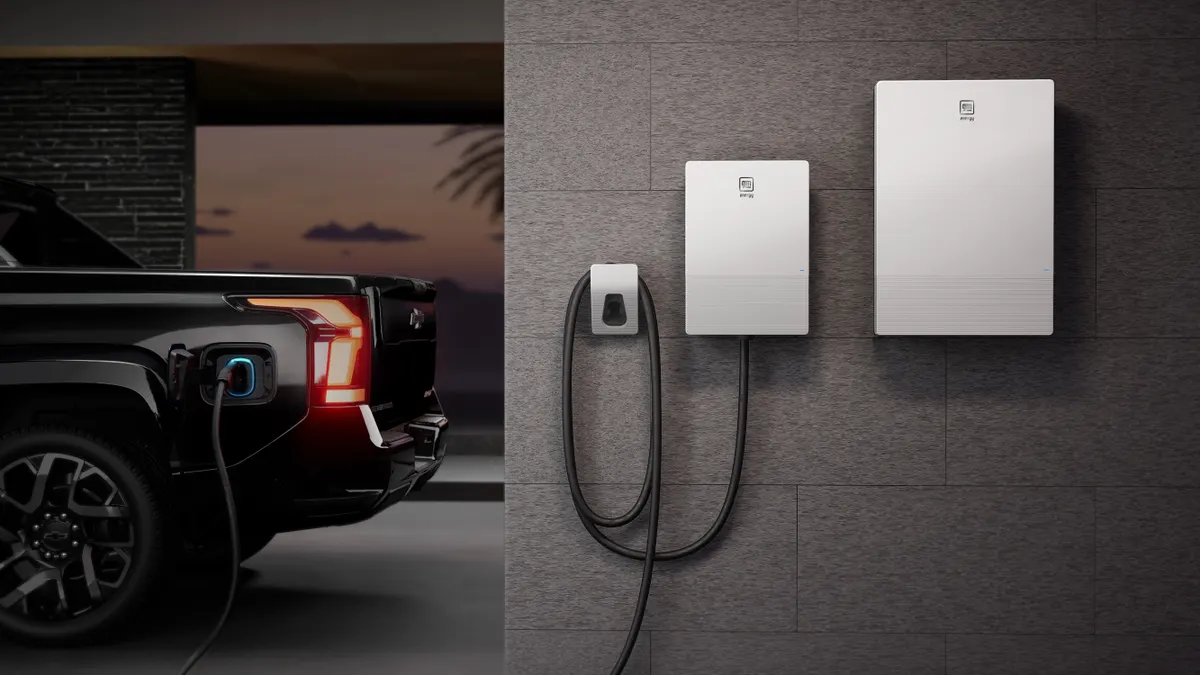
- Powershare Gateway: The brain of the system. It manages the connection between your vehicle, your home’s electrical panel, and the grid. It handles automatic switchover when the grid goes down and prevents backfeed to utility lines.
- Universal Wall Connector: Tesla’s bidirectional charger. It charges your Cybertruck from the grid normally, and reverses the flow during an outage to send energy from the truck back into your home.
What It Costs
Tesla sells the Powershare Home Backup Bundle — which includes both the Gateway and the Universal Wall Connector — for $1,950. Typical installation costs run $2,400–$3,000, bringing the total all-in cost to approximately $3,500–$5,000 depending on your home’s electrical setup.
Compare that to a traditional whole-home standby generator at $13,000–$17,000, and it’s not even close. The Powershare system costs a fraction of the price, requires no fuel, produces no noise or emissions, and the “generator” doubles as your daily driver.
The Build-It-Your-Way Approach: Start Small, Scale Up
One of the most appealing aspects of Tesla’s Powershare ecosystem is that you don’t have to do everything at once. You can start with the basics and add components as your budget allows.
Stage 1: Cybertruck + Powershare Gateway (~$3,500–$5,000)
This is the entry point. Your Cybertruck charges from the grid as usual. When the power goes out, the Powershare Gateway automatically switches over, and the truck starts powering your home. No solar panels or batteries required.
At 123 kWh of capacity and 11.5 kW of continuous output, the Cybertruck alone can keep a typical Florida home running for three to five days — including air conditioning.
The limitation at this stage: if you need to drive the truck somewhere, your house loses power until the truck comes back and reconnects.
Stage 2: Add a Powerwall (~$13,500–$16,500 installed)
The Tesla Powerwall 3 adds 13.5 kWh of stationary battery storage to your home. It becomes your “always-on” power anchor — if the Cybertruck is away, the Powerwall keeps essential loads running.
When both the Cybertruck and Powerwall are working together, your total backup capacity jumps to 136+ kWh. That’s potentially a full week or more of backup power for a Florida home. The Powerwall manages the load intelligently: it discharges first, then taps into the Cybertruck’s larger pack when needed.
Stage 3: Add Solar Panels
Now you’re producing your own energy. Solar panels charge both your Powerwall and your Cybertruck from sunshine, dramatically reducing or eliminating your electric bill entirely. During a hurricane outage, your panels recharge your batteries every day the sun comes out — which in Florida is most days, even during storm season.
At this stage, you’ve achieved true energy independence: your home produces its own electricity, stores it in your battery, and your vehicle is part of the system. No utility bill. No fuel costs. No vulnerability to grid outages.
This isn’t a theoretical scenario. PPM Solar clients are doing exactly this right now — starting with a Powershare Gateway, then adding solar down the line as their budget allows.
Beyond Tesla: Other Vehicle-to-Home Options in 2026
Tesla Powershare gets the most attention, but it’s not the only game in town. Several automakers now offer V2H capability, and more are on the way.
Available Now
| Vehicle | Battery | Output | Equipment Cost* | Backup Est. |
| Tesla Cybertruck | 123 kWh | 11.5 kW | ~$3,500–$5,000 | 3–5 days |
| Ford F-150 Lightning | 98–131 kWh | 9.6 kW | ~$5,000+ | 2–3 days |
| Chevy Silverado EV | 200+ kWh | 9.6 kW | ~$8,098 | 6–7 days |
| GMC Sierra EV Denali | 200+ kWh | 9.6 kW | ~$8,098 | 6–7 days |
| Cadillac Escalade IQ | 200 kWh | 9.6 kW | ~$8,098 | 6–7 days |
| Chevy Equinox EV | 85–107 kWh | 9.6 kW | ~$8,098 | 3–4 days |
| Kia EV9 | 99.8 kWh | 12 kW | ~$6,440+ | ~3 days |
*Equipment cost includes installation estimates where available. Actual costs vary by home.
Important Notes on the Competition
- Ford F-150 Lightning: Ford’s Intelligent Backup Power was a pioneer in V2H, but the required Charge Station Pro home charger has been discontinued as of 2026. If you already have one installed, it still works. But new installations are no longer possible through Ford’s official program, which limits this as a forward-looking option.
- GM vehicles (Silverado EV, Sierra EV, Escalade IQ, Equinox EV, Blazer EV, LYRIQ): GM’s Ultium-platform vehicles offer impressive battery capacities — the Silverado EV and Sierra EV pack over 200 kWh, the largest in the market. However, the GM Energy V2H Bundle costs $8,098 for equipment alone, more than four times Tesla’s $1,950 Powershare bundle.
- Kia EV9: A strong entry with up to 12 kW output through the Wallbox Quasar 2 bidirectional charger. Currently one of the few non-truck options with full V2H capability.
Coming Soon
The V2H landscape is expanding rapidly. Vehicles expected to gain full V2H capability in 2026 and beyond include:
- Tesla Model Y — V2L is already available on 2025+ Performance trims via a small adapter. Full V2H is expected to roll out via over-the-air software updates as the Powershare ecosystem matures. When it does, the market shifts dramatically: the Model Y is the best-selling vehicle in the world.
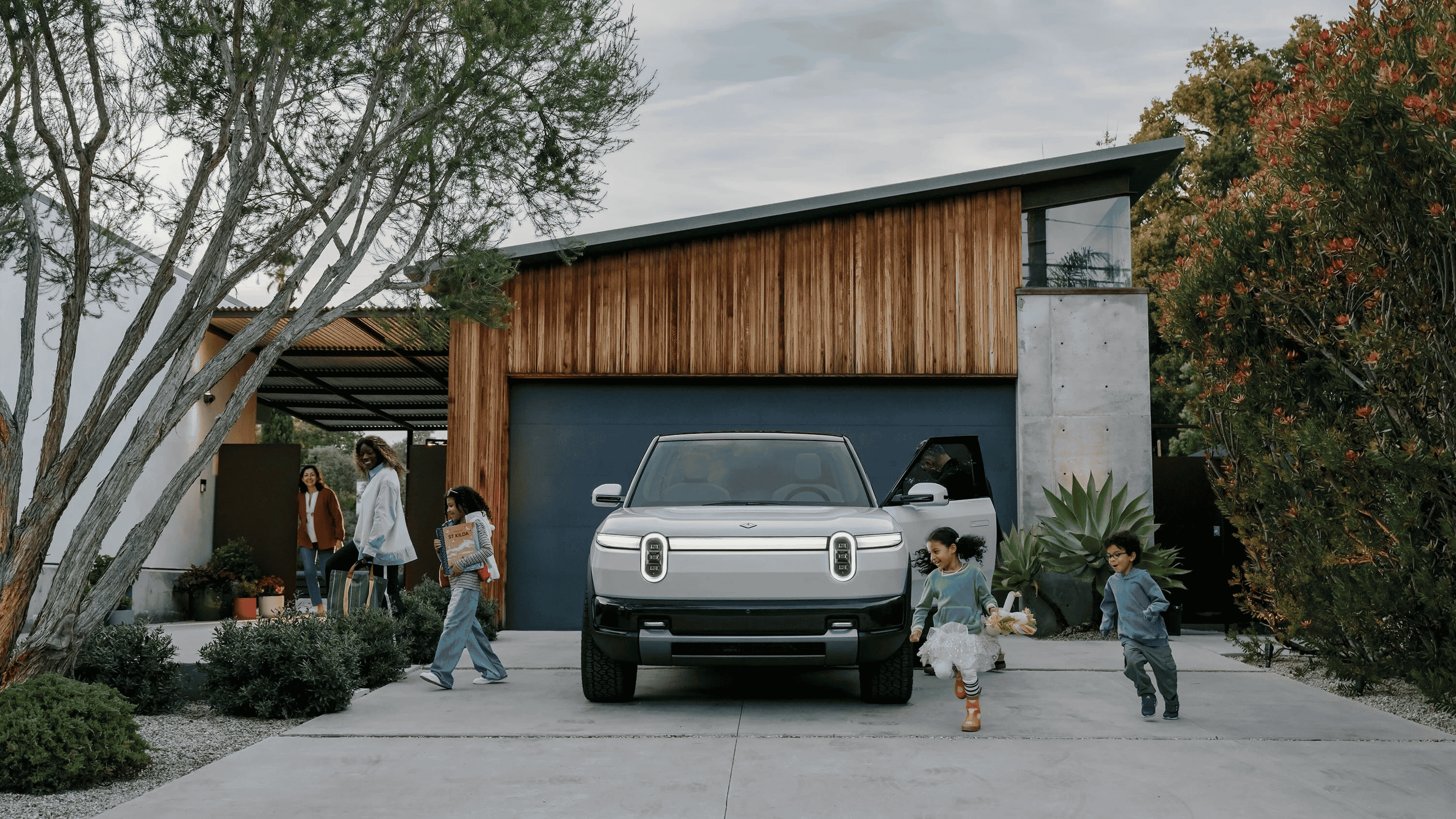
- Rivian R2 — 11 kW V2H output with Rivian’s own bidirectional charger, expected first half of 2026
- Volvo EX90 — V2H capability via the dcbel Ara Home Energy Station, launched in late 2025
- Hyundai Ioniq 9 — V2H confirmed as a near-term feature
Vehicles with V2L (Power Individual Devices)
Even without full V2H capability, many electric vehicles can power individual appliances and devices through vehicle-to-load (V2L) outlets. These won’t power your entire home, but they can keep a refrigerator running, charge phones, or power work equipment during an outage:
- Hyundai Ioniq 5 and Ioniq 6: 1.8–3.6 kW via V2L adapter
- Kia EV6: up to 3.6 kW V2L
- Genesis GV60 and GV70 Electrified: V2L capable
- Most new EVs launching in 2026+ are including V2L as a standard feature
The System-Agnostic Option: Franklin Home Power
Not everyone drives a Tesla, and not everyone wants to be locked into a single manufacturer’s ecosystem. That’s where Franklin Home Power comes in.
The FranklinWH system is a home battery that doesn’t care where its energy comes from. It accepts any 240V AC input — grid power, solar inverters, a gas generator, or the output from an electric vehicle with a high-power outlet. It’s not technically vehicle-to-home in the way Tesla Powershare is. It’s better described as “anything-to-home” — a universal energy buffer that works with whatever you have.
Key Specs
- 13.6 kWh per unit, using long-lasting lithium iron phosphate (LFP) battery chemistry
- Scalable up to 15 units — that’s 204 kWh of total storage, more than any single EV on the market
- 5 kW continuous output per unit, 10 kW peak
- Compatible with any brand of solar inverter, any generator, any EV with a 240V outlet
For homeowners who drive a Ford Lightning, a Chevy Silverado EV, or any other vehicle with a high-power outlet, the Franklin system provides a path to EV-assisted home backup without being tied to Tesla’s ecosystem. Plug your truck’s 240V outlet into the Franklin unit, and it stores and distributes that energy to your home.
The Complete Picture: Solar + Battery + EV
Each of these technologies is valuable on its own. Solar reduces your electric bill. A battery provides backup during outages. An EV eliminates fuel costs and gas station dependency. But together, they form something more powerful: a fully resilient energy system that keeps your home running, your vehicle charged, and your family safe — no matter what happens to the grid.
Here’s How the Pieces Fit Together
- Solar panels generate electricity from sunlight. In Florida, that means reliable production roughly 300 days per year. After a hurricane, panels begin producing power again as soon as skies clear — often within hours of the storm passing.
- A home battery (Powerwall, Franklin, or similar) stores that solar energy and provides the “island” that keeps your home powered independently of the grid. It’s your always-on anchor.
- A V2H-capable EV multiplies your backup capacity by 3–9× over a standalone battery. The Cybertruck’s 123 kWh is nine times a Powerwall 3. It also gives you something no stationary battery can: the ability to leave. When gas stations are empty and roads are flooded, your fully charged EV is your way out.
And here’s the number that puts it in perspective: Florida has over 500,000 electric vehicles on its roads today, including more than 10,000 Cybertrucks — more than any other state. With the best-selling vehicle in the world, the Tesla Model Y, expected to gain V2H capability through software updates, this isn’t a niche technology. It’s the near future of home energy resilience for millions of Floridians.
What You Can Do Before the Next Storm
Hurricane season runs from June 1 through November 30, with the most intense activity typically between August and October. If you’re reading this, you still have time — but not unlimited time. Installation schedules fill up as storm season approaches.
Here are practical steps, depending on where you’re starting from:
If You Already Own a Cybertruck
You’re sitting on 123 kWh of backup power right now. Adding a Powershare Gateway and Universal Wall Connector (starting at $1,950 for equipment, ~$3,500–$5,000 total installed) gives you whole-home backup that can run your AC for days. This is the fastest, most affordable path to serious hurricane resilience.
If You Already Have Solar but No Battery
Your panels shut off when the grid goes down. Adding a Tesla Powerwall or Franklin Home Power battery keeps your solar working independently. If you also have a V2H-capable EV, you’ll have a system that can potentially run indefinitely — solar recharges the battery during the day, and the EV provides extra capacity when needed.
If You’re Starting from Scratch
Consider the modular approach. Start with the component that gives you the most immediate value — for many Cybertruck owners, that’s the Powershare setup. You can add battery storage and solar panels later as your budget allows. Every piece you add makes the system more resilient and more cost-effective.
If You Drive a Non-Tesla EV
Check whether your vehicle supports V2H (see the comparison table above). If it does, contact an installer about the appropriate bidirectional charging equipment. If it doesn’t yet have V2H, the Franklin Home Power system can still accept your vehicle’s V2L output as a supplemental power source alongside solar and grid charging.
Ready to Build Your Hurricane-Resilient Energy System?
PPM Solar designs and installs complete solar, battery, and Powershare systems throughout Florida. Whether you’re looking to add Powershare to your Cybertruck, install a Powerwall, go solar for the first time, or build a fully integrated system from the ground up — we can help you design the right setup for your home, your vehicle, and your budget.
Every system we install is 100% in-house — no subcontractors. Our NABCEP-certified team has completed over 800 installations across Florida since 2009, and we design every system to meet Florida’s demanding hurricane building codes.