If your July electric bill made you wince, you’re not imagining things. Florida electricity rates have climbed to their highest levels in years — and every major utility in the state played a role.
The Florida Public Service Commission’s own data tells the story: a typical FPL customer using 1,000 kWh per month now pays $136.64. Duke Energy customers pay $150.40. And if you’re on Tampa Electric (TECO), you’re looking at $176.89 — nearly $2,123 a year just for electricity.
Those are the official numbers for June through December 2026. They don’t include what happens when summer heat pushes your usage to 1,300 or 1,500 kWh — which, for most Florida households running air conditioning all day, is exactly what’s happening right now.
This article breaks down exactly where your money is going, why rates are rising faster than inflation, and what Florida homeowners are doing about it.
What You’re Actually Paying For: A Line-by-Line Breakdown
Most people glance at the total on their electric bill and move on. But when rates climb, it’s worth understanding where the money actually goes — because not every charge on your bill works the same way, and some are far more volatile than others.
Here’s what a typical FPL residential bill looks like for 1,000 kWh of usage, based on the Florida Public Service Commission’s published rate schedule for June–December 2026:
| Line Item | Monthly Cost | What It Pays For |
| Base Rate Charges | $89.17 | Power plants, transmission lines, substations, employee salaries — the cost of keeping the system running |
| Fuel & Purchased Power | $28.93 | Natural gas and other fuels burned to generate electricity. Fluctuates with global energy markets |
| Storm Protection Plan | $9.95 | Grid hardening — burying power lines, reinforcing poles, upgrading equipment to withstand hurricanes |
| Environmental Compliance | $3.45 | Emissions controls, environmental monitoring, and regulatory compliance |
| Gross Receipts Tax & Fees | $3.54 | State gross receipts tax and regulatory assessment fees |
| Energy Conservation | $1.48 | Programs designed to help customers reduce energy consumption |
| Capacity Cost Recovery | $0.52 | Purchasing power from non-FPL sources when demand spikes |
| Transition Rider Credit | −$0.40 | A small credit related to the Northwest Florida service territory integration |
| TOTAL | $136.64 |
Look at the top two items. Base rates and fuel charges together make up $118.10 — 86% of the entire bill. Everything else is supporting charges.
Now here’s the part most articles won’t tell you: the fuel charge is the one that keeps surprising people. It’s recalculated every year by the PSC based on projected natural gas prices, and it can be adjusted mid-year if fuel costs spike. In April 2026, Gainesville Regional Utilities (GRU) faced public backlash after raising its fuel adjustment multiple times in a row — even though the utility hadn’t touched its base rates in two years.
This distinction matters because when you generate your own solar electricity, you eliminate the fuel charge entirely. Solar panels don’t burn natural gas. Every kilowatt-hour your system produces has zero fuel cost — not just today, but for the next 25 to 30 years.
How Florida’s Major Utilities Compare Right Now
The Florida Public Service Commission publishes a side-by-side comparison of all major investor-owned utilities every six months. Here’s the current picture for a residential customer using 1,000 kWh per month (June–December 2026):
| Utility | Monthly Bill | Base Rate | Fuel + Power |
| FPL (Peninsular FL) | $136.64 | $89.17 | $28.93 |
| FPL (NW Florida) | $141.36 | $89.17 | $28.93 |
| Duke Energy Florida | $150.40 | $94.63 | $34.65 |
| Tampa Electric (TECO) | $176.89 | $102.98 | $32.10 |
| Florida Public Utilities | $165.17 | $53.07 | $88.20 |
Source: Florida Public Service Commission, Billing Adjustments Comparison, June 2026.
A few things jump out:
- TECO customers are paying the most in the state — $176.89 per month. That includes a $19.95 Storm Restoration Recovery charge that TECO is still collecting for hurricane damage repairs. That’s nearly $240 a year just for past storms.
- Florida Public Utilities has the lowest base rate but the highest fuel charge — $88.20 per 1,000 kWh. Their customers are overwhelmingly exposed to fossil fuel price swings.
- Duke Energy’s rates are $14 higher than FPL’s, even after Duke removed its storm cost recovery charge in March 2026 (which had temporarily added $7.54 per month).
- GRU (Gainesville) holds its own at $136.40 per 1,000 kWh — down from $179.59 in September 2022. But GRU has raised its fuel adjustment multiple times in 2026, frustrating customers who were told base rates weren’t going up.
The pattern across every utility is the same: base rates are rising, fuel charges are volatile, storm-related surcharges keep appearing, and the total bill only goes in one direction.
Why Your Bill Is Getting Worse, Not Better
This isn’t a temporary spike. Three structural forces are pushing Florida electricity costs higher — and none of them are going away.
1. FPL locked in $1.65 billion in rate increases through 2029
In November 2025, the Florida Public Service Commission approved FPL’s four-year rate plan covering 2026 through 2029. The agreement authorizes:
- $945 million in additional base rate revenue effective January 1, 2026
- $705 million more in additional base rate revenue beginning January 1, 2027
FPL originally petitioned for $1.545 billion in 2026 alone. The settlement reduced that, but $1.65 billion in approved increases over two years is still the largest rate increase in FPL’s history.
For FPL’s original proposal, a typical 1,000-kWh residential customer bill was projected to rise from $134.14 in 2025 to $142.37 in 2026, $148.29 in 2027, $149.93 in 2028, and $151.99 in 2029. The settlement softened 2026 to $136.64, but the trajectory through 2029 remains upward.
That’s an additional $18 per month by the end of the decade compared to what you paid in 2025 — on the base rate alone, before any fuel cost surprises.
2. Summer demand is running 23% above normal
An 8.5% base rate increase would have been painful on its own. But this summer, it’s compounding with electricity demand that’s running roughly 23% higher than typical, according to The Money Overview’s July 2026 analysis of FPL billing data. The reason is simple: it’s been relentlessly hot, and air conditioning accounts for the largest share of Florida household electricity use.
The average Florida summer electricity bill is now $207 per month, according to a July 2026 St. Augustine Record analysis. That’s up 39% since 2020 — and it ranks Florida as the ninth most expensive state in the country for summer cooling costs.
But averages hide the real pain. Florida households use about 1,142 kWh per month on average — 25% above the national average. In summer, heavy AC users easily hit 1,500 kWh or more. At FPL’s rates, 1,500 kWh pushes your bill over $200. On TECO, you’re approaching $270.
3. The fuel charge is a one-way escalator
Here’s the charge that nobody talks about but everyone pays: the fuel cost recovery clause. It covers the cost of natural gas burned at power plants, and it’s passed through to customers dollar-for-dollar with no utility markup — but also no cap.
Fuel charges currently account for 25–30% of a typical FPL bill and can be revised mid-year by the PSC if gas prices swing. For Florida Public Utilities customers, fuel charges are a staggering $88.20 per 1,000 kWh — more than FPL’s entire base rate.
This charge is the most volatile part of your bill. And it’s the charge that solar eliminates completely. Every kilowatt-hour you generate from your roof uses zero fuel, carries zero fuel cost recovery, and insulates you from every future natural gas price spike for the life of your system.
What Solar Actually Does to Your Electric Bill
Solar doesn’t just “lower” your bill in some vague way. It eliminates specific charges, and understanding which ones makes the math concrete.
When your solar panels generate a kilowatt-hour of electricity, that’s one fewer kWh you buy from the utility. That means you avoid paying:
- The base energy charge
- The fuel cost recovery charge
- The capacity cost recovery charge
- The gross receipts tax on those charges
Under Florida’s net metering rules, any excess energy your system sends to the grid during the day is credited at the full retail rate and applied against the energy you pull from the grid at night. The result is that most solar homeowners see their monthly electric bill drop to $10–$30 — essentially just the base customer charge and minimum bill amount.
Here’s a practical example:
| Without Solar | With Solar (8 kW system) | |
| Monthly usage | 1,200 kWh from grid | ~200 kWh from grid (1,000 kWh offset by solar) |
| Monthly FPL bill | ~$170 | ~$30 |
| Annual electricity cost | ~$2,040 | ~$360 |
| Annual savings | — | ~$1,680 |
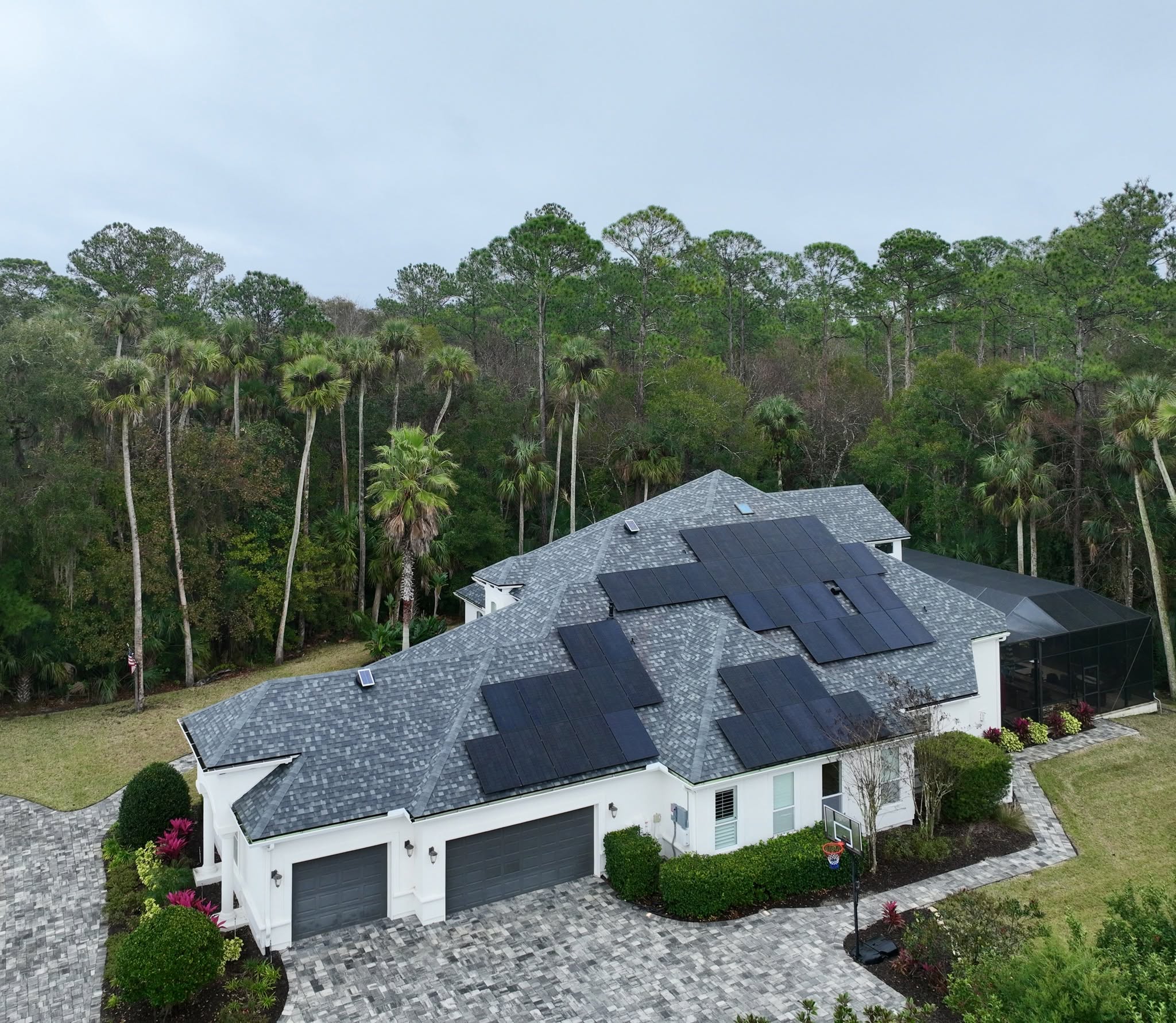
An 8 kW solar system in Florida typically produces about 12,000 kWh per year — enough to offset 80–100% of the average home’s electricity. At current FPL rates, that’s roughly $1,680 in annual savings. On TECO, where rates are higher, the same system saves even more.
And here’s the part that changes the equation over time: your solar savings grow automatically as rates increase. You locked in your system cost on day one. But the utility charges you’re avoiding get more expensive every single year. The FPL rate plan runs through 2029. Your solar panels keep producing for 25–30 years.
Add Battery Storage and Eliminate Even More
Solar alone handles the daytime. But in Florida, a large share of your electricity use happens in the evening — when you come home, turn down the AC, cook dinner, and run the dryer. That’s also when your solar panels are no longer producing.
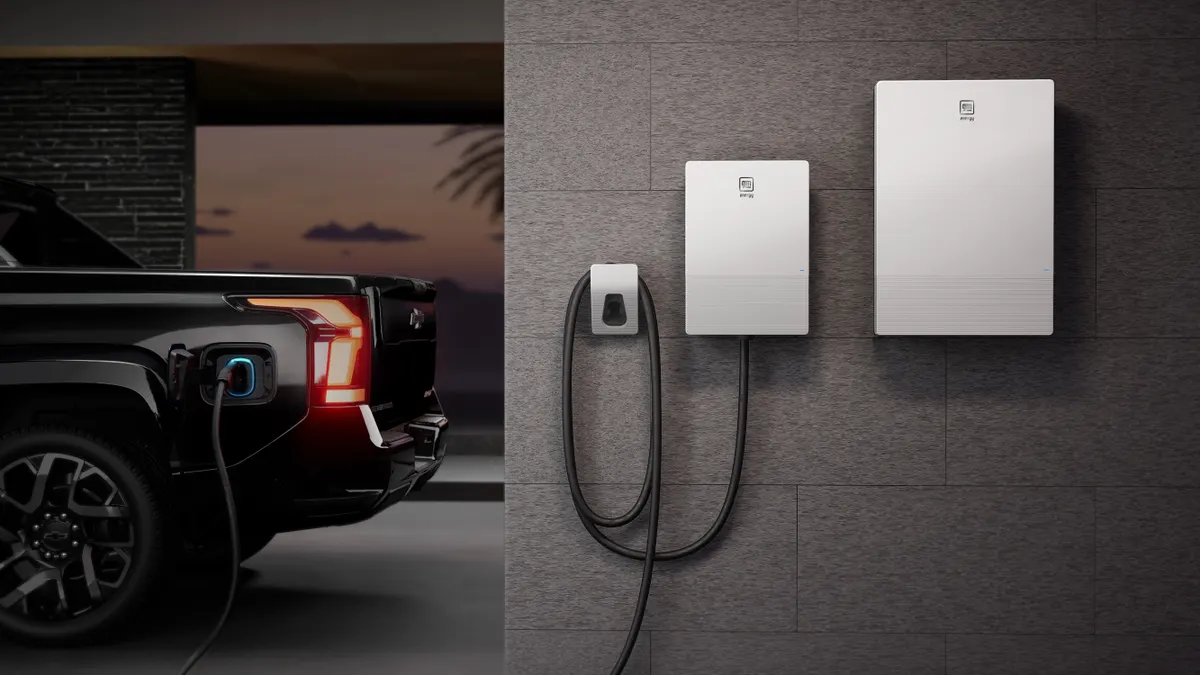
A home battery system like the Tesla Powerwall 3, Enphase IQ Battery, or FranklinWH stores the excess solar energy your panels produce during the day and releases it in the evening. The result: you pull almost nothing from the grid, even after sunset.
Battery storage also protects you during power outages — which, in Florida, are not a hypothetical. And with virtual power plant programs now launching in Florida, some battery owners are actually earning money by letting their battery support the grid during peak demand events.
The Cost of Waiting: What Another Year on the Grid Costs You
Some homeowners think about solar for months — or years — before making a decision. Here’s what waiting costs in real dollars:
If you’re currently paying $170/month to FPL and you wait 12 months to install solar, that’s approximately $2,040 paid to the utility that you could have avoided. If FPL’s rates increase by another $10–15/month in 2027 as projected, your cost of waiting gets even higher in year two.
Meanwhile, the average residential solar system in Florida costs $2.50–$3.50 per watt installed. For an 8 kW system, that’s roughly $20,000–$28,000. With financing options available at competitive rates, many homeowners find that their monthly loan payment is less than their old electric bill — meaning solar is cash-flow positive from month one.
And unlike your electric bill, a solar payment is fixed. It doesn’t increase with fuel costs, storm surcharges, or regulatory decisions you have no vote in.
What to Check on Your Electric Bill Right Now
Before you do anything else, pull up your most recent electric bill (or log into your utility’s website) and look at three things:
1. Your total kWh usage. This is the number that determines everything. If you’re above 1,000 kWh in summer — and most Florida homes are — solar math works strongly in your favor.
2. Your fuel cost recovery charge. This is the volatile charge that solar eliminates. On FPL, it’s listed as “Fuel” on your bill. On GRU, it’s the “Fuel Adjustment.” Watch how it’s changed over the past 12 months.
3. Any storm-related surcharges. TECO customers are still paying $19.95/month in storm restoration recovery. Duke recently removed theirs, but a new hurricane season could bring new charges. Solar and battery storage reduce your exposure to these grid-dependent costs.
Find Out Exactly How Much You Could Save
Every home and every utility territory is different. The fastest way to find out what solar would do to your specific electric bill is to talk to a local installer who knows Florida’s rate structures, net metering rules, and permitting requirements.
PPM Solar has been designing and installing solar systems across Florida since 2009 — more than 17 years of experience with every major Florida utility. Our team includes NABCEP-certified professionals, and every installation is performed by our own W2 employees.
Get a free savings estimate → Contact us at (352) 221-9464 or visit our website to schedule a consultation. We’ll pull your actual utility data and show you exactly what solar can do for your electric bill.